


Inheriting King Jeongjo's Philosophy of Filial Piety (孝) and Sharing Hwaseong's Identity as Our Mission
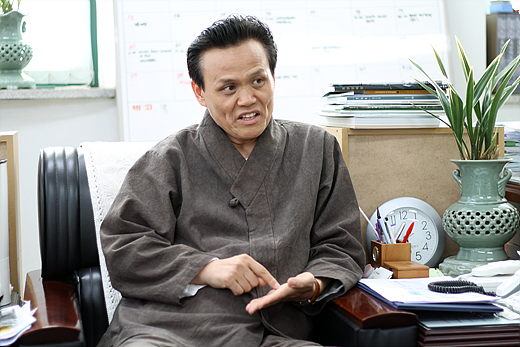
"The mainstream of Hwaseong's spiritual culture is the philosophy of filial piety. Hwaseong is a place where the World Cultural Heritage sites of Yungneung and Geonneung, along with the utmost devotion shown by King Jeongjo in serving his late father Crown Prince Sado, remain intact."
These are the words of Woo Ho-chul, director of Hwaseong Cultural Center, who emphasizes the philosophy of filial piety.
Director Woo, who emphasizes filial piety, stated, "The current state of society is alarmingly desensitized to morality, with social ethics and hierarchical order collapsing and creating a world of materialism, which shakes the fundamental order of human nature."
Director Woo emphasized, "We must practice filial piety, which is the foundation and basis of human conduct, to establish order. We will work to make Hwaseong, where we live, a source of filial devotion, and we must all work together toward this goal."
We met with Woo Ho-chul, director of the Hwaseong Cultural Center, which oversees the history, culture, and arts of Hwaseong City, at the director's office located at Balan-ro, Hyungnam-eup, Hwaseong City, to discuss his "role and calling."
- What is the role of Hwaseong Cultural Center?
Hwaseong Cultural Center is an institution established under the Local Culture Center Promotion Act. Culture centers create the identity of a region through the discovery, management, and transmission of the region's history, culture, and arts.
Therefore, it is a place that enhances the quality of life for residents and citizens to share identity, foster harmony, and lead a stable cultural life.
The land of Hwaseong dates back 150 million years. This can be easily confirmed through fossil sites of dinosaur eggs. True to its heritage as a land of loyalty, filial piety, and propriety, Hwaseong possesses abundant historical significance.
In terms of the spirit of loyalty, the March 1st Independence Movement that unfolded throughout Hwaseong is exemplary. Hwaseong's independence movement was an expression of desperate resistance. Through this, we can read the spirit of the Korean people.
In terms of the spirit of filial piety, it is King Jeongjo's filial devotion. This is the philosophy of filial piety preserved at Yungneung and Geonneung and Yongju Temple.
At Yongju Temple, a woodblock print of the Sutra on Filial Piety and Gratitude to Parents, bestowed by King Jeongjo, is preserved. The song we call "Mother and Father" originated from this.
In terms of the spirit of propriety, Hwaseong is a place where the achievements and thoughts of many figures remain, such as the dance master Yi Dong-an and the novelist and playwright Hong Sa-yong.
Hwaseong Cultural Center is creating Hwaseong's identity together with citizens so that all citizens can share it.
- What is the signature event of Hwaseong Cultural Center?
On March 1st, a ceremony commemorating the 93rd anniversary was held. It has been 93 years since the March 1st Independence Movement occurred.
Over these 93 years, we have achieved independence and liberation for our nation, Korea, and through the Saemaeul Movement, we have joined the ranks of economically developed countries through a spiritual movement.
Now, throughout the world, Korean culture such as the Korean Wave and K-pop are spreading. We must continue to inherit the spirit with which our forebears dedicated themselves to protecting our nation, without arrogance or forgetfulness.
In this regard, it is an event held with citizens to strengthen national sovereignty and foster a spirit of ownership so that the spirit of the Korean people and the Republic of Korea can flourish for generations to come.
- What is the historical significance of Jeam-ri in Hyungnam-eup, Hwaseong City?
Jeam-ri is a representative site of national suffering during Japanese colonial rule.
When the March 1st Movement broke out in 1919, the independence movement also arose in the Hwaseong region, which was adjacent to Seoul. The independence movement first occurred in the Songsan and Sakang areas, during which the Japanese police chief Noguchi was killed.
In the Wujeong and Jang'an areas, the office and station of two administrative divisions were completely burned, and Japanese police officer Kawabata was killed.
In the independence movement demonstration at Balan Market, residents participating in the demonstration engaged in stone-throwing battles with Japanese troops and actively conducted anti-Japanese resistance.
When the administrative office and station were attacked and two police officers were killed in Hwasuri and Sakang-ri, the Japanese colonial authorities' retaliation manifested as the Jeam-ri Massacre.
Thereupon, Japan gathered approximately 30 men inside a church and imprisoned them, then brutally killed them with fire, guns, and swords.
The Jeam-ri Massacre exemplifies the cruel and ruthless atrocities of the Japanese colonial authorities, which, in other words, demonstrates the strong national consciousness and will for independence of the people of the Hwaseong region during the Japanese colonial period.
I believe that Jeam-ri became the center that transformed subsequent independence movements into more systematic and active national liberation movements following the Jeam-ri Incident.
Now, the term and place name "Jeam-ri" itself can be said to be a living historical site preserving the spirit and national consciousness of independence activists, rather than a painful trace of the distant past.
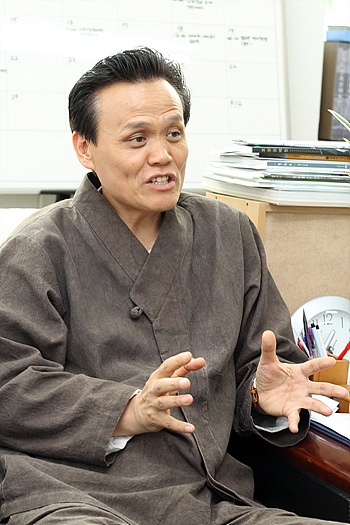
King Jeongjo's filial devotion not only created a framework for maintaining order in the state, society, and family, but also exemplified human conduct and became a model for all people.
Through the practice of filial devotion as a basic order, he created an environment that awakened and taught humanity with the right spirit.
Filial piety is the foundation of human conduct. Jeongjo taught his people how to serve their parents.
Jeongjo had his father's tomb relocated from Hwasan to Hyunryungwon (later promoted to Hyunryung Royal Tomb), and he visited Hwaseong every year to pay homage to his father's tomb.
When paying homage to his father's tomb, he would visit Yongju Temple to hear the teachings of the Sutra on Filial Piety and Gratitude to Parents.
Jeongjo not only bestowed the woodblock print of the Sutra on Filial Piety and Gratitude to Parents upon Yongju Temple, but also awakened filial devotion in the common people through its publication.
Jeongjo said, "A life of truth lies in the ordinary act of serving one's parents well, loving and protecting one's spouse and children, and being faithful to one's occupation," and emphasized that "filial duty to one's parents is a fundamental human ethics that must never change, no matter how the world changes."
He stated, "When a mother gives birth to a child, she sheds 3 mal and 8 dou of blood and nurses 8 seom and 4 mal of milk," and therefore, "When one considers such parental grace, a child should carry his father on his left shoulder and his mother on his right shoulder, and even if he circles that great Mount Sumeru a hundred or thousand times, he can never fully repay it."
- What would you like to say to the youth of Hwaseong?
You should establish healthy foundations during the formative years of your youth and fulfill your duties as individuals living healthy lives, as healthy volunteers to society, and as healthy citizens to the nation.
You must remember the efforts of your parents who raised you and your teachers, and become excellent mentors for those who come after.
What I wish to urge upon the youth is, first, become a person with a healthy body and mind. Second, create a community dedicated to the common good and serve. Third, strive for self-development, as your development is the development of the Republic of Korea.
The Hwaseong Cultural Center will fulfill its role as a cultural plaza so that youth can participate as healthy cultural citizens.
[ Contents of the Sutra on Filial Piety and Gratitude to Parents ]
First, the grace of conceiving and protecting the child
Second, the grace of enduring pain during childbirth
Third, the grace of forgetting worries after giving birth to a child
Fourth, the grace of swallowing bitter things and spitting out sweet things to feed the child
Fifth, the grace of lying on wet sheets and sleeping on dry ones
Sixth, the grace of nursing and raising with love
Seventh, the grace of washing, laundering, and cleaning filth
Eighth, the grace of worrying and being concerned when the child travels far away
Ninth, the grace of enduring hardship for the child's sake
Tenth, the grace of worrying for the child even at the time of passing
[ Profile of Director Woo Ho-chul ]
Age: Born February 1961 (51 years old)
Education
Suwon High School
Gyeonggi University, Department of Law
Korea Agro-Fisheries University, Lifelong Education Center, Executive MBA Program
Career
President of the Gyeonggi District of the Korean Buddhist Youth Association
Director of Social Enterprise Wuri Sesang Co., Ltd.
Representative of Suwon Municipal Haenggung-dong Kindergarten
Supporter Member of Hwaseong City Talent Development Foundation

Loading comments…