


Gyeonggi Province to Provide 67.75 Billion Won in Emergency Financial Support for Heavy Snow Damage Recovery and Livelihood Restoration
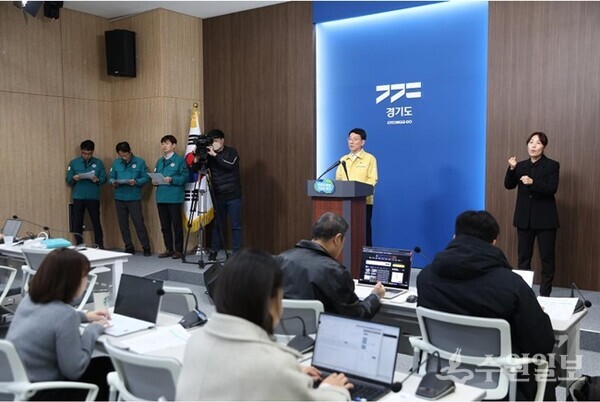
[Suwon Ilbo=Reporter Kim Kap-dong] Gyeonggi Province has decided to provide emergency financial support of 67.75 billion won for heavy snow damage recovery and livelihood restoration in the province.
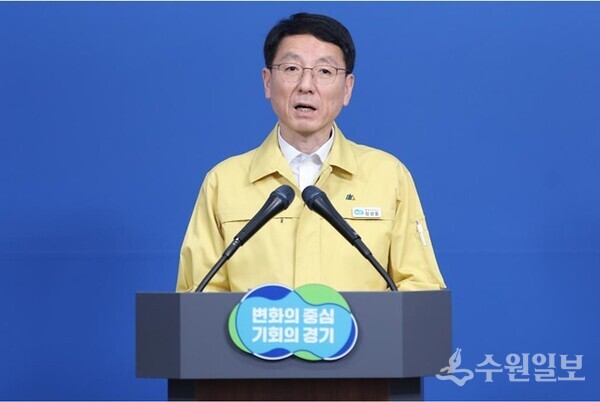
Administrative Vice Governor Kim Sung-joong held a press conference on "Heavy Snow-Related Livelihood Recovery Measures" at the Provincial Government briefing room on the 6th, stating, "The province decided on the 5th to provide emergency financial support totaling 67.75 billion won by adding 37.6 billion won from funds, reserves, and special adjustment grants to the 30.15 billion won announced on the 29th of last month for swift recovery from heavy snow damage."
This is the concrete implementation of the promise made by Gyeonggi Province Governor Kim Dong-yeon during a visit to damage sites in Anseong and Pyeongtaek on the 2nd, stating, "We will proceed with recovery procedures and methods that go beyond normal practice in a quick timeframe."
Governor Kim previously stated regarding procedures and methods that exceed normal practice: "We have already spent more than 3 billion won through disaster funds and reserve funds, but if necessary, we will spend more to complete recovery quickly. Finances exist for such purposes."
Accordingly, the province decided to additionally provide 37.6 billion won from provincial available resources—30 billion won from disaster management funds, 30 billion won from disaster relief funds, 3 billion won from reserves, and 1.6 billion won from special adjustment grants—for damage recovery in the private sector, including small business owners, livestock farmers, and agricultural workers who suffered greater damage than public facilities.
To this end, the province has established special support measures first for small business owners affected by damage.
Small business owners expected to suffer the greatest damage from heavy snow will receive emergency livelihood stabilization funds of 3 billion won. With this, affected small business owners will be able to receive up to 10 million won in emergency livelihood stabilization funds.
Previously, small business owners suffering disaster damage received only 3 million won in disaster support funds and 2 million won from provincial disaster relief funds. However, the province decided to provide additional emergency livelihood stabilization funds, as the facility collapses from this heavy snow have caused numerous cases of inventory damage and material destruction, with additional losses expected due to business suspension during recovery.
The province plans to increase disaster relief funds from the existing 2 million won to a maximum of 7 million won, adding an additional 5 million won. If all 7 million won is received, recipients can receive up to 10 million won in emergency livelihood stabilization funds, including the 3 million won in disaster support funds.
Emergency livelihood stabilization funds will be provided as quickly as possible to small business owners without delays from financial bottlenecks. The province plans to execute funds in advance once damage is confirmed, even before deliberation by the Central Disaster and Safety Countermeasures Headquarters.
Second, the province actively supports facility recovery for affected livestock and agricultural farmers.
By providing 3 billion won from disaster management funds, the province will support demolition of collapsed vinyl greenhouses and livestock facilities and disposal of disaster waste. The 3 billion won from disaster management funds is added to the 7.35 billion won from disaster management funds announced last week. This measure aims to prevent secondary damage from additional collapses and quickly restore disaster sites for resumption of livestock and farming activities.
To support livestock farms, reserve funds were increased from the existing 2 billion won to a total of 5 billion won. These funds will be used for measures most needed on-site, including demolition of collapsed barns, rescue of isolated livestock, and disposal of dead animals. To this end, the province has already notified cities and counties of its plan to provide reserve funds to prevent livestock farmers from being unable to dispose of dead animals due to financial constraints, and has established measures to enable advance disposal of dead livestock.
Third, the province will provide additional special adjustment grants for damage recovery in the public sector.
The province completed provision of 7.35 billion won from disaster management funds to cities and counties on the 2nd for emergency restoration and snow removal equipment and materials support. Additionally, the province plans to provide additional special adjustment grants of 1.6 billion won for recovery of public facilities including agricultural and fisheries markets and sports facilities damaged by the heavy snow.
Meanwhile, facing the difficult reality where livestock farmers, agricultural workers, and small business owners who suffered the greatest economic hardship from the unprecedented November heavy snow in 117 years are increasing their burdens, the province has requested that the central government declare special disaster areas prioritized before final damage assessments are confirmed so that affected residents can receive additional disaster support funds and tax exemptions.
Administrative Vice Governor Kim Sung-joong stated: "To overcome the disaster swiftly, the province has converted the Provincial Disaster and Safety Countermeasures Headquarters to a recovery system and is operating an 'Integrated Gyeonggi Support Center' with cities and counties, concentrating all administrative resources for rapid damage recovery. We are doing our best to ensure that residents affected by this unprecedented heavy snow can return to comfortable daily lives as soon as possible."


Loading comments…