Shift in Democratic Party's Core from YouTuber to President
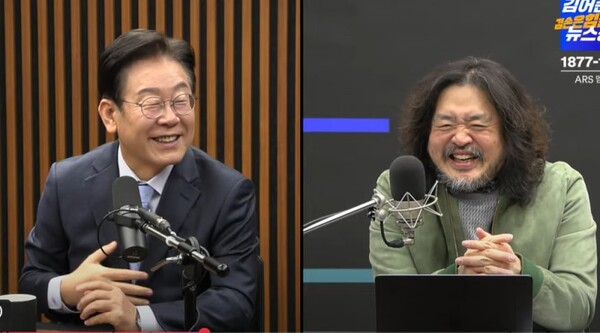
The axis driving party members' support in the Democratic Party leadership election has shifted within a year. Last year, when 'pro-Lee' was virtually the default, political YouTubers were the focal point in rallying supporters and creating differences among candidates. This time, with 'pro-Chung' emerging as a separate political force, 'Myeongsim' (明心)—centered on President Lee Jae-myung—became the core of the party leadership competition.
According to political circles on the 18th, the party leadership competition between newly appointed Chairman Kim Min-seok and candidate Jung Chung-rae extended beyond a head-to-head candidate battle to a three-way confrontation between pro-Lee (pro-Lee Jae-myung) and pro-Chung (pro-Jung Chung-rae) supporters.
The conflict came to the fore following the June 3 local elections.
Online, derogatory terms emerged bundling not only politicians but also YouTubers from rival camps. Pro-Lee supporters used the term 'Munjotulrae-yu' to bundle former President Moon Jae-in, former Cho Kuk Innovation Party Chairman Cho Kuk, YouTuber Kim Eo-jun, candidate Jung, and author Yu Si-min.
The other side countered with 'Hangangsaeddongtaejugyeol,' grouping National Assembly members Han Jun-ho, Kang Deuk-gu, and Lee Eon-joo, Prime Minister Kim Min-seok at the time, YouTubers Lee Dong-hyung and Kim Yong-min, and Assemblymember Song Young-gil.
Politicians and YouTubers were effectively called upon as a single political force. As friction between supporters intensified, political circles saw the reemergence of the saying 'progressives are destroyed by division,' with some comparing the confrontation between the two sides to 'life-or-death group fistfights.
The influence of political YouTubers was confirmed at last year's party convention as well.
At the time, candidate Jung and candidate Park Chan-dae successively appeared on major political YouTube channels to compete for party members' votes. Pro-Democratic YouTubers, including Kim Eo-jun, continuously offered evaluations of candidates and party issues, establishing YouTube as a major campaign space for the party convention.
This trend continued even after candidate Jung became party chairman. During the local elections, pro-Chung politicians contacted supporters through major political YouTube channels, with YouTube functioning as a conduit connecting party political forces and members.
However, after the local elections ended and the party leadership competition began, the driving force shifted.
As competition between pro-Lee and pro-Chung supporters converged on the question of 'who will support the success of the Lee Jae-myung administration,' political distance from the president emerged as a more important criterion than YouTuber support.
Chairman Kim served as the inaugural Prime Minister of the Lee Jae-myung administration, emphasizing that he jointly managed state affairs with the president. He positioned himself as the leading figure of the pro-Lee camp by linking government-party stability and the success of the Lee administration to his party leadership bid.
Candidate Jung also emphasized a pro-Lee identity, but circumstances differed. As a separate 'pro-Chung' political designation and support base formed around candidate Jung, a structure distinguishing pro-Lee from pro-Chung emerged.
During this process, the president's policy initiatives also drew attention.
Policy messaging toward Honam, cited as one of the biggest battlegrounds in the Democratic Party convention, materialized shortly after the local elections.
Ahead of the party convention, President Lee presided over a national briefing on three mega-projects and announced plans to promote a Honam semiconductor cluster. Subsequently, the presidential office officially announced a decision to establish a semiconductor industrial complex on the site of the relocated Gwangju military airport.
While government policy cannot be called support for a particular candidate, for Honam party members, the Lee administration's regional development vision was presented as concrete policy. With Honam emerging as the biggest battleground in the party leadership competition, the president's policy initiatives had the effect of tilting the party leadership competition—'who will create achievements alongside the Lee administration?'—in Chairman Kim's favor.
In reality, the early stages of the party leadership competition saw Chairman Kim and candidate Jung trading wins. In the Chungcheong region, Chairman Kim defeated candidate Jung by just 303 votes, and the next day, candidate Jung surged ahead again in Busan, Ulsan, and South Gyeongsang Province. The cumulative gap between the two regions at the time was only 0.99 percentage points, prompting predictions that Honam's choice would decide the contest.
Honam also emerged as an important political base for Chairman Kim. In a June poll ahead of the party convention, Chairman Kim also significantly led candidate Jung not only among Democratic Party supporters but also in Honam.
The result was a victory for Chairman Kim. Ultimately, the central pivot in the party leadership competition at this convention was the president, not YouTubers.
A political circles insider stated, 'It is natural that the president is the center of the ruling party, and it is difficult to view the comparison between the president and YouTubers in terms of influence over party members as a normal situation.' The official continued, 'If the conclusion of this convention is that the president defeated the YouTuber, then as the ruling party, more significant than the outcome of the competition is the fact that the president and YouTuber were placed on the same scale, indicating that internal public discourse and party organization have failed to function properly.'