


Paldal-gu New Government Building "Leading Suwon and Paldal's Next 100 Years"
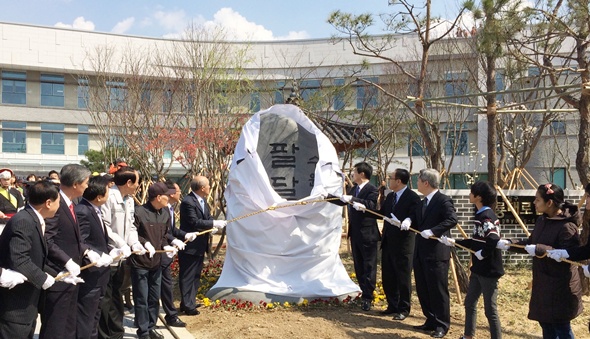
"At the Paldal-gu government building, we will lead the next 100 years of future for Suwon and Paldal."
Suwon Mayor Yeom Tae-young held a completion ceremony for the Paldal-gu Government Building's new headquarters on the morning of the 5th, with approximately 1,000 officials from various agencies and citizens in attendance, making this statement.
Mayor Yeom said that day, "With the construction of the Paldal-gu Government Building, a long-held wish of citizens, I will work diligently to provide residents with the best administrative services and become a center for participation and communication."
Mayor Yeom said, "With the establishment of the Paldal-gu Government Building, the UNESCO World Heritage Hwaseong Fortress, which embodies the reform spirit of King Jeongjo, has once again become the center of administration," adding "We will realize the highest level of people-oriented administration for Suwon citizens, revitalize surrounding commercial districts including traditional markets, breathe new life into the old downtown, and make the heart of Suwon beat again."
The completion ceremony for the Paldal-gu Government Building held that day, based on the meaning and spirit of the completion ceremony of Hwaseong held on October 16, 1796, drew attention by combining common people's culture and royal court culture to showcase the beauty of shared joy of both high and low and harmony among people.
Construction on the Paldal-gu Government Building began in November 2012 on the remaining site of the Suwon Hwaseong Museum, and was completed last month with construction costs of 25.6 billion won, featuring a building area of 2,787 square meters, total floor area of 12,628 square meters, one basement level, and three above-ground floors.
The Paldal-gu Government Building, designed with the UNESCO World Heritage Hwaseong Fortress walls as its motif, is equipped with business facilities including a comprehensive civil affairs center, departmental offices, and conference rooms, as well as facilities for residents such as a book cafe, workplace daycare center, and rest areas, presenting a new model of "harmony and efficiency" in public building construction, according to the city.
Nearby are various UNESCO World Heritage Hwaseong Fortress sites including Hwaseong Museum, Hwaseong Haenggung Palace, Hwahongmun Gate, and Suwon Stream, and traditional markets such as Paldal Market, Jidong Market, and Yeongdong Market are in close proximity, raising expectations for revitalization of traditional markets.
In particular, Maehyang-dong, where the Paldal-gu Government Building is located, is at the center of Suwon's Hwaseong Fortress, and the city's placement of a district government building in the relatively underdeveloped old downtown clearly reflects its commitment to revitalizing the local economy.
Meanwhile, the existing Paldal-gu Government Building, which was located near City Hall, relocated to the Suwon World Cup Stadium starting in 2002, subsequently requiring consumptive budget expenditures for rent and maintenance costs of approximately 760 million won annually, and due to its somewhat distance from residents' daily living areas and accessibility difficulties, the necessity for new construction has been continuously raised.
Loading comments…