


Establishing Gyeonggi High Court Would Bring Significant Benefits in Litigation Time and Costs
‘The Seoul High Court, which handles a population of approximately 25.98 million and 27,941 filed cases (as of end of 2007), must resolve the problem of high costs and low efficiency resulting from concentrated judicial proceedings.’
Voices calling for significant benefits are growing louder, including reduced costs and grievances for residents and civil complainants in the Seoul metropolitan area and Gangwon region through establishing a Gyeonggi High Court in Suwon. Additionally, there is broad consensus that the establishment of a Gyeonggi High Court in Suwon is necessary from constitutional and local autonomy perspectives.
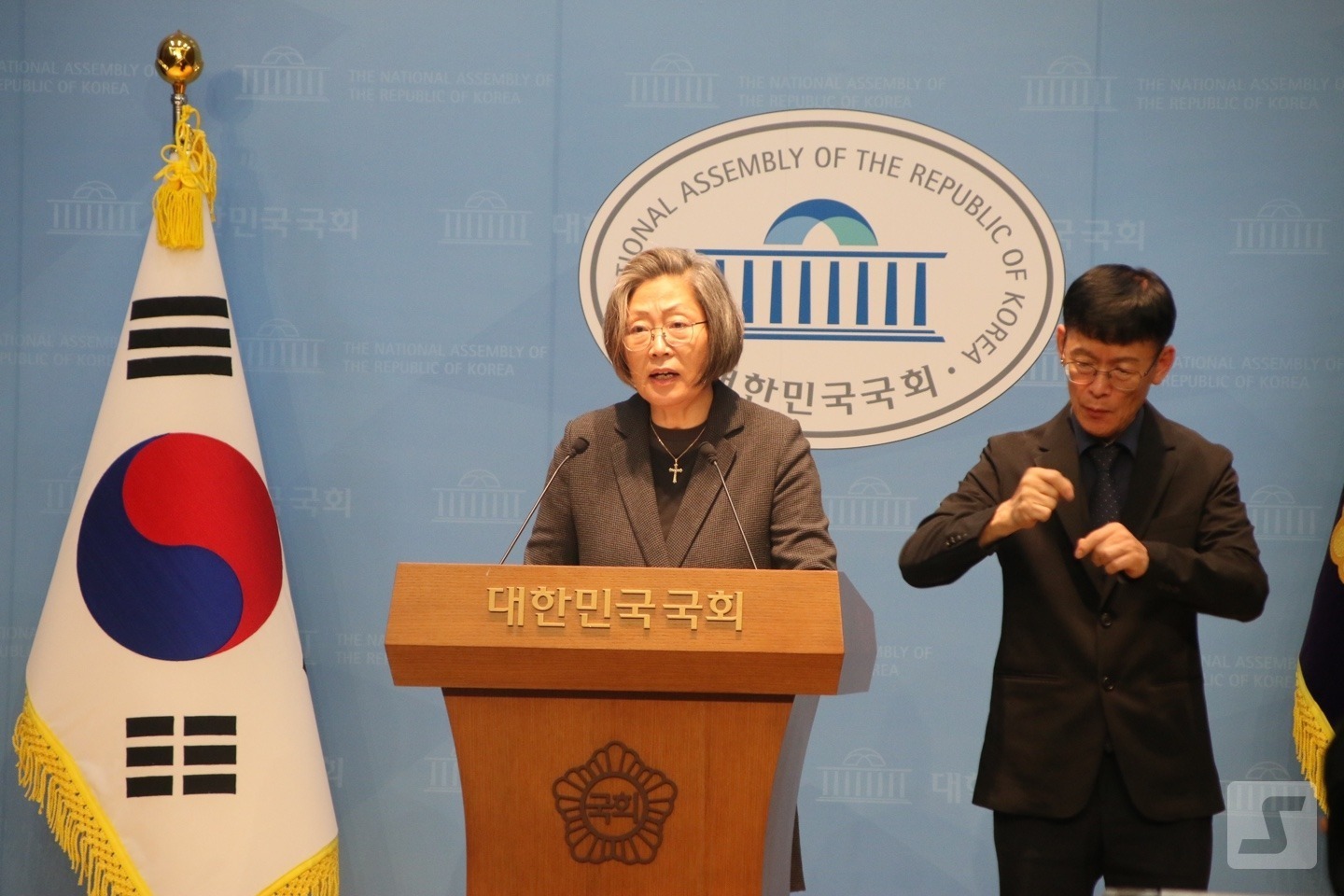
On the 20th, a ‘Public Hearing for the Establishment of Gyeonggi High Court’ was held in a small conference room on the first floor of the National Assembly Members' Building, jointly hosted by Rep. Jeong Mi-kyung (Grand National Party, Suwon Gwonseon) and Gyeonggi Province.
At this venue, experts including members of the regional legal community and scholars presented and discussed the feasibility of establishing a Gyeonggi High Court in Suwon.
Rep. Jeong Mi-kyung emphasized that establishing a Gyeonggi High Court in Suwon is “the best way to guarantee residents' access to judicial proceedings as well as to enhance the substance and efficiency of the right to petition for trial, while simultaneously resolving case backlogs at the Seoul High Court.”
Furthermore, Gyeonggi Province Governor Kim Moon-soo stated, “Gyeonggi Province has suffered disadvantages from Seoul metropolitan area regulations, and this applies to the legal services sector as well,” and added, “We will make efforts to establish a high court in the Suwon area and an appellate division outside courtroom in the Uijeongbu area.”
● “Establishment of Gyeonggi High Court Will Increase Various Benefits”
Choi Sun-ho, Vice President of the Suwon Bar Association, presented on the topic of ‘Grievances of Gyeonggi residents due to concentration of high courts in Seocho-dong’ and argued that various benefits would result from establishing a Gyeonggi High Court, based on the results of a public opinion survey jointly released by the Suwon Bar Association and Ajou University in 2006.
As of the end of 2007, the Seoul High Court's jurisdiction (Seoul, Gyeonggi Province, Incheon, Gangwon Province, etc.) has a population of 25.98 million, and the number of filed cases is 27,941.
This figure exceeds the combined population and filed cases of the four high courts in Busan, Gwangju, Daejeon, and Daegu (24.3 million people, 14,353 cases).
Vice President Choi pointed out that Gyeonggi residents are experiencing multiple grievances, including inconvenience in litigation due to traffic congestion as well as increased litigation costs and case volumes.
According to data released in 2006 from a joint research project between the Suwon Bar Association and the College of Law at Ajou University, 66.1% supported the establishment of a Gyeonggi High Court, showing overwhelmingly high approval.
In particular, opinion that the establishment of a Gyeonggi High Court would generate benefits exceeded a minimum of 60%.
Regarding regional development in Gyeonggi Province, 82.1% answered that it would be ‘helpful’; 85.2% said time savings and cost reduction for litigation-related parties would be helpful; and 81.1% said improved legal services would be helpful, showing overwhelming support for benefit generation.
Regarding the timing of establishment, 38.9% supported installation within 1-2 years, and 35.3% supported immediate installation, indicating that urgent establishment of a Gyeonggi High Court in Suwon is necessary.
Vice President Choi noted that 7.33 million people, representing 28% of the Seoul High Court's jurisdictional population, reside in the Suwon District Court's jurisdiction, and that appeals cases alone totaled 3,316 (as of end of 2007), representing a major cause of case backlogs at the Seoul High Court.
He stated, “If a high court were established based solely on appeals cases transferred from the Suwon District Court to the Seoul High Court, it would become the third-largest high court nationwide, following Busan,” and argued, “As the situation worsens in the southern Gyeonggi region (Osan, Pyeongtaek, Anseong, etc.), demands for establishing a high court will inevitably intensify.”
● “A High Court Should Be Established in Suwon, the Administrative Center of Gyeonggi Province”
Professor Oh Dong-seok of Ajou University School of Law presented on the topic of ‘Constitutional Appropriateness of Establishing a Gyeonggi High Court’ and asserted that “from the perspective of local autonomy and democracy, appellate courts (high courts) should be established on a district court basis.”
Professor Oh pointed out that Article 27, Paragraph 3 of the Constitution stipulates that ‘all citizens have the right to receive swift trials,’ and argued that “swiftness is the lifeblood of trials, and trial delays impose mental suffering and anxiety on the parties involved.”
He emphasized that Korea's court system is centralized and oversized, resulting in reduced efficiency of trials and accessibility from residents' residential areas, and that now is the time to consider the expansion of high courts in a trend of increasing appeal rates.
In other words, if establishing a new high court requires verification using objective indicators of ▲number of litigation cases ▲population ▲jurisdictional area ▲traffic conditions ▲regional characteristics, the Gyeonggi High Court in Suwon already possesses high court-level scale when compared with other high courts.
Additionally, he noted that the Suwon District Court, which is composed of one district court and six branches, accounts for 16.8% of appeals cases filed to the Seoul High Court, and argued that the establishment of a Gyeonggi High Court in Suwon is justified for sharing litigation duties.
Professor Oh Dong-seok emphasized, “The establishment of an appellate court is not a matter of regional self-interest, but rather a matter of local autonomy and decentralization, and furthermore, the realization of citizens' fundamental rights. It is reasonable to establish it in Suwon, the administrative center of Gyeonggi Province.”
Meanwhile, in July 2008, Rep. Jeong Mi-kyung and Rep. Won Yu-cheol each proposed ‘Amendments to the Act on the Establishment and Jurisdiction of Courts at All Levels,’ aimed at establishing a high court in the Gyeonggi region.
Loading comments…