


Welfare Ministry's Support for Multicultural Families is Desk-Bound Administration
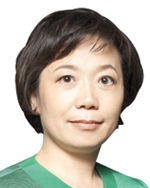
According to analysis data from Rep. Jeong Mi-kyung (Grand National Party, Kwonseon District, Suwon) released on the 13th, based on materials submitted by the Welfare Ministry titled 'Status of Implementation of Interpretation and Translation Services for Marriage Immigrants and Estimated Marriage Immigrants by Region,' Chinese-speaking marriage immigrants number 728 in Dongdaemun-gu, Seoul; 1,331 in Daejeon; and 3,341 in Ansan, yet no interpretation and translation service personnel are deployed in these areas.
Additionally, Rep. Jeong pointed out that service provision is imbalanced, with Indonesian language services in Dongdaemun-gu and Mongolian language services in Ganghwa County, Incheon having only one service user each, and Gumi City's Indonesian language service having only two users, despite service personnel being assigned to these areas.
According to Welfare Ministry data related to this matter, 59 interpretation and translation personnel are currently working at 38 multicultural family support centers nationwide, providing services in languages from 10 countries.
Rep. Jeong Mi-kyung stated, "When comparing the service languages with the current status of service users in each region, there are cases where the number of users in other languages exceeds the number of speakers of the assigned personnel's language," and added, "While more than 13 countries are recorded as origins of marriage immigrants in Korea, service provision languages are limited to 8 countries."
Rep. Jeong further asserted, "The government's multicultural family support policy continues to be characterized by desk-bound administration without consideration for reality, including the needs of service users. If it is difficult to allocate sufficient personnel with limited budget, alternatives need to be prepared, such as strengthening telecommunications services, to increase policy efficiency."
Loading comments…