


'Land of Opportunity' Western Suwon Needs KTX Station Attraction
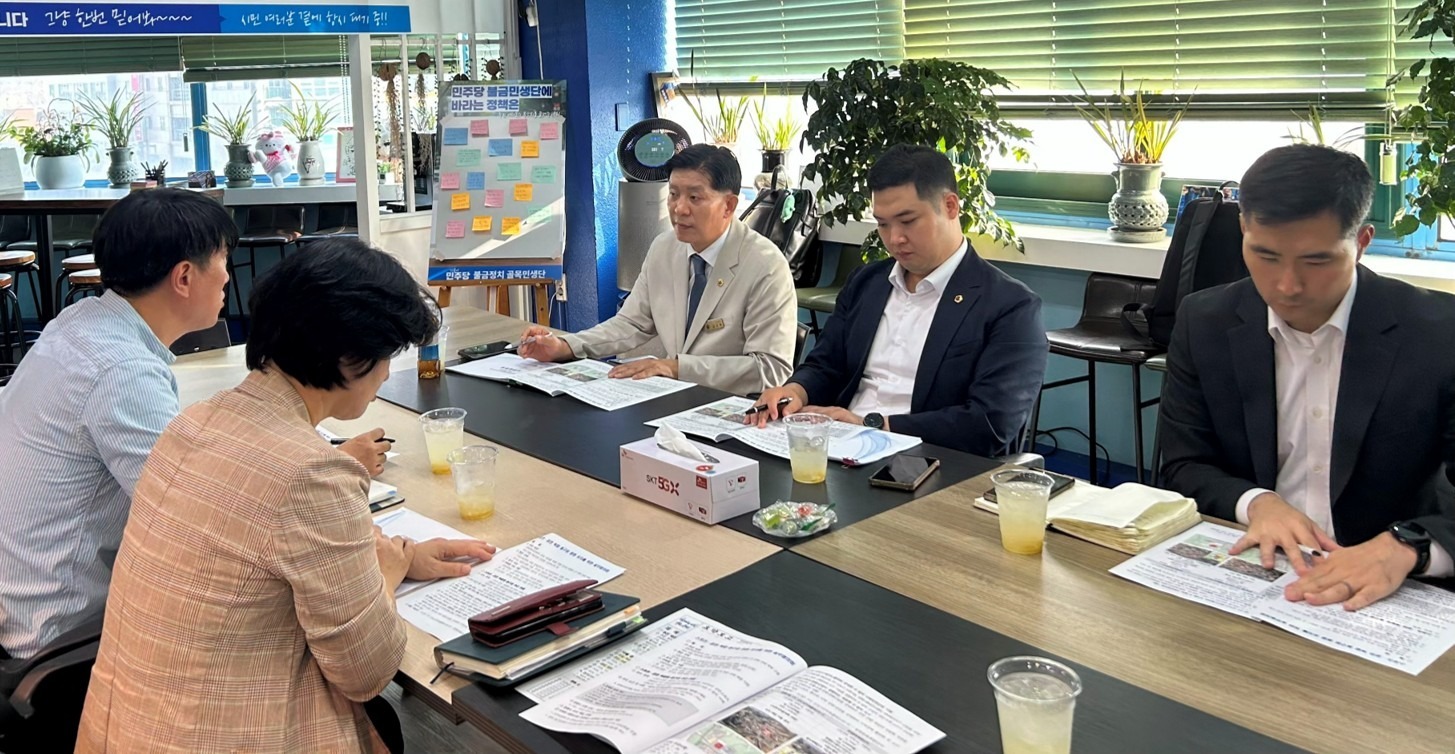
The 'Western Suwon Long-Term Development Plan' research group (hereinafter referred to as the Western Suwon Research Group) of the Suwon City Council announced research results conducted earlier this month to assess the potential of the Western Suwon area, establish long-term development strategies, and present mid-to-long-term development strategies for major districts.
Composed of Representative Park Jang-won and council members Kim Jin-woo, Kim Ho-gyeom, Kim Hyo-soo, Myung Gyu-hwan, Lee Yun-phil, Lee Jong-phil, and Hong Ki-dong, the research group conducted strategy analyses on the functions and structure of the Western Suwon area, spatial structure reorganization, and analysis of the impact of attracting the Suwon-Hwaseong High-Speed Railway Station (tentative name).
● Growth management zone adjacent to Hwaseong City... No restrictions on attracting companies
According to the research group, Western Suwon is a crucial hub for economic activities in the Seoul metropolitan area and is adjacent to the newly emerging Hwaseong City.
In particular, the presence of Hwaseong City, which belongs to the growth management zone, was highlighted as a characteristic that places no restrictions on new companies entering aside from large enterprises.
Additionally, the research group pointed out the potential for synergistic effects with leading universities and corporate research institutes in the Seoul metropolitan area.
Furthermore, as railroads concentrate such as the Su-In Line and Shinbundang Line extensions, the area is being analyzed as a relatively 'land of opportunity,' and the research group analyzed that it is necessary to attract a high-speed railway (KTX) station with Suwon, Hwaseong, and Ansan as the region in relation to the Shinbundang Line extension.
● Introduction of high-value-added wholesale and logistics functions like Dongdaemun Market
Regarding the functions that Western Suwon should possess in the future, the research group suggested examining the attraction of R&D-combined; advanced manufacturing industries centered on aircraft safety zones 5 and 6.
When combining corporate research institutes of large enterprises with research personnel from surrounding universities, it is expected to be comparable to Daejeon's Daedeok Research Complex.
Above all, the Western Suwon Research Group emphasized that Western Suwon possesses the potential to become a center of high-value-added wholesale functions.
In other words, with the Gyeongbu Line, the Dongtan-Bongdam expressway, and over 60,000 university students from 10 universities including Sungkyunkwan University and Suwon University within a 5-kilometer radius, the area possesses centrality and accessibility through low-rise, high-density spatial use that can create high added value similar to the Dongdaemun wholesale commercial district.
Along with this, the research group analyzed that it could also perform the function of 'Business Zone' through cross-industry exchange in manufacturing and exhibitions (conventions) to create added value.
In particular, assuming the relocation of the Air Force base, utilizing a site of approximately 10 million square meters (approximately 3 million pyeong), a 'Conventional Complex Zone' combining leisure and medical industry, education industry, urban agriculture and eco-experience agriculture would be possible, the group emphasized.
● Eco-experience agriculture and nature-friendly functions
The Western Suwon Research Group, in line with the growing demand for eco-friendly agriculture, also proposed introducing urban agriculture and eco-experience agriculture functions to the Western Suwon area.
In particular, following the relocation of the Rural Development Administration, the group proposed establishing an 'Eco-Agriculture Center' under the leadership of Suwon City on this site and developing it as a mecca for agricultural R&E; (research and development and education).
Additionally, the group also proposed the creation of citizen farms in the form of family farms providing garden plots to citizens.
Furthermore, the group proposed expanding nature-friendly leisure functions including the creation of ecological and leisure spaces centered on Hwanggujicheon and an Eco Bridge at Chilboshan (ecological corridor connection).
● Development method integrating new and old urban areas
Through the development of 'Conventional Complex Zone,' the group also proposed an 'integrated urban development' method to reorganize the downtown area with respect to new urban areas and old downtown zones.
The Western Suwon Research Group emphasized that the current new town development method has limitations such as rising real estate prices and unfair distribution of public funds, and that mutual development should be pursued by bundling new and old urban areas together.
Furthermore, the group proposed establishing green transportation axes and forest trail networks by connecting routes linking Hwanggujicheon and Seohocheon and expanding bicycle-only road routes spanning the Suwon Station-Homaesil-dong-Yonghwasa section.
Additionally, in accordance with new transportation structures such as the Shinbundang Line extension, Su-In Line, and the Bongdam-Taean Light Rail Transit line, the group also proposed reorganizing urban space, accommodating station area functions, and systematic residential functions.
● Attracting Suwon-Hwaseong High-Speed Railway Station
The Western Suwon Research Group analyzed that in the case of Gwangmyeong Station, the usage population is 1.42 million, concentrated in Seoul, and the Pyeongtaek candidate site also has only 1.1 million people.
On the other hand, the research group stated that the Suwon-Hwaseong Station candidate site in the Maesong-myeon Eocheon-ri area, where it meets the Seoul Metropolitan Circular Railway, has convenient transportation, abundant available land nearby, and is expected to have economic and R&D; ripple effects across the southern Seoul metropolitan area including Suwon, Hwaseong, and Ansan.
In particular, if the Seoul Metropolitan Circular Railway is connected to Incheon Songdo and Incheon International Airport in the long term, it is expected to contribute to enhancing national competitiveness.
● Need for 'Western Suwon Forum' through public-private-academic cooperation
The Western Suwon Research Group emphasized that future tasks include establishing detailed comprehensive plans and programs for Western Suwon, research and verification of urban functions, and implementation of 'green city planning' programs.
In particular, the group stressed that a 'Western Suwon Forum' should be established through public-private-academic cooperation for the development of Western Suwon, serving as a driving force for creating exemplary advanced city planning, relocating the Air Force base, implementing various urban development programs, and early implementation of metropolitan railways.
However, the situation is not simple as there are many variables that could affect the process of envisioning the development of Western Suwon, such as the Defense Ministry recently expressing an unfavorable opinion on the relocation of the Suwon Air Force base.
Regarding this, the Western Suwon Research Group pointed out that there are many uncertain variables such as the Suwon Air Force base, the use of green belt areas, and the utilization of relocation sites of public institutions, emphasizing that a rational land use strategy must be devised.
Loading comments…