[Special Planning] What Should You Eat When You Visit Suwon? Galbi, Roasted Chicken, Sundae, Braised Pork Feet... Full of Delights
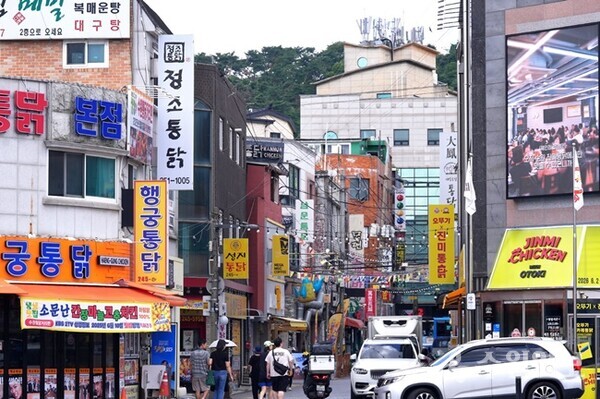
[News S=Reporter Jung Jun-sung] 'Travel and food' are inseparable. Whether domestic or international, food is an indispensable source of joy when visiting a destination. Food particularly carries the regional characteristics, history, and stories of the people who have lived there. Suwon's signature dishes are no exception. From premium foods suitable for entertaining guests to affordable popular dishes, desserts and coffee that lift your spirits—all contain diverse stories and lifestyles of Suwon. In observance of the '2026-2027 Year of Suwon Visits,' we introduce Suwon's food specialties for tourists and visitors.
◇Korea's Representative Galbi with Historical Significance and Distinctive Taste
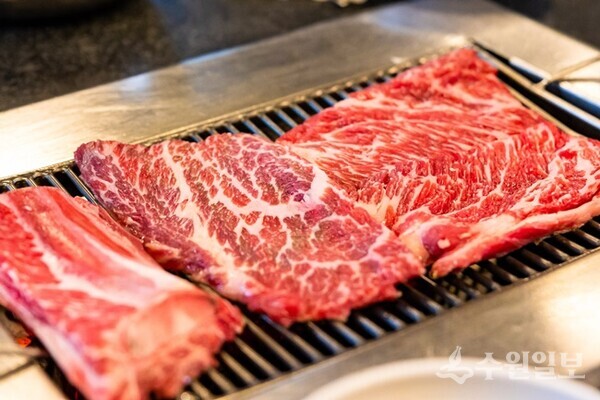
Above all, Suwon galbi is the signature food specialty, renowned for its historical significance and distinctive taste.
It is also counted among Korea's three famous galbi and represents the nation's representative cuisine.
Suwon galbi, the pinnacle of premium food for entertaining guests, is said to have originated from 'Hwa Chun Ok.'
Operating in Yeongdong Market since the 1940s, the restaurant gained fame after introducing grilled galbi, which became a frequent stop for the then-president in the 1960s.
Subsequently, numerous galbi restaurants emerged in Suwon from the 1970s onward.
King Jeongjo played a role in the thriving beef galbi food scene in Suwon.
As King Jeongjo constructed Hwaseong Fortress and established military farms in Suwon, cattle multiplied in the surrounding areas.
Subsequently, cattle markets formed and developed, allowing beef galbi food culture to flourish.
A distinctive feature of Suwon galbi is that it uses salt for seasoning rather than soy sauce.
Additionally, the galbi bones are cut larger than in other regions, earning them the nickname 'king galbi.'
Those who prefer enjoying the meat's natural flavor rather than relying on marinades favor it.
As it represents Suwon, galbi restaurants are scattered throughout the city.
Particularly, long-established large galbi restaurants are concentrated near business districts and tourist attractions.
Each establishment varies in marinades, cooking methods, and table settings.
To find Suwon galbi that best suits your palate, frequent culinary trips to Suwon are inevitable.
◇Meeting Chicken, the K-Food Representative, at Whole Chicken Street!
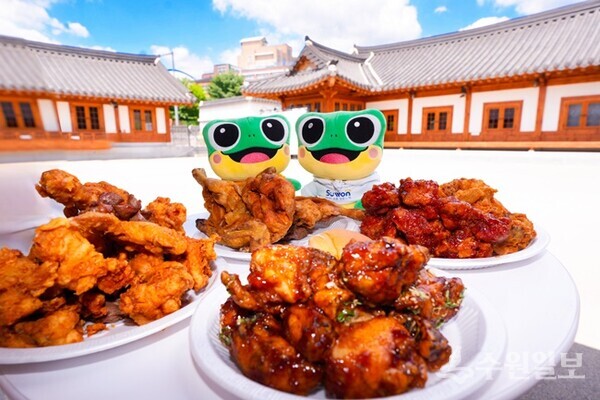
Whole chicken, recently gaining popularity as a K-food representative, boasts fame second to none as a Suwon specialty.
Suwon has a 'Whole Chicken Street' where whole chicken shops filling buildings two to three stories high become packed with customers during evening hours.
Suwon's Whole Chicken Street refers to a 100-meter-long alley connecting Jungjo-ro and Suwon Stream.
About 10 whole chicken shops cluster together in this short stretch, with no famous franchise outlets; most are independently operated stores.
Whole chicken restaurants bearing names derived from unique local place names continue a 50-year history, creating a new chapter in K-food history.
Menus at Whole Chicken Street establishments attract attention by prioritizing fundamentals over flashiness.
They feature fried and seasoned chicken as main offerings without relying on supplementary ingredients like separate sauces or cheese.
Options range from old-style whole chickens fried in large cauldrons to those boasting distinctive sauce flavors.
You can also select from diverse flavors—chicken famous for king galbi-style sauce, chicken flavored with curry powder, and more.
Particularly, the rustic paper pouch-shaped packaging evokes nostalgic memories.
Suwon City has initiated travel product development this year to revitalize Whole Chicken Street and brand Suwon as the city of chicken.
Working with the Korean Food Promotion Institute and Suwon Culture Foundation, the city is promoting culinary tourism activation and K-cuisine belt projects.
Programs including personal chicken-making experiences for domestic visitors and chicken road and chimaek (chicken and beer) experiences for foreigners are planned for operation in the latter half of the year.
◇Fame Shared with Citizens: 'Sundae, Braised Pork Feet, and Soup Rice'
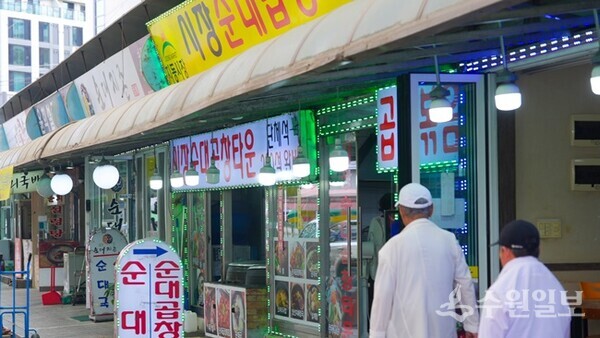
Sundae, braised pork feet, and soup rice—affordable dishes enjoyed casually—are also representative Suwon specialties.
Notably, these popular foods with generous portions, beloved by everyday people, are concentrated around traditional markets.
Jidong Market, among markets near Paldalmun Gate, the south gate of Hwaseong Fortress, is famous as Sundae Town.
Jidong Market, with tile-roof-shaped signage catching the eye, houses dozens of affordable restaurants selling sundae and stir-fried sundae and offal.
Various ingredients mixed on an iron plate make you wonder when you'll finish, but as you eat, you inevitably end up stir-frying rice with the craving—such is its addictive charm.
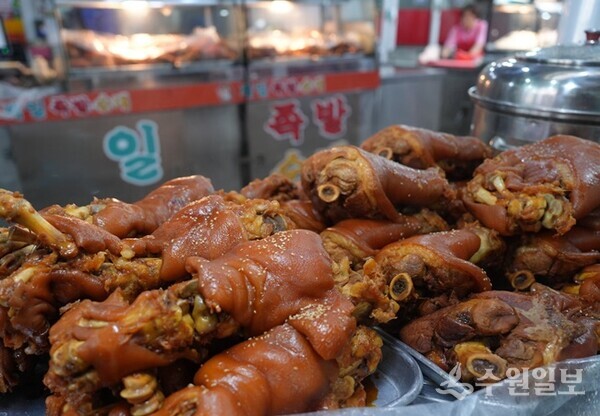
Gwonseon Comprehensive Market is equally special, where chewy 'braised pork feet' seem to hold a competition for which looks more appetizing.
Gwonseon Comprehensive Market, a building-type traditional market, features 110 shops selling various goods.
Particularly, many food vendors sell sundae and braised pork feet.
Steaming braised pork feet freshly boiled in the shops stimulate passersby's appetites.
Soup rice varieties, long considered men's comfort food despite being piping hot yet providing a refreshing sensation, now captivate audiences across all ages and internationally. Suwon has renowned soup rice restaurants throughout.
The Younghwa-dong area, near Jangamun Gate, formerly a gateway to Hwaseong Fortress surrounded by bars, is famous for its long-established soup restaurants.
Moreover, soup rice specialty shops are easily found near Suwon Station and in Ingye-dong, where younger demographics gather.
◇A Special Meeting of Sweet Desserts and Fragrant Coffee
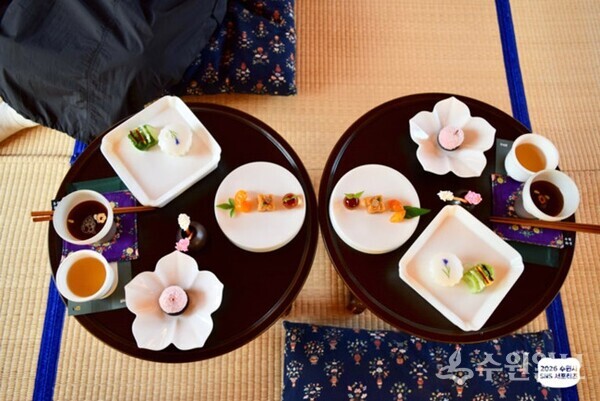
Despite overflowing fullness from Suwon's diverse restaurants, dessert-loving tourists must definitely visit Suwon.
Specialty food souvenirs crafted with regional flavors and designs satisfy visitors.
Suwon has long been known for unique snacks.
Suwon yakgwa is made from flour, sesame oil, and honey.
Tea sets including Suwon yakgwa, enriched with pine nuts and sesame for deeper taste and nutrition, can be experienced near Hwaseong Palace.
Beyond this, sand cookies featuring designs stylized after Paldalmun Gate, Hwaseong's south gate, are also popular.
Bread filled with whole walnuts and whole red beans, shaped like western-style pastries, make perfect souvenirs to commemorate and share memories of visiting Suwon.
Experiencing Suwon's unique coffee brands is also recommended.
Suwon features regionally-based cafes operating under proprietor-founded brand names.
A notable example is a cafe brand that expanded from Haenggung-dong to eight locations driven by affection for Suwon.
A cafe brand operating eight shops in the Sindong Cafe Street area is also prominent.
Coffee culture-leading brands from over 20 years ago in Suwon—such as those featuring drip-bag products inspired by Hwaseong's four gates—can be found throughout the city.
Meanwhile, Suwon City selected 100 restaurants through external agency recommendations, on-site visits, and surveys to strengthen culinary tourism competitiveness and revitalize the local economy.
Lists can be accessed on the Suwon Tourism Information App 'Touch Suwon.' Detailed information is also searchable in English, Japanese, and Chinese.
A Suwon City official stated, "Thanks to Suwon merchants' dedication in steadfastly maintaining traditional markets and alley commerce, Suwon boasts abundant culinary tourism," adding, "We will continue developing diverse tourism content linked to restaurant tours to inject vitality into the local economy."