


Hwaseong Special City Crosses 15-Year Threshold...Administrative Revolution Begins with Four District Offices
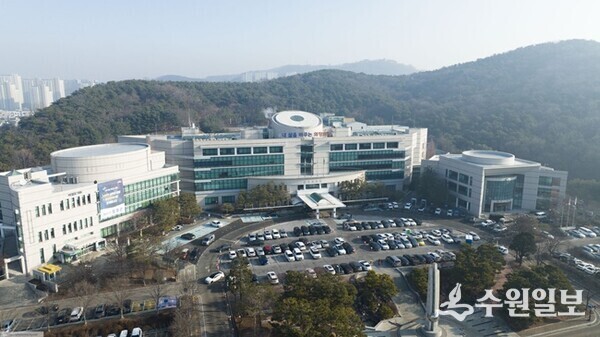
[Suwon Ilbo=Reporter Park Chan-hyuk] Hwaseong Special City officially received approval from the Ministry of the Interior and Safety on the 22nd of last month to establish four general-purpose districts, now standing at the threshold of a major transition to a citizen-centered administrative system.
This approval represents an achievement realized after 15 years of repeated challenges, policy shifts, and setbacks since the city's population exceeded 500,000 in 2010. It is evaluated as a milestone that transcends a simple administrative division reorganization and marks a historic turning point in Hwaseong's administrative history.
Until now, the government maintained a cautious approach toward establishing general-purpose districts under the policy direction of "smaller government" and responsibility town/township/neighborhood system, while Hwaseong had to manage rapidly expanding urban demands amid the suspension of alternative systems and changing policy directions. In particular, the central-government-focused administrative system revealed limitations in addressing the city's vast area, rapidly increasing population, and increasingly complex civil petition demands.
Following the start of the eighth elected administration, the city designated the establishment of general-purpose districts as its top priority, created a "Special City Promotion Task Force," and systematically undertook substantive procedures including research projects, citizen briefing sessions, name selection contests, and assembly resolutions. Through cooperation with local National Assembly members, provincial and city council members, and civil society organizations, and persistent persuasion of relevant agencies including the Ministry of the Interior and Safety and the National Assembly, the establishment of general-purpose districts was finally confirmed for August 2025.
The city is accelerating preparations for the opening of four district offices—Manseong-gu, Hyohaeng-gu, Byeongjeom-gu, and Dongtan-gu—targeting February 1, 2025, by determining administrative boundaries, organizing structures, delegating affairs, and securing temporary offices. An administrative system centered on citizens' living areas is set to commence full operation.
Sanitation, Culture, and Sports Sectors: "Civil Petitions Resolved Quickly at Nearby District Offices"
When district offices open in February, citizens will be able to conveniently process various sanitation licensing petitions that previously required direct visits to city hall or branch offices within their living areas.
△Food and public health business licensing △Issuance of culinary and beauty licenses △Management of children's food safety protection zones will transition from the existing "city hall-concentrated" administration to "living area-distributed" administration, significantly reducing the time required from business startup preparation to license management.
Cultural content industry licensing will also be processed at district offices, allowing self-employed workers and creators in businesses closely related to citizens—such as karaoke rooms, video screening rooms, PC rooms, and publishing houses—to resolve civil petitions more quickly, with site inspections and guidance available in real-time.
Additionally, sports facility-related petitions will be resolved one-stop within living areas. Applications for outdoor sports facility use, safety inspection requests, and participation in community sports programs will be possible with "a single visit to the district office," improving both administrative accessibility and service satisfaction.
Development, Construction, and Park-Greening Sectors: "Civil Petitions Processed Within 30 Minutes...Reducing Administrative Distance and Saving Time"
Complex licensing petitions that previously required 2-3 hours of round-trip travel to city hall can be processed swiftly within 30 minutes after district offices open.
In particular, △land transfer applications △cadastral resurvey △real estate transaction reports △finding ancestral land and other real estate-related petitions can be directly received at district offices with results confirmed quickly. This provides significant administrative convenience to elderly residents and rural area residents.
Construction permit procedures will also be dramatically simplified. △Permits for buildings of six stories or less △Reports of temporary buildings △Building ledger maintenance △Demolition and deletion reports can be immediately processed at district offices, significantly reducing time and cost burdens on small construction contractors and local residents. This is expected to have particularly high impact in urban outskirts and rural areas where small-scale construction petitions frequently occur.
The parks and greening sector will also undergo major reorganization centered on "living areas." District offices will handle △forest fire prevention and suppression △street tree maintenance △removal of trees threatening disaster △forest illegal activity enforcement, enabling faster response to citizen inconvenience than before.
In particular, initial disaster response time will be shortened, contributing to securing citizen safety.
Health and Welfare Sectors: "Receiving Health Care and Welfare Benefits at Nearby Locations"
Existing health centers numbered only three, with many citizens experiencing inconvenience in basic services such as medical treatment, preventive vaccinations, and health screenings due to distant locations.
With district office openings, health centers will be established in Manseong-gu, Hyohaeng-gu, Byeongjeom-gu, and Dongtan-gu, enabling close-contact health policies tailored to regional characteristics and residents' health needs.
For example, Manseong-gu will strengthen chronic disease and emergency medical response centered on elderly and rural residents; Hyohaeng-gu will enhance walking programs linked with universities and health promotion projects; Byeongjeom-gu will provide specialized health services utilizing historical and cultural resources; and Dongtan-gu will strengthen customized childbirth and childcare policies for youth, increasing generational engagement.
As welfare administration shifts from city hall-centered to district office-centered, △child allowances △childbirth support funds △disabled person pensions and other major welfare benefits can be applied for and received swiftly near residents' homes. Citizens with limited mobility—such as elderly persons, persons with disabilities, and parents caring for children—will directly experience benefits most immediately.
In particular, with the establishment of a "three-tiered welfare administration system" connecting city hall, district offices, and towns/townships/neighborhoods, coordination between policy formulation and field implementation will be strengthened, realizing comprehensive welfare services without gaps.
Expansion of childcare centers and installation of Hwaseong-style child-raising facilities will also be operated within living areas, with enhanced engagement across the entire welfare system anticipated.
Industry, Agriculture, and Transportation Sectors: "Regional Economy and Daily Commuting All Become Closer"
With industry and economic petitions also processed at district offices, citizens' and self-employed workers' petition accessibility will improve dramatically. In particular, △weighing device inspection △tobacco and telecommunications sales business reports △employment agency registration, changes, and closure reports will be processed one-stop at the relevant district office, improving practical efficiency through reduced waiting times and simplified procedures.
In the agriculture sector, △agricultural chemical and fertilizer distribution management △seed and origin labeling and other operations-focused agricultural administration will be transferred to district offices. Farmers will no longer need to travel long distances to city hall and can directly view necessary petitions, receive guidance, and resolve matters at their respective district offices.
Pet-related administration will also shift to a life-centered approach. Hygiene and management inspections of animal hospitals, pet grooming businesses, and exhibition businesses will be conducted directly by district offices, with improved petition response speed and service quality expected as pet-owning households increase.
Meanwhile, Hwaseong City is also reorganizing public transportation networks coordinated with temporary offices as part of the district office opening plan.
Urban areas such as Byeongjeom-gu and Dongtan-gu will maintain and supplement existing routes, while areas with relatively insufficient public transportation—Manseong-gu and Hyohaeng-gu—are reviewing accessibility improvement measures including △introduction of new routes △expansion of service frequency, with both district office accessibility and convenience of in-regional mobility expected to be strengthened.
In particular, route adjustments and service expansion are being reviewed to improve accessibility from areas such as Namyang-eup, Joam, Bifong, Maesong, and Jeongnam, with sequential implementation of future demand forecasting, budget allocation, and transportation operator selection procedures.
Mayor Jeong Myeong-geun stated, "The establishment of general-purpose districts is not simply a matter of dividing administrative jurisdictions, but rather a new starting point for providing faster and more attentive administrative services closer to citizens' daily lives," adding, "Various civil petitions that previously required long trips to city hall, administrative procedures that took considerable time, and welfare and health services that were difficult to access will now be resolved directly within citizens' living areas."
He continued, "This is a change Hwaseong must rightfully make for its citizens, and it is a commitment to move administration first so that each citizen's life becomes more convenient, safer, and able to move in a better direction," emphasizing, "We will do our best to realize administration that is close to citizens, reduces their inconvenience, and transforms their lives."
He added, "In line with the government's direction of 'capable administration centered on the people and field operations,' Hwaseong Special City will implement substantive autonomous administration that draws closer to citizens' lives."


Loading comments…