


Gyeonggi Province Selects Three Candidate Sites for Gyeonggi International Airport: Hwaseong Hwaseong Lake Reclaimed Land, Pyeongtaek Seotanmyeon, and Icheon Mogamyeon

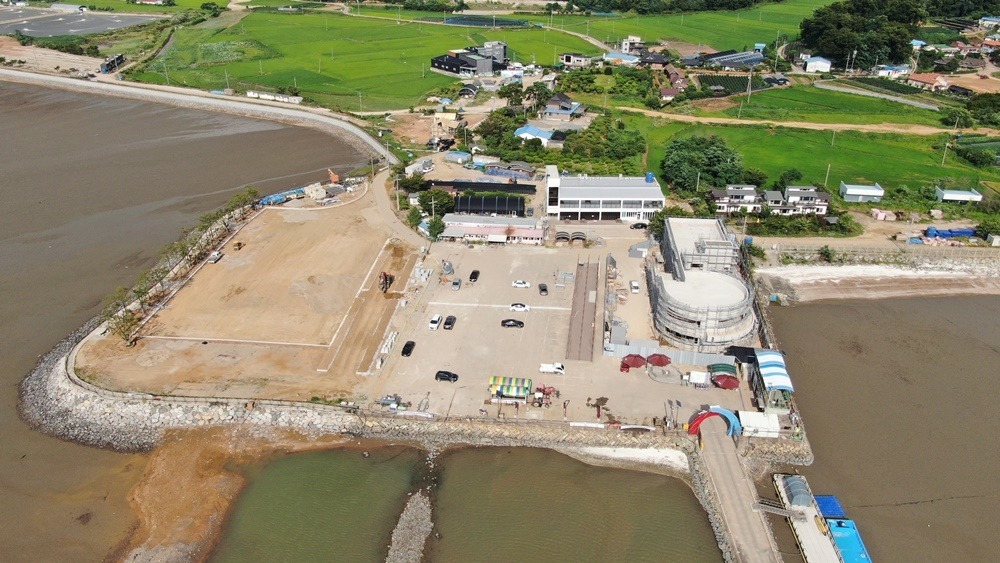
[Suwon Ilbo=Reporter Kim Gap-dong] Gyeonggi Province has selected the Hwaseong Lake reclaimed land in Hwaseong City, Seotanmyeon in Pyeongtaek City, and Mogamyeon in Icheon City as candidate sites for the construction of Gyeonggi International Airport.
On the 8th, the province announced the results of the research project on "Vision and Implementation Plan for Gyeonggi International Airport Construction," revealing multiple candidate sites for airport construction and future promotion plans.
■ Three Multiple Candidate Sites Selected
The selection process first identified five cities and ten regions within the province as primary candidate sites, considering airspace (space to ensure safe aircraft operations), noise levels, and through terrain maps and field surveys.
Subsequently, applying international standards from the International Civil Aviation Organization (ICAO) and the U.S. Federal Aviation Administration (FAA), location suitability was reviewed for all ten regions considering airspace, weather, obstacles, noise, accessibility, and expansion potential.
Three regions were selected as multiple candidate sites after comprehensive review including regional balance and economic efficiency considering the purpose of future recruitment. Based on airport site area of 2.7 million square meters and one runway of 3,200 meters, all three candidate sites were analyzed to secure economic feasibility with a benefit-cost (B/C) index of 1.0 or higher.

■ Necessity of Gyeonggi International Airport Construction
This research showed that Gyeonggi International Airport has sufficient competitiveness due to latent passenger demand and increased high-tech industry air cargo, and can serve as an alternative to address limitations of existing airports in the Seoul metropolitan area.
The province projects that the total population will increase to 14.79 million by 2040 due to increases in the productive population with high air travel usage. Although approximately 34% of Incheon International Airport and Gimpo International Airport users are Gyeonggi Province residents, the province lacks airports, resulting in an average 1 hour and 22 minutes of travel time to reach airports.
Additionally, Gyeonggi Province is concentrated with high-value-added industries suitable for air cargo transportation. A significant increase in air cargo demand is expected with the development of high-tech industrial complexes. In particular, the world's largest semiconductor mega-cluster with 622 trillion won in investment through 2047 is scheduled to be developed in southern Gyeonggi Province. Air cargo accounts for 28% of the national total by weight ('23) and 36% by value ('23), securing sufficient air logistics demand.
Based on air demand analysis, assuming airport opening in 2035, sufficient demand is projected for 17.55 million passengers and 350,000 tons or more of cargo by 2065, thirty years later.
Meanwhile, major metropolitan areas worldwide such as New York and London operate three or more airports, contributing to the formation of global economic and cultural spheres. The construction of Gyeonggi International Airport can be expected to create synergy effects with Incheon and Gimpo International Airports. Additionally, despite the fourth phase expansion of Incheon International Airport, facility saturation expected by 2035 and flight restrictions due to the border with North Korea could be effectively addressed by Gyeonggi International Airport.

■ Hinterland Development Direction and Future Plans
The hinterland development direction is "construction of an airport economic zone centered on high-tech industries." The province plans to strengthen the competitiveness of high-tech industries such as semiconductors and mobility concentrated mainly in southern Gyeonggi Province and construct an airport economic zone where surrounding areas can develop in connection.
Detailed strategies include promoting the designation of a free economic zone near the airport to establish it as a global cutting-edge strategic industry hub. Each candidate site will be specialized in strategic industries according to its characteristics: Hwaseong City in mobility, and Pyeongtaek City and Icheon City in the semiconductor industry.
Additionally, an airport complex city will be developed in the airport area to activate aviation industry including aircraft maintenance centers (MRO) essential for airport operations. Hinterland will be developed with logistics and industrial complexes, research centers, international business districts, and MICE facilities to lead new growth in Gyeonggi Province.
Furthermore, a regional transportation hub including roads, railways, and urban air mobility (UAM) will be established centered on the airport to strengthen connections with existing major cities and industries. For sustainable development, an eco-friendly airport and hinterland based on RE100 will be constructed.
Going forward, Gyeonggi Province plans to pursue recruitment through sufficient consultation with related local governments after developing hinterland development plans.
Follow-up research projects will be undertaken to establish airport hinterland development strategies, fully reflecting diverse opinions of local governments and residents through town meetings. Strategies for advanced industry specialization, airport complex city development, and transportation network planning tailored to each candidate site will be specified, and comprehensive incentive support measures will also be prepared.
Additionally, measures will be developed to address residents' concerns that may arise during airport and hinterland development processes such as noise and altitude restrictions, and communication with local governments and residents will be strengthened.
Han Hyun-soo, head of the Gyeonggi International Airport Promotion Task Force, said, "Starting with the announcement of candidate sites, we will ensure that the Gyeonggi International Airport is promoted as an airport built together with provincial residents."


Loading comments…