


Gyeonggi Province Introduces 'Fair Trade Self-Compliance Program' for Public Institutions

[Suwon Ilbo=Reporter Park No-hun] Gyeonggi Province is promoting the adoption of the 'Fair Trade Self-Compliance Program (Compliance Program, hereafter CP)' for public institutions under its jurisdiction.
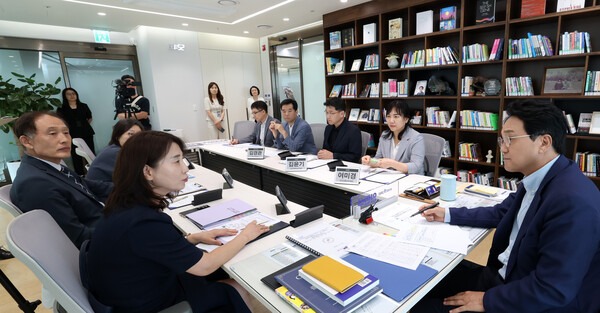
Gyeonggi Province held roundtable discussions with public institutions under its jurisdiction on the 20th and 21st, and officially recommended the adoption of the 'Fair Trade Self-Compliance Program (Compliance Program, hereafter CP)' on the 25th.
CP refers to an internal compliance system regarding education and supervision that enterprises voluntarily adopt and operate to comply with fair trade-related laws and regulations.
Gyeonggi Province plans to introduce a fair trade self-compliance program across institutions and enterprises in the province, and prior to full-scale implementation, it recommended CP adoption to public institutions that maintain numerous transaction relationships with partner companies and subcontractors, the province explained.
This is also related to Governor Kim Dong-yeon's promise of 'preventing burden transfer to subcontracting companies by strengthening ESG (Environment (E), Society (S), Governance (G)) management.' The CP system can be utilized in the Society (S) aspect of fair competition, Governance (G) aspects of anti-corruption, and compliant management in ESG evaluation.
Accordingly, the province plans to provide incentives such as reflecting evaluation factors for public institutions that proactively adopt CP.
For private enterprises in the province, the province plans to not only provide expert consultation for establishing CP elements but also grant extra points in enterprise support selection programs when adopting the system.
Any Gyeonggi Province resident who needs additional information or education on CP can use the online content within the Gyeonggi Province Lifelong Learning Portal (GSEEK).
Heo Sung-chul, Director of the Fair Economy Division of Gyeonggi Province, said "Provincial public institutions, as major contractors of public projects in the province, need to play a leading role in complying with fair trade regulations," and added "To this end, we will proactively promote CP adoption in provincial public institutions and will further expand the adoption of the system to private enterprises in the future."
Meanwhile, the Fair Trade Commission introduced the CP system in 2001 to overcome the limitations of market order establishment that relied only on government law enforcement, and is supporting the adoption of the fair trade self-compliance program in accordance with 'Regulations on the Operation of Fair Trade Self-Compliance Program and Incentive Provision, etc.' to activate the system.
The Fair Trade Commission operates a grading evaluation system for enterprises and institutions that have established and operated the eight adoption requirements, and grants benefits such as exemption from ex officio investigations to companies rated grade A or higher.
The eight requirements are ▲Establishment and implementation of CP standards and procedures ▲Executive commitment and support for self-compliance ▲Appointment of self-compliance manager to oversee CP operation ▲Production and utilization of self-compliance manual ▲Continuous and systematic self-compliance education ▲Establishment of internal monitoring system ▲Disciplinary action against employees violating fair trade regulations ▲Effectiveness evaluation and improvement measures, etc.

Loading comments…