


Suwon Mayor Yeom Tae-young: "Welfare Grand Compromise Means Providing Welfare Tailored to Each Region"

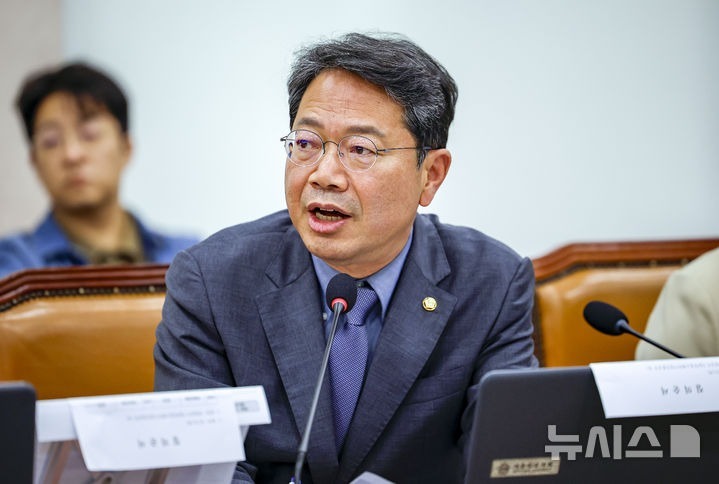
[Suwon Ilbo=Reporter Seo Dong-young] Yeom Tae-young, chairman of the Council of Mayors and Governors of Korea and Suwon Mayor, who has been active as an "advocate for local autonomy," held a discussion with Professor Lee Sang-ee of Jeju National University, who has charted a path for the welfare state, and Professor Jung Jae-hwan of Sungkyunkwan University, a broadcaster who recently settled in Suwon.
The Council of Mayors and Governors of Korea and Suwon City held a "Welfare Grand Compromise Talk Concert" on the 18th at 4 p.m. in the Event Hall of the Suwon Convention Center in front of approximately 300 audience members, including regional opinion leaders, social welfare facility workers, and general citizens.
The talk concert was structured around familiar key terms that could help explain and understand the welfare grand compromise. First, with the keyword "Waste or Investment," Professor Lee Sang-ee raised the question: "At a time when welfare spending in our country is increasing, structural adjustment is necessary to implement sustainable welfare."
In response, Chairman Yeom Tae-young introduced: "Out of 226 basic local governments across the country, 202 agreed that an orderly welfare guideline is necessary, which is why the Special Committee on Welfare Grand Compromise was formed."
With the keyword "Multiple Choice," issues with uniform administrative systems were pointed out. Chairman Yeom Tae-young stated: "The administrative system that combines counties with a population of 50,000 and cities with 1 million people as equal units does not provide room for autonomy and customized administrative services." He added: "To improve welfare, the uniform administrative system must be reformed."
He explained: "For welfare projects implemented by the central government, such as basic pension and child allowance, the project costs are matched with basic local governments, so we must bear the cost of projects in which we did not participate in decision-making." He continued: "This results in a problem where basic local governments with low financial independence have fewer available resources to implement distinctive welfare projects tailored to their regions."
Professor Lee Sang-ee stated: "Local governments cannot implement welfare that directly resonates with people, resulting in citizens not being happy." He added: "Rather than selective welfare, we must instill the belief among taxpaying citizens that their taxes return to them, so that realistic universal welfare can be achieved."
The third keyword was "Jajangmyeon" (Chinese-style noodles). Regarding the budget structure of local government welfare projects, in which government-mandated tasks account for 90 percent, Chairman Yeom Tae-young said: "It's like ordering jajangmyeon and asking the delivery person to add money." He gave an example: "In the case of Busan Buk-gu Office, which suffers from distorted budgets due to matching costs for welfare projects, leading to shrinking self-directed projects and insufficient personnel costs, it has even reached the point where they appeal to having become a subordinate agency of the Ministry of Health and Welfare."
Chairman Yeom Tae-young stated: "Our society is in an unsustainable situation due to serious low birth rates. It is time to devise solutions to overcome the crisis we face." He added: "Next year's general election, where we can select politicians who take responsibility, is the golden opportunity for our society."
Furthermore, the limitations of government-mandated tasks, where local governments merely execute regulations set by the central government, resulting in ambiguous authority and responsibility and ultimately leading to "ping-pong" and "silo" administration, were highlighted through the keyword "Piling On and On."
Professor Lee Sang-ee introduced survey results showing that in Denmark, the entity that receives the overwhelming trust of citizens is not family but government. He elaborated: "When the roles of the central government and local government are clearly defined by law, and authority and responsibility are granted to local government, trust in government increases."
Chairman Yeom Tae-young, citing the example of Suwon City, shared the reality: "The social welfare department is considered an arduous and unpopular department. Even when beneficiaries' situations are difficult, we have no choice but to focus on exclusion and disqualification according to rules from the center rather than active support, which sometimes leads to accidents and incidents."
He further stated: "Satisfactory welfare systems require implementing welfare that matches field judgment and simplifying procedures." He emphasized the need for localized welfare projects, such as housing welfare support provided by Suwon City to families in crisis and multi-child families.
Chairman Yeom emphasized that the main agenda of the welfare grand compromise is for the state to provide welfare universally to the people, while local governments provide necessary welfare to vulnerable groups left in blind spots. In other words, there is a need for criteria to distinguish between projects the state must perform and those local governments should perform.
The final keyword was "Welfare Grand Compromise." Professor Lee Sang-ee stated: "The topic of welfare grand compromise must be publicized, and it should become an important benchmark for acquiring political citizenship."
Professor Jung Jae-hwan said: "The topic raised by the welfare grand compromise is not merely a matter for the political sphere but is directly connected to the lives of ordinary citizens like us."
Chairman Yeom Tae-young once again emphasized the welfare grand compromise, which means sharing authority and responsibility. He stated: "The welfare grand compromise is about properly distinguishing between welfare projects that the central government can perform better and those that local government can carry out more effectively, and clearly defining responsibility." He added: "As a local government, we will make efforts to improve the level of social services in our region."



Loading comments…