


Gyeonggi-type Carbon Neutral Industrial Complex · Formation of 120 Billion Won Carbon Neutral Fund

[Suwon Ilbo=Reporter Park No-hun] Gyeonggi Province will establish five or more Gyeonggi-type carbon neutral industrial complexes by 2030 and operate a carbon neutral fund worth 120 billion won, implementing 'Gyeonggi Province Carbon Neutral Leading Project' to proactively respond to the climate crisis.
Jo Myung-rae, former Minister of Environment and co-chair of Gyeonggi Province's Special Committee for Climate Response and Industry Conversion, Kang Geum-sil, chairperson of Earth and People, Park Sung-nam, director of the province's Environment Division, and Jung Do-young, Economic Planning Officer, held a joint press conference at Gyeonggi Provincial Government on the 22nd to announce the 'Gyeonggi Province Carbon Neutral Leading Project' containing these details.
The Special Committee, composed of experts from various fields including climate, energy, environment, and economy and industry, was launched in June and is working to develop Gyeonggi Province's vision for transitioning to a zero-carbon society and strategies for responding to the climate crisis.
Co-Chair Kang Geum-sil stated, "Since President Moon Jae-in declared 'carbon neutrality' in October last year, there have been significant changes, including the government's '2050 Carbon Neutral Scenario' and the National Assembly's enactment of the 'Framework Act on Carbon Neutrality and Green Growth for Climate Crisis Response,'" adding "In this era of transformation, we have proactively prepared the 'Gyeonggi Province Carbon Neutral Leading Project' to offer new hope."
Looking at the main contents, the province will promote 13 detailed strategy tasks centered on two key implementation tasks: industrial green transition and expansion of renewable energy based on resident participation, under the vision of 'transition to a fair green economy for carbon neutrality.'
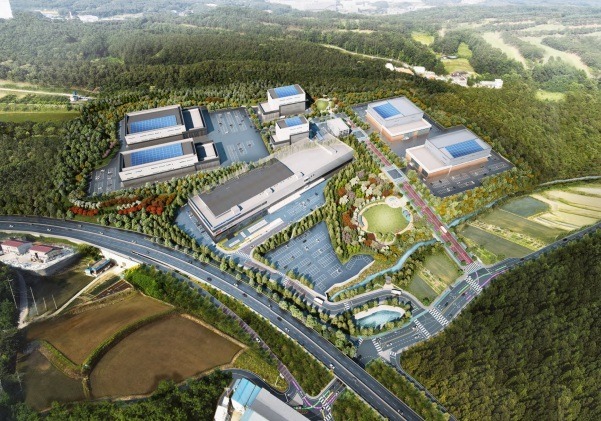
Regarding the first key task of industrial green transition and support, the province decided to establish five or more Gyeonggi-type carbon neutral industrial complexes by 2030.
This is a project that supports low-carbon process improvement through the distribution of eco-friendly facilities and technology, a representative specialized project of Gyeonggi Province that gives meaning to the transition to decarbonization in the development, operation, and management paradigm of industrial complexes, the largest concentration of enterprises.
To this end, the province will launch pilot projects to develop a Gyeonggi-type carbon neutral industrial complex model targeting one newly planned industrial complex of approximately 60,000 square meters and existing industrial complexes of 600,000 square meters.
The province is currently discussing preliminary preparation procedures, including concluding business agreements with related cities and counties, public institutions, and enterprises.
Additionally, the province will establish and operate a carbon neutral fund totaling 120 billion won over the next five years starting in 2022.
Based on this, the province plans to proactively discover and actively invest in carbon neutral promotion companies in the province, first establishing 300 billion won through 6 billion won of government contributions next year and 24 billion won from private investment, then gradually expanding the scale.
In addition, ▲'Low-Power Semiconductor Design Workforce Development Project' that aims to reduce carbon emissions and create jobs in connection with Gyeonggi Province's representative semiconductor industry ▲'Construction of Waste Plastic Resource Circular Economy' through public-private cooperation and win-win relations between large and small-medium enterprises will be implemented.
For the second key task of resident awareness change and expansion of revenue-sharing renewable energy, the province will implement solar power generation projects using public land, RE100 (a campaign to supply 100% of electricity used as renewable energy) 100,000 household movement to guarantee basic renewable energy rights, and others.
First, by 2030, the province will establish new renewable energy production infrastructure of 1GW (gigawatt) through the RE100 100,000 household project, which supports installation costs for energy complex-type and single-family solar power generation facilities.
These projects are expansions of projects the province has been promoting as part of its Green New Deal policy, and the electricity generated through 1GW of power generation facilities is an amount that approximately 320,000 households, based on households consuming 300kWh per month, can use for one year.
In addition, Gyeonggi Province's public institution RE100 practice declaration will be conducted, committing to supply 100% of electricity used by 72 public institutions directly managed by the province through renewable energy.
Furthermore, ▲relay 'Gyeonggi Forest' project to create forests on unused provincial land where residents directly plant and manage trees donated by enterprises ▲early establishment of Gyeonggi Province Carbon Neutral Support Center ▲greenhouse gas emissions map production and inventory establishment project ▲renewable energy resource map construction and investment brokerage center operation to promote private investment ▲Gyeonggi Province-city and county renewable energy target agreement to discover customized renewable energy supply models for 31 cities and counties ▲establishment of renewable energy one-stop service support system to improve resident acceptance of renewable energy are planned to be promoted.
Along with the announcement of the 'Gyeonggi Province Carbon Neutral Leading Project,' Gyeonggi Province also announced the province's future policy direction and plans for realizing 2050 carbon neutrality.
To effectively implement the government's '2050 Carbon Neutral Scenario' confirmed on October 27 and the 2030 National Greenhouse Gas Reduction Target, the province will build a close cooperation system with the central government and establish a '(tentative name) 2050 Gyeonggi Province Carbon Neutral Master Plan' by 2022 to link with government policy.
Additionally, the province will compose a local committee under the Carbon Neutral Basic Act to reflect private carbon neutrality capacity in actual policy, supplementing substantive authority and policy functions for deliberation, resolution, and implementation inspection, while also enacting a '(tentative name) Gyeonggi Province Carbon Neutrality and Green Growth Basic Ordinance' by the first quarter of next year to provide institutional backing.
Co-Chair Jo Myung-rae emphasized, "The Gyeonggi Province Carbon Neutral Leading Project is significant in that it strengthens the will to practice carbon neutrality even within the limited circumstances and situations of local government, and establishes the foundation for leading proactive and active response," adding "Gyeonggi Province and the Special Committee for Climate Response and Industry Conversion will make the best efforts to lead the advancement to a carbon-neutral society as a task of the times."


Đang tải bình luận…