[Jeong Jun-sung's Yeomindongnak (360)] 'Name-Giving (作名)'
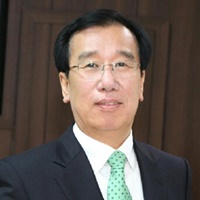
"Putting my name on the line...."
This is an expression of 'determination' that emphasizes honor and responsibility.
A person's name carries legal and honorable meaning that goes beyond simply being an identifier of an individual.
This is why 'name-giving (作名)' has been regarded as important since ancient times.
In particular, people believed that one's life—including wealth and prosperity (富貴榮華) and establishing oneself and making a name (立身揚名)—was determined by what name one carried.
Consulting one's birth date and time (eight characters of destiny) and physiognomy, as well as referencing generational characters in family genealogies, are all related to this belief.
Of course, one cannot wholly believe in traditional perspectives on name-giving.
However, name-giving signifies the birth of a new person, so it is certainly not something to be neglected.
There is another importance to names: they represent a person during their lifetime and remain eternally after death.
Everyone knows this without even mentioning the saying that 'a tiger leaves its skin when it dies, and a person leaves their name (虎死留皮 人死留名)'.
From this, we can well understand that human names carry 'soul'.
However, time has changed the style of 'name-giving'.
This is because certain Chinese characters used for personal names appear in each era, following trends.
Preferred names by era have also emerged.
For example, 'Myung-soo' and 'Young-ja' in the 1940s, 'Young-sik' and 'Young-sook' in the 1950s, and 'Min-jun' and 'Yu-jin' in the 2000s are representative examples.
Meanwhile, purely Korean names and unique, individualistic names that broke through the two-character barrier have become mixed in.
While current law limits names to five characters, there are cases like 'Park-cha-go-na-on-nom' and 'Son-go-jang-nan-byeok-si', showing enough diversity.
Since 'a name' is assigned to distinguish one thing from another, it has an absolute impact on the existential value of objects, organizations, and phenomena.
Just as existence signifies a name, everything in this world has a name, making this even more so.
The power of name-giving is enormous because even the same person, object, or phenomenon creates different images depending on what name is given to it.
Perhaps this is why, recently, the government and local autonomous bodies have been actively engaged in 'naming' their departments.
While this is done as part of organizational restructuring, there is considerable 'unfamiliarity with department names' because it reflects the intentions of 'leaders' too much.
For instance, looking at the entire nation, such examples include Gyeonggi Province's 'Fair Distribution Deputy Governor', Daejeon City's 'Political Affairs and Science Deputy Mayor', and Gyeonggi Provincial Office of Education's 'Wall-Breaking Cooperation Division'—examples are too numerous to enumerate.
Considering that department names have continuously changed each time local governments have changed, it is difficult to avoid the criticism that this instance also reflects 'naming politics'.
Let us keep in mind that administrative efficiency and a city's future competitiveness do not emerge from simply moving departments around and changing names through administrative procedures.