Decline in Gyeonggi Province Employment Growth Rate Attributed to Slowdown in Healthcare Sector
An analysis has emerged indicating that the recent decline in Gyeonggi Province's employment growth rate stems from the slowdown in growth of the healthcare sector, which once expanded rapidly but has decelerated since the 2020s.
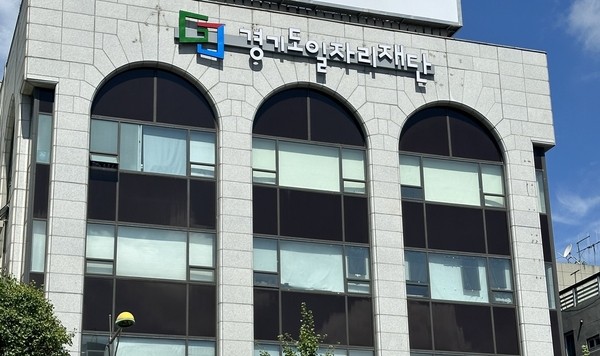
The Jobs Research Center of the Gyeonggi Province Jobs Foundation published a GJF Employment Issue Report titled "Analysis of Recent Decline in Employment Growth Rate in Business, Personal, and Public Service Sectors in Gyeonggi Province."
The report analyzed the background of the declining employment growth rate in Gyeonggi Province through industry-specific employment statistics. In particular, it examined how changes in the healthcare sector within the health and welfare industry have affected the overall employment growth rate.
According to the report, in the first quarter of this year, the employment growth rate in business, personal, and public service sectors in Gyeonggi Province decreased by 24,000 people compared to the same period last year, recording -0.8%. Consequently, the overall employment growth rate in Gyeonggi Province reached only 0.2%. In contrast, nationwide employment in business, personal, and public service sectors increased by 249,000 people, recording approximately 2.0% growth, which contributed to the favorable overall industrial employment growth rate of 0.6%.
The business, personal, and public service sector has occupied the largest share in job creation nationwide since the 2000s. From 2013 to 2025, employment across all industries increased by 3.47 million people, of which 2.81 million were in business, personal, and public service sectors, accounting for 81% of the total increase. Among these, employment in the health and welfare sector increased by 1.61 million, representing 46% of the total increase.
Employment in Gyeonggi Province's health and welfare sector has grown faster than the national average, driven by the province's economic growth. From 2015 to 2024, while nationwide health and welfare employment increased by 81%, Gyeonggi Province saw an increase of 87%. In particular, employment in the healthcare sector, which includes clinics and hospitals, increased by 39% nationally but by 58% in Gyeonggi Province.
The healthcare sector is characterized as a local service industry where supply is provided in the vicinity of residents' neighborhoods. The rapid growth of Gyeonggi Province's healthcare sector in the late 2010s and early 2020s reflects the province's faster population inflow and income growth compared to other regions.
However, following steep growth through 2023, Gyeonggi Province's healthcare sector has recently experienced a significant slowdown in growth. This change has been identified as a major factor in the recent decline in the employment growth rate of Gyeonggi Province's health and welfare sector.
Employment in Gyeonggi Province's social welfare sector continues to grow steadily. The pace of increase is also similar to other provinces. The report explains that the recent decline in employment growth rate is a phenomenon resulting from the healthcare sector's rapid growth followed by a slowdown in the increase rate, rather than policy factors in the social welfare sector.
Choi Kyung-soo, senior research fellow at the Jobs Research Center of the Gyeonggi Province Jobs Foundation, stated, "The decline in employment growth rate in Gyeonggi Province's health and welfare sector is attributable to the healthcare sector, centered on hospitals and clinics, growing faster than other provinces and recently experiencing a slowdown in growth momentum." He added, "Employment growth in the social welfare sector is not slower than other provinces or experiencing a slowdown due to policy factors; however, the Seoul metropolitan area, where social welfare is already well-established, does tend to have a somewhat lower employment growth rate compared to provincial areas."