Suwon City to Conduct 'Customized On-Site Human Rights Education' for 77 Organizations
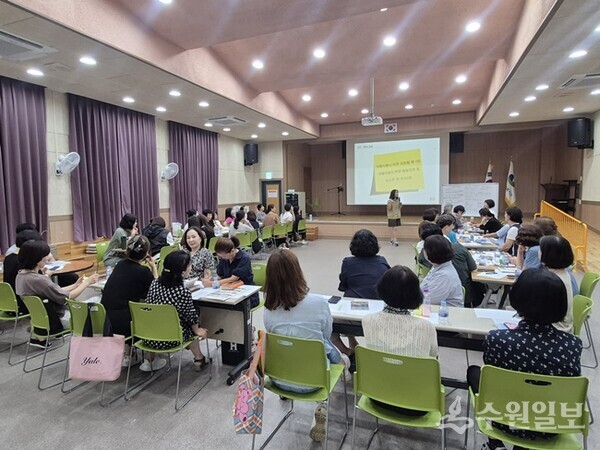
[News S=Reporter Jung Jun-sung] Suwon City announced on the 6th that it will implement 'customized on-site human rights education.'
The program will run through November, visiting 77 collaborative organizations and groups in Suwon City to provide human rights education to employees and citizens.
Prior to this, Suwon City accepted participation applications from collaborative organizations (invested, subsidized, and consigned institutions, etc.) from June 22 to July 3.
As a result, 111 organizations and groups applied. After reviewing applications based on the urgency and appropriateness of the education, Suwon City selected 77 organizations and groups.
Through this education program, Suwon City plans to provide high-quality education to those with limited opportunities to access human rights training.
The city also aims to eliminate human rights blind spots and contribute to spreading a human rights-friendly culture in the public sector.
The expected number of participants through November is estimated at 1,860, including collaborative organization employees, socially disadvantaged groups, and general citizens.
To maximize educational effectiveness, priority was given to △socially disadvantaged groups and small communities △mandatory human rights education recipients (invested and subsidized institutions) △newly applying organizations.
A total of 70 sessions of educational courses have been organized. Based on this, this year's education will be divided into two groups—'collaborative organization employees' and 'socially disadvantaged groups and general citizens'—and operated with precision.
Courses are designed with themes that can be immediately applied in practical work settings, such as workplace harassment prevention, human rights management, and fostering a human rights-friendly organizational culture.
The city plans to elevate the human rights sensitivity of public workers who interact with citizens to the next level through this education.
Education programs for socially disadvantaged groups and general citizens (48 sessions) have been further subdivided.
Instructors will be deployed according to the characteristics of each target group: △people with disabilities (17 sessions) △children (13 sessions) △elderly (6 sessions) △people with mental disabilities (2 sessions) △homeless individuals (1 session).
'Practice-oriented education' will also be conducted in parallel. Rather than simple theory-based instruction, the education will proceed as 'practice-oriented education,' where participants from relevant groups share discrimination cases they experience in daily life and learn about methods for remedy of rights.
Meanwhile, Suwon City has made human rights education mandatory for public institutions in accordance with the 'Basic Human Rights Ordinance.' The city is leading efforts to spread human rights culture through various human rights education initiatives, including human rights education organization networks and the Suwon Citizen Human Rights Academy.
An official from Suwon City stated, "So that not a single citizen is left out of human rights education, we will create 'Suwon where everyone's human rights are respected' through on-site visiting education programs."