


Hwaseong City Reorganization Personnel Reassignment Affects 406 Employees
Hwaseong City, entering an era of a population of 500,000, carried out a large-scale personnel reassignment effective March 14 following an organizational restructuring that expands one bureau into three additional divisions.
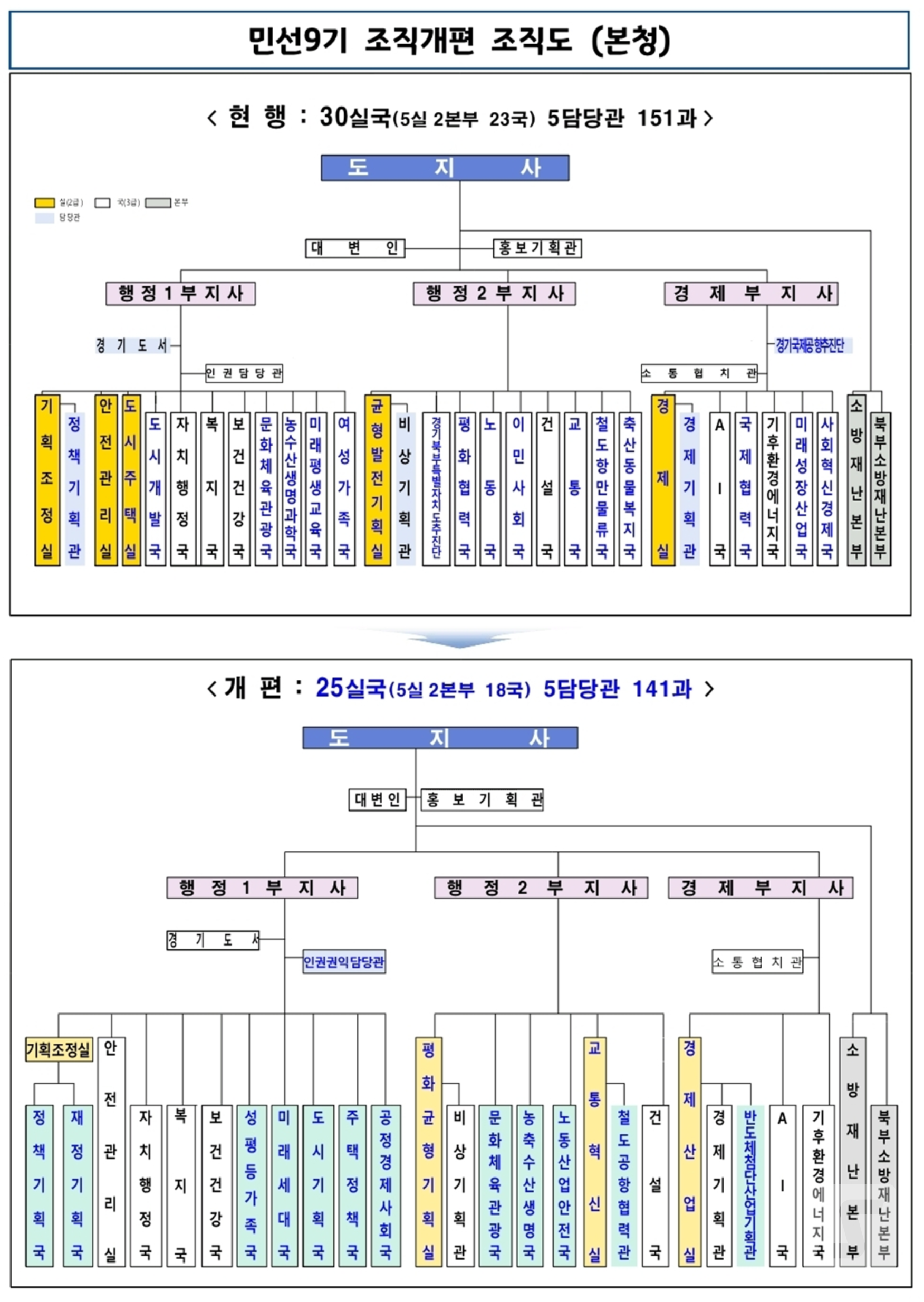
The personnel changes were implemented following the passage of the revised ordinance on the establishment of Hwaseong City's administrative organization at the 102nd second regular session on January 27, which expanded the structure from 4 bureaus, 29 divisions, and 144 sections to 5 bureaus, 32 divisions, and 159 sections.
After a three-year freeze on civil service positions, 50 additional civil service positions were approved last year. The personnel reassignment encompasses 406 people, including 156 promotions (including one grade-4 official and four grade-5 officials), 173 transfers resulting from those promotions, and 54 new appointments.
Hwaseong City focused this personnel reassignment on improving public administrative services and stable organizational management, while reflecting employee grievances as much as possible and seeking to enhance motivation in work performance.
Additionally, the city pursued organizational unity through rotation assignments for long-serving employees with three or more years in their current positions and staff working in demanding divisions such as licensing and permit departments.
Moreover, in promotions at grade-6 and above, the city appointed civil servants who had previously been overlooked in promotion decisions by considering both experience and capability.
For promotions at grade-7 and below, promotion candidates were selected based on ranking lists that prioritized experience.
A Hwaseong City official stated, "Through promotion reassignments for previously overlooked civil servants and balanced transfer assignments, we expect to promote organizational unity and inject vitality into organizational management."
[How Did Hwaseong City Reorganize Its Organization?]
On the 13th, Hwaseong City newly established bureaus and reorganized into a structure focused on specialized functions in response to increased new administrative demands from population growth.
The city established an Environment and Urban Development Bureau by separating functions in construction, transportation, urban development, and environmental sectors, reorganizing from 4 bureaus, 29 divisions, and 144 sections to 5 bureaus, 32 divisions, and 159 sections.
As a result, the existing Citizen Life Support Bureau was renamed the Education and Welfare Bureau, the Environment and Industry Bureau became the Economy and Industry Bureau, and the Construction and Urban Development Bureau became the Construction and Transportation Bureau.
Six new divisions were established: the Finance Division, Sports and Tourism Division, Agriculture and Fisheries Division, Land Information Division, Road Management Division, and East Construction and Transportation Division, while three divisions—the Investment Promotion Department, Tourism and Marine Division, and Public Facilities Division—were abolished.
Department names were also changed: the existing Human Resources Development Division became the Education Support Division, the Livestock and Fisheries Division became the Livestock Division, the Citizen Life Support Division became the Welfare Policy Division, and the East Construction and Industry Division became the East Economy and Industry Division, respectively.
Operations of the Environment Policy Division and Environmental Resources Division from the Environment and Industry Bureau, the Urban Policy Division and Urban Management Division from the Construction and Urban Development Bureau, and the Forestry Division were transferred to the newly established Environment and Urban Development Bureau.
Additionally, Land Development 1 Division and Land Development 2 Division were consolidated into the Land Development Division; Marine Leisure and Marine Development into Marine Development; Knowledge Industry and Universal Promotion into Investment Attraction; and General Facilities and Cultural Welfare Facilities into Public Buildings.
Twenty new administrative units were established including Management Analysis and Delinquent Tax Management, while four divisions—Urban Design, Service Industry, Revenue Facilities, and U-City Development—were abolished.
Loading comments…