


Mounting Debt Crisis in Gyeonggi Province... Where Will the GTX Project End?
Gyeonggi Province's deteriorating finances, chronic deficits at its subordinate public institutions, and the GTX project have become subjects of intense scrutiny at the National Audit again.
On the 13th, Rep. Park Ki-choon (Democratic Party) of the House Transportation and Maritime Affairs Committee issued a press release during the Gyeonggi Province audit, stating, "As Governor Kim Moon-soo focused on populist policy promotions and large-scale national projects, Gyeonggi Province's financial situation has deteriorated."
According to data released by Rep. Park, Gyeonggi Province's financial independence rate dropped from 78% in 2004 to 59.3% this year—a decline of over 18 percentage points—while the budget size increased more than 20% from 9.0413 trillion won in 2006 to 10.9961 trillion won as of last October.
In response, Rep. Park stated, "Gyeonggi Province's financial independence rate is deteriorating because the province is spending more money than it collects in taxes. It is undesirable for the governor to neglect provincial affairs and focus only on central politics and national projects. The governor must fulfill his proper role."
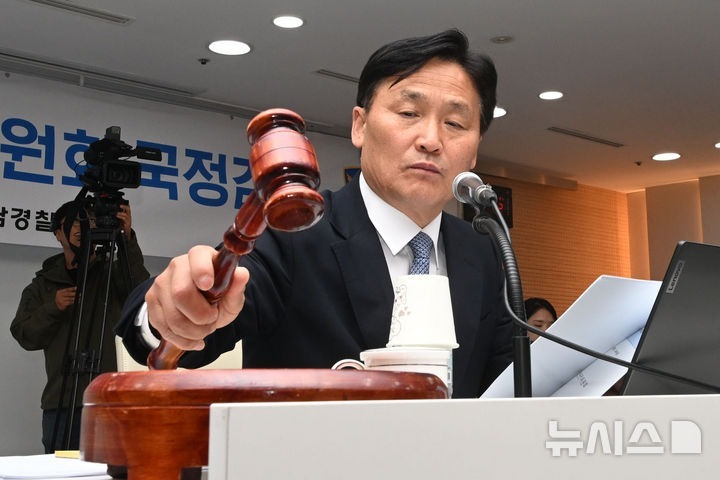
During the Gyeonggi Province audit at the House Administrative Safety Committee on the 14th, criticism poured in regarding the province's fiscal deficit and the GTX project, which the province is currently promoting as a priority initiative.
Rep. Yoon Sang-il of the Future Hope Alliance pointed out, "Gyeonggi Province's local debt balance at the end of last year was 3.8917 trillion won, up 22% from 3.1773 trillion won in the previous year, and Gyeonggi Housing and Urban Development Corporation's debt stands at 6.7159 trillion won with a debt-to-equity ratio of 393%, making it the highest level nationwide excluding Seoul."
Subsequently, Rep. Ahn Hyo-dae of the Grand National Party noted, "Gyeonggi Province's delinquent local tax collection increased from 987.8 billion won in 2008 to 1.2381 trillion won as of the end of August this year, showing a continuous rise. Governor Kim must make all-out efforts to strengthen fiscal soundness."
The questioning then shifted to allegations that Governor Kim is using the GTX project for political and strategic purposes.
Rep. Kim Chung-jo of the Democratic Party stated, "There are doubts as to whether the project will produce proper results given the lukewarm response from the government and Seoul City in securing funding for the GTX project. Given that Governor Kim is being classified as a potential presidential contender, there is suspicion that he is using the GTX project for political and strategic purposes."
Rep. Lee Myung-soo of the Liberty Forward Party criticized, "While resolving regional disparities within Gyeonggi Province and improving roads are urgent tasks, Governor Kim is excessively focused on the GTX project, which could have negative effects on other projects."
Meanwhile, there were also concerns raised that Gyeonggi Province residents are suffering damage due to overpayment of taxes. As of July, the province collected 109.8 billion won more than the standard amount, and 4.8 billion won—4.39% of the total—has not been returned to taxpayers.
Rep. Lee In-gi of the Grand National Party stated in a press release, "While overpayment increases every year, Gyeonggi Province is not actively working to return the money to taxpayers. Along with efforts to prevent overpayment from occurring in the first place, measures should be established to return funds to taxpayers so that residents do not suffer losses."
Loading comments…