


Mayor Kim Yong-seo's Promise Implementation Is 'In Progress'
Mayor Kim Yong-seo of Suwon, in his fourth democratic election term, received a score of 64 out of 100 points in a mid-term evaluation. Of 51 total pledge projects evaluated, 41 projects achieved relatively satisfactory results, while the appropriateness of pledges and the rate of pledge project changes showed a non-compliance ratio of 61% (31 cases).
On the 22nd, the Suwon Gyeonggi Council for Ethical Politics announced the results of a mid-term evaluation of Mayor Kim's pledges for the fourth democratic election term (July 2006–June 2008). This evaluation covered a total of 51 projects—26 projects selected by Mayor Kim and 25 projects selected by the Council—from his 100 major pledges, and was conducted by dividing them into 'pledge appropriateness' and 'pledge implementation degree.'
By category, of the 51 projects evaluated for pledge appropriateness, 31 projects (61%) were found to be inappropriate in pledge selection. Four projects including pledges to address aircraft noise damage from the Air Force flight base and its relocation, and the utilization of Seoul National University's College of Agriculture and Life Sciences facilities for university attraction were classified as unfulfillable promises beyond local government jurisdiction.
Additionally, 15 pledges including the operation of the Suwon English Village, the development of Woncheon Recreation Area, and the plaza project in front of Hwaseong Palace were criticized as 'filling in the list' as continuous projects from the third democratic election term in the 100 major pledges.
The 'school specialization support project' whose budget increased 5.6 times (8.4 billion won) more than originally planned, and the pledge to promote Gwanggyo Mountain as a provincial park were also analyzed as showing insufficient caution in pledge selection, as they were changed to natural ecosystem restoration and maintenance projects contrary to original plans.
The implementation degree of pledges received relatively high scores. When all 51 pledges were scored on a scale of A-F (1-5 points), the results were as follows: A (smoothly implemented) 17 projects, B (appropriately implemented) 15 projects, C (average) 9 projects, D (weakly implemented) 3 projects, E (unlikely to be implemented) 3 projects, and F (impossible to implement) 4 projects.
Projects such as the construction of the Suwon History Museum and the Hwaseong Museum, and the expansion of the metropolitan road network received high scores (A), while the substantialization of overseas training programs for public officials and the urban park development project were evaluated as showing weak (E) implementation will. Four items including the relocation of the Air Force flight base and the attraction of a high-speed rail station in Southern Gyeonggi Province, which were evaluated as pledges beyond local government jurisdiction, were given failing marks of F.
The pledge implementation evaluation reflected five sub-items: sincerity in pledge selection, specificity of funding and suppression of citizens' tax burden, securing of funds, policy achievement feasibility within the remaining term, and clarity of timeline and completion date.
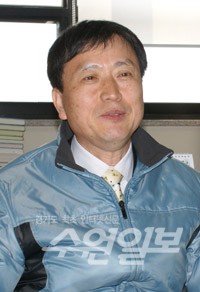
Kim Mi-jeong, Secretary General of Suwon Gyeonggi Council for Ethical Politics, stated, "This evaluation was not based on criteria of whether something was done well or poorly, but rather weighted what role should be played during the remaining term," and emphasized, "Rather than a list-style 100 major pledges, 10 feasible pledges would receive better response from citizens."
The city countered that since the evaluation was conducted as of June of last year, it is somewhat disconnected from the current point in time, and the city has been making considerable progress in implementing pledges since the evaluation. In particular, the city noted that tasks such as the relocation of Suwon Air Base and park development on the Seoul National University College of Agriculture and Life Sciences site are being pursued through ongoing feasibility studies.
Hong Sung-gwan, Director of Planning and Budget, stated, "We humbly accept the evaluation results. However, since it has been a year since the evaluation point in time, there is a timing discrepancy," and said, "We will pay greater attention to projects for pledge implementation going forward."
| "Do Your Best to the End on Implementable Pledges" "Separate from necessity and importance, we evaluated from the perspective of the mayor's role and authority. Pledges that fall outside the scope of basic local government affairs have slim prospects for implementation. They are merely pledges that stimulate voter sentiment. However, we are not negating the efforts of the mayor of Suwon in maintaining awareness of the issue and pursuing it continuously." He acknowledged considerable difficulty in establishing such evaluation criteria. "Finding a common denominator for evaluation criteria was not easy. Dividing into budgeted and non-budgeted pledges was also ambiguous. After more than ten meetings, we decided to approach it from two broad frameworks: pledge appropriateness and implementation. It was not easy to ensure objectivity. There could be various other evaluations, but I left the remaining part to the judgment of citizens." He also did not forget to offer advice on pledge implementation during the remaining term. "I believe that in pledge implementation, we should listen to various opinions and respond with a flexible approach. Rather than presenting an excessively broad range of pledges, it is preferable to properly implement one pledge that resonates with residents. City administration has been handled well so far, but it would be good to further supplement this aspect going forward." The following is a question and answer session. -Evaluations by citizens who actually experience the results could differ? ▲The implementation evaluation has two sides of a coin. High implementation does not necessarily have a positive impact on citizens, nor does low implementation necessarily cause inconvenience. It is simply a measure of whether Mayor Kim Yong-seo of Suwon fulfilled his promises. Suwon Gyeonggi Council for Ethical Politics focused on budget securing and execution, and promotion plans. While it is unclear how citizens will perceive it, that feeling will be decided by voting in the next election. Pledges (공약) should not remain as empty promises (空約). -Why did you give 0 points to pledges such as Suwon Air Base relocation, which is the city's most pressing issue? ▲It would help understanding to explain focusing solely on the Air Base pledge. In short, it is so ambiguous whose pledge it is that it falls outside the scope of authority. Everyone from the provincial governor to members of the National Assembly, the mayor, provincial and city council members pledged to relocate the air base. It is essentially an unfeasible pledge within the term and an inappropriate pledge. This is separate from the necessity and importance of the project. Simply put, efforts were made, but the budget was not executed. I have left the evaluation of this to the assessment standards of individual citizens. -What pledges should Mayor Kim focus on during his remaining term? ▲There is no pledge that is not important as a commitment to voters. I would like to urge adherence to three principles in the broad framework. Pledges must be implemented, pledges that should be abandoned should be decisively cleared, and pledges with insufficient implementation should proceed with gathering citizen opinion. I urge once more that the mayor not lose sight of his original resolve and maintain the will to implement pledges to the very end. |
Loading comments…