


100th Anniversary of Lee Byeong-hee ③ Planting Korea's Future Industries in Suwon
Editor's Note
2026 marks the 100th anniversary of Baekwoong Lee Byeong-hee's birth. Having served as a seven-term National Assembly member from Suwon, he left significant marks on Suwon's growth, including the relocation of Gyeonggi Province's provincial government, restoration of Suwon Hwaseong Fortress, and corporate recruitment. Behind these achievements lay his dedication to connecting the central government, businesses, civil service, and local communities. Suwon Ilbo revisits the 100 years of history shared between Baekwoong Lee Byeong-hee and Suwon.

In the 1960s, Suwon was still a city with strong agricultural characteristics.
In Seodun-dong, there were a pre-cursor agricultural research institution to the Rural Development Administration and Seoul National University's College of Agriculture, and just beyond the city's outskirts stretched rice paddies and fields.
As the Republic of Korea entered the industrialization era, this landscape rapidly transformed. Following Sunkyung Textile and Daehan Textile came Sunkyung Synthetic Fiber and Hanil Synthetic Fiber, with Kumgang Slate and tobacco factories establishing themselves. In Maetan-dong, Samsung Electronics, the hub of Korea's newly emerging electronics industry at the time, arrived.
This was the process of agricultural city Suwon transitioning into an industrial city.
Lee Byeong-hee was active in attracting enterprises to Suwon. Multiple records indicate that Lee Byeong-hee played a role in bringing Samsung Electronics, Sunkyung Synthetic Fiber, Hanil Synthetic Fiber, tobacco factories, and other companies to Suwon.
The most symbolic example is Samsung Electronics.
In the late 1960s, Samsung founder Lee Byeong-chul chose the electronics industry as a new business venture. Samsung Electronics Manufacturing was established in 1969, but Korea's electronics industry was still in its infancy at that time.
The connection between Lee Byeong-hee and Lee Byeong-chul began earlier. According to relevant records, after the 5·16 Coup, Lee Byeong-hee arranged a meeting between Lee Byeong-chul and President Park Chung-hee, establishing a relationship, and subsequently recommended to Lee Byeong-chul that Suwon become the hub for the electronics industry. There are also accounts that he personally searched for factory sites together with his younger brother Lee Byeong-seong.
Samsung initially showed interest in the Cheoncheon-dong area. This is now where Sungkyunkwan University's Natural Science Campus is located.
However, a determination was made that the area was not suitable for building a large-scale factory, so a new site was sought. The location chosen was Maetan-dong.
At the time, the Maetan-dong area was covered with extensive farmland. Samsung secured a large plot of land here, and Suwon city reorganized administrative districts and urban planning to accommodate the factory. In 1970, Samsung Electronics began producing black and white televisions, and the following year began exports. Subsequently, as it expanded its product range to include refrigerators and washing machines, Suwon became a major hub for Samsung Electronics' growth.
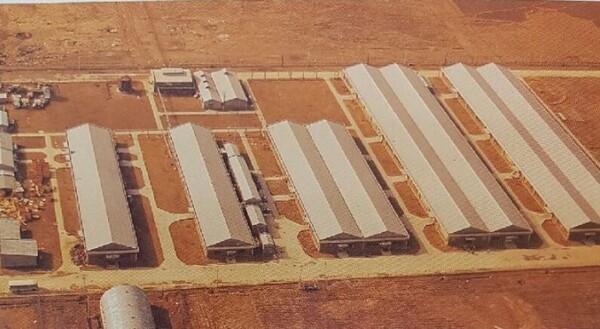
Considering Samsung Electronics today, it may seem obvious, but at the time it was a choice whose future could not be guaranteed.
Samsung Electronics was a newly founded company. There were no semiconductors or smartphones. This new company established its foothold in the electronics industry on farmland in East Suwon.
At that time, the textile industry was taking root in West Suwon.
Sunkyung Textile, the predecessor of today's SK Group, nestled in Pyeongdong. Sunkyung, which revived factories devastated by the Korean War, started with textiles and expanded its business into chemical fibers and yarns. The Sunkyung Synthetic Fiber Suwon plant was established, and in this process, Lee Byeong-hee also lent his support.
In the Maesanro area was Daehan Textile. For a long time, it was one of Suwon's representative textile factories and shaped the industrial landscape around Suwon Station.
In Jowon-dong, Hanil Synthetic Fiber was established. The large-scale Hanil Synthetic Fiber facility is also recorded as a company on which Lee Byeong-hee focused efforts to attract to Suwon.
The building materials industry also arrived. Kumgang Slate, the predecessor of today's KCC, built a factory in Suwon. In Hwaseo-dong, a large-scale tobacco factory was established.
Sunkyung Textile and Sunkyung Synthetic Fiber in Pyeongdong, Daehan Textile on Maesanro, Hanil Synthetic Fiber in Jowon-dong, Kumgang Slate in Seodun-dong, tobacco factory in Jeongja-dong, and Samsung Electronics in Maetan-dong. Industrial hubs of different sectors emerged throughout Suwon.
Factories transformed the city. As workers and their families came seeking jobs, housing and schools were needed, and roads and commerce expanded. Demand for industrial and household water increased. Land subdivision and infrastructure development followed to accommodate businesses and population.
In particular, development in East Suwon accelerated, centered on Maetan-dong where Samsung Electronics was located. It became the catalyst for the city that had been formed around the fortress and Suwon Station to expand eastward.
Change also came to Cheoncheon-dong, which Samsung had initially considered as a factory site. With Sungkyunkwan University's Natural Science Campus, a Samsung school corporation, establishing itself there, a new educational and research hub was created in Northwest Suwon.
Corporate recruitment became not just about constructing a few factories, but a driving force for expanding Suwon's living areas and urban spaces.
Over half a century, many of the factories from that time have disappeared or left Suwon. Daehan Textile and Hanil Synthetic Fiber factories closed, and the tobacco factory ended its role as a production facility. Suwon's industrial structure, which was manufacturing-centered, also shifted toward research and development and advanced industry.
However, some of the companies that took root in Suwon at that time have grown into enterprises representing the Republic of Korea.
Samsung Electronics became a global electronics and semiconductor company. The Maetan-dong Suwon plant also transformed from a factory producing goods to Samsung Digital City, focused on research and development.
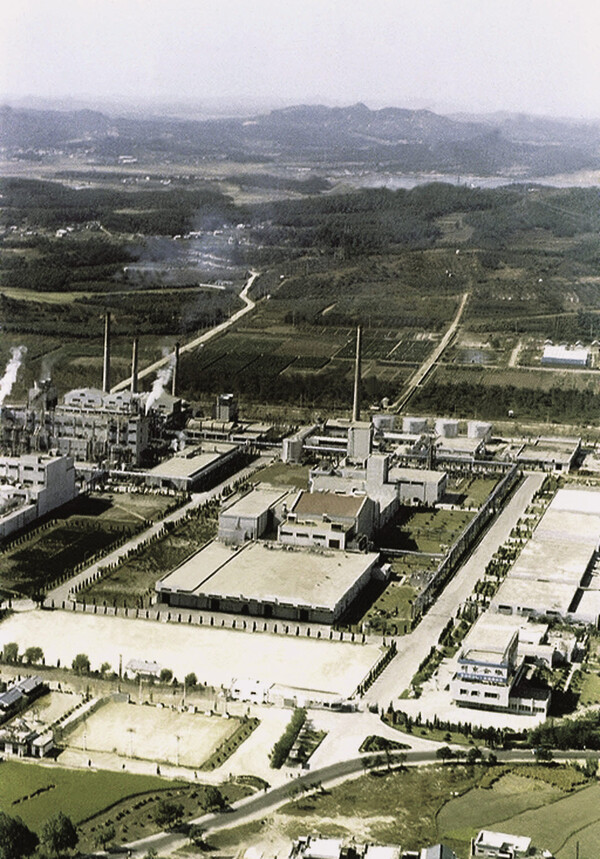
Sunkyung, which operated looms in Pyeongdong, grew into the SK Group. Starting from textiles, it expanded its business into energy and telecommunications, and after acquiring Hynix in 2012, embraced semiconductors as a core business.
As of 2026, Samsung Electronics and SK Hynix are the two pillars supporting Korea's semiconductor industry.
Behind Lee Byeong-hee's focus on corporate recruitment lay the conviction that the region's future should be sought in jobs and industry. For the region's future, people were needed, and for people to gather, there had to be jobs. For this purpose, he sought to attract enterprises and new industries to Suwon.
As a result, factories came to Suwon and people gathered. Cities grew following industry, and among the companies that developed in this process, some continue to lead Korea's core industries across generations.
Samsung Electronics, which entered the rice paddies of Maetan-dong in the 1960s, became a global semiconductor company. Sunkyung, which grew from Pyeongdong, changed its name to SK, and the group embraced SK Hynix to establish another pillar of semiconductors.
At that time, no one could foresee what it would become today. Yet looking back now, the outcome is clear.
Lee Byeong-hee left behind not merely factories, but industries of the future. Seeds sown in his time have grown into the very industries on which Korea's future generations will live and work.
Loading comments…