


Suwon Special City Food Waste Generation Decreases for Third Consecutive Year
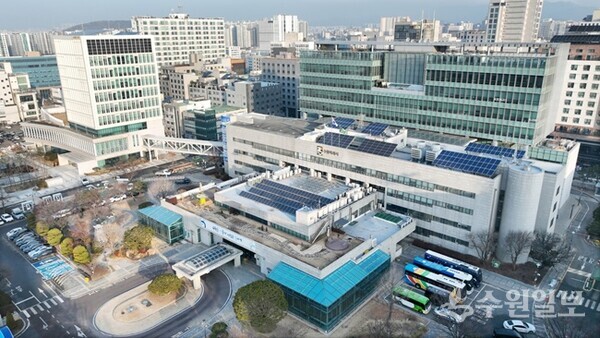
[Suwon Ilbo=Reporter Jung Jun-sung] Suwon Special City's food waste generation has decreased for the third consecutive year.
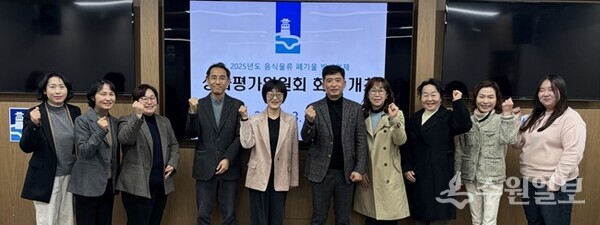
On the 16th, the city held the '2025 Food Waste Generation Reduction Performance Evaluation Committee' in a video conference room, attended by Committee Chair Kwon Hyuk-ju, Director of the City's Environment Bureau, and ex-officio and appointed committee members, to evaluate the implementation outcomes of the 'Food Waste Generation Reduction Plan.'
According to the city, last year's total food waste generation was 79,176 tons, a decrease of 5,718 tons (6.74%) compared to 84,894 tons in 2024. The figures show consistent year-over-year reductions: 99,499 tons in 2022 and 89,644 tons in 2023.
The city set this year's food waste generation target at 90,889 tons and has already exceeded the target by 12.89% (11,713 tons).
Last year's generation from households and small restaurants was 68,101 tons, down 4,932 tons from the previous year, while generation from high-volume waste-producing facilities was 11,075 tons, down 786 tons from the previous year.
The city implemented various reduction measures to decrease food waste generation and achieved results exceeding targets.
The city achieved a 77.9% reduction in food waste through pilot operation of large-capacity reduction equipment at apartment complexes, and the 'School Food Waste Donation Pilot Program' launched last September also played a significant role in reducing food waste.
The school food waste donation pilot program supports leftover school meals to food-insecure populations to eliminate gaps in care and promote circular use of food resources. From September to December last year, 4,116 kg of school meals were donated to 1,937 food-insecure individuals. Through meal donation, schools reduced food waste and cut treatment costs. The program also achieved the effect of reducing carbon emissions while reducing food waste.
A city official stated, "Thanks to the active participation of residents in our food waste reduction measures, we were able to achieve the food waste reduction target for the third consecutive year," and added, "Going forward, we will implement customized reduction measures tailored to each emission source and continue to develop resident participation programs to create a pleasant living environment."
Loading comments…