


Gwangmyeong City to Build 'K-Arena,' South Korea's Flagship 40,000-Seat Arena, in Gwangmyeong-Siheung New City Phase 3
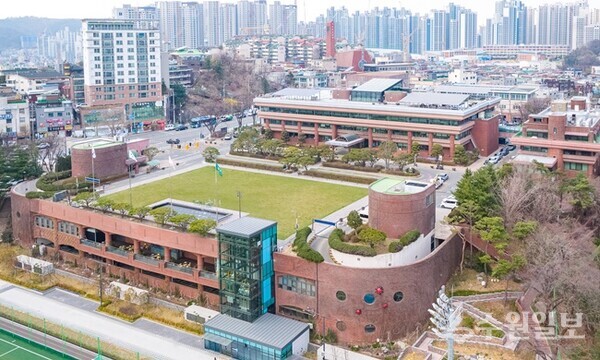
[Suwon Ilbo=Reporter Yu Je-sung] Gwangmyeong City has completed basic plans for constructing a flagship South Korean arena with a capacity of up to 40,000 seats in Gwangmyeong-Siheung New City Phase 3.
On the 8th, the city held a final report session on the 'K-Arena basic strategy establishment project' in the City Hall conference room, conducting a final review of the arena attraction basic strategy that comprehensively analyzed the location, transportation, and market environment of Gwangmyeong-Siheung New City Phase 3.
In line with the national policy initiative of 'mid to large-scale complex concert-type arena (K-Arena),' the city began establishing a basic strategy in September and, through this project, substantiated site suitability, arena construction scale, and surrounding complex development directions.
As a result of the project, it was decided to construct a dome-type arena capable of accommodating a maximum of 40,000 people. The 40,000-seat scale is the largest among domestic arenas.
Currently, most arena concert venues in operation or under construction in Korea are smaller than 20,000 seats, with no arenas capable of accommodating 30,000 to 40,000 or more people.
The city emphasized the necessity of a 'national representative performance facility' befitting the growing global influence of K-pop and conceived the Gwangmyeong K-Arena on a mega-scale.
To this end, the city plans to equip professional performance facilities including architectural acoustics design, electronic acoustic systems, and upper systems enabling diverse stage production, and will incorporate design that minimizes obstructed-view seating.
The city conceived arena construction on a scale befitting a national facility symbolizing K-pop, which is growing in global prominence.
The arena will operate as a multipurpose performance and sports complex facility capable of accommodating not only K-pop and popular music concerts, but also overseas celebrity concerts, national representative soccer team matches (A-matches), e-sports competitions, and future-oriented content such as AI, robot, and drone racing.
Surrounding the arena, citizen sports facilities, hotels, shopping malls, and other commercial and convenience facilities will be developed to create a complex entertainment space combining viewing, experience, and leisure. Through this, the plan aims to create an urban destination that new city residents can use daily, while also strengthening lodging, shopping, and rest functions to accommodate large numbers of visitors.
This project confirmed that Gwangmyeong-Siheung New City Phase 3 is the optimal location for attracting the arena. Culture-economy city planning centered on the arena is possible from the new city development phase, and excellent metropolitan transportation networks including KTX Gwangmyeong Station and newly constructed metro stations are in place. Additionally, excellent accessibility to Incheon International Airport is advantageous for attracting overseas tourists, and the ability to address the shortage of cultural facilities in the southwestern region of the metropolitan area was evaluated as a competitive advantage.
The city plans to incorporate expert opinions from the report session to finalize the strategy, then proceed through a second project to substantiate the basic plan, following which it will begin earnestly pursuing arena attraction in accordance with government public recruitment procedures.
Mayor Park Seung-won stated, "The K-Arena will serve as a good springboard for Gwangmyeong City to advance into a culture and tourism hub city," and added, "Based on the project results, we will substantively prepare for arena attraction in accordance with government public recruitment procedures."

Loading comments…