


3-Year Performance Review - ④Climate Gyeonggi Province's 'Climate Economy' in 3 Years, Designing South Korea's Future
[Suwon Ilbo=Reporter Kim Gapdong] Climate is economy. The current climate crisis is not simply a weather issue, but a starting point of a massive transition that shakes entire industries, welfare, technology, and national competitiveness.
The Bank of Korea has warned that without proper response to the climate crisis, South Korea's economic growth rate will decline by 0.3 percentage points annually, and the nation's GDP by 2100 could shrink by up to 21%. The fact that the climate crisis is a practical risk threatening future economy can no longer be denied.
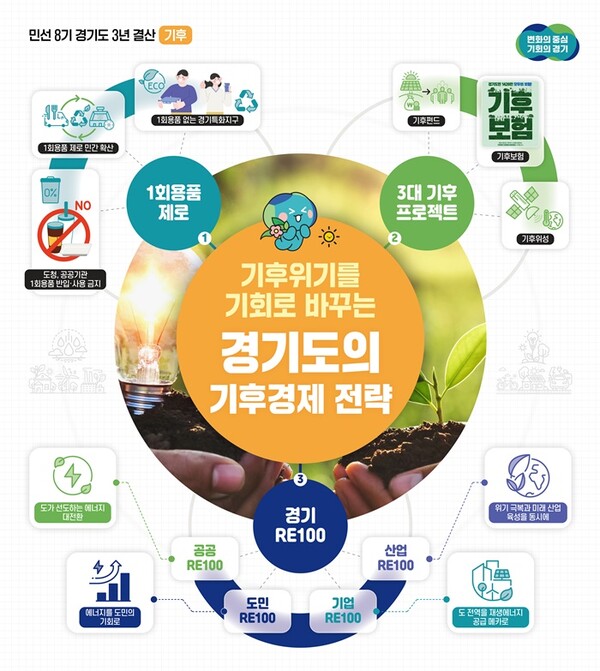
In response, Gyeonggi Province has made clear its direction to "turn climate from a crisis into an opportunity," presenting a new path of transformation toward "climate economy" that transcends climate response. In February, Gyeonggi Province Governor Kim Dong-yeon declared this direction through a "Climate Economy Vision Declaration," pledging to lead a paradigm shift in South Korea's economic model based on key policies pursued by the 8th-term provincial government.
The province has completed a climate policy model that draws attention both nationally and internationally over the past three years, centered on strategic pillars including △Gyeonggi RE100 △3 Major Climate Projects (Climate Insurance·Climate Satellite·Climate Fund) △Citizen-participation climate action.
■ All-Directional Carbon Neutrality Transition, Gyeonggi RE100
: Energy innovation transformed together by public sector, industry, citizens, and technology startups
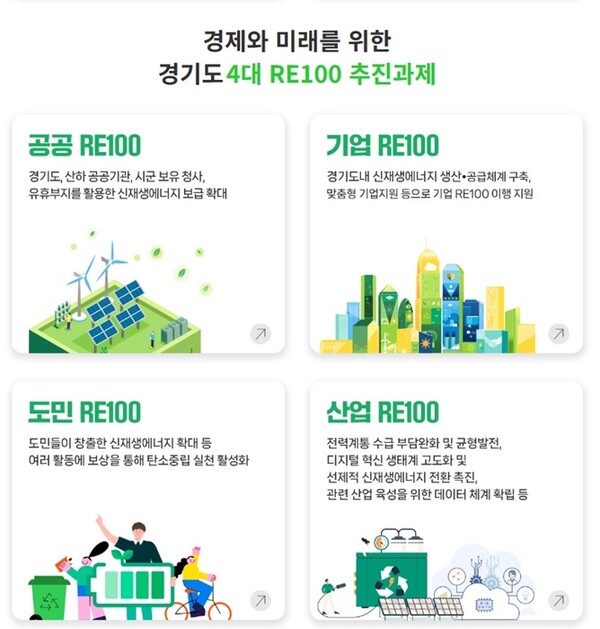
'Gyeonggi RE100' is the climate transition strategy that Gyeonggi Province initiated first nationwide and achieved the most success with. Centered on four sectors—public, business, citizens, and industry—the initiative has expanded renewable energy while also broadening citizen participation foundations.
In February 2024, a 'Public Institution RE100 No. 1' solar power facility was established on unused land at the Gyeonggi Northern Provincial Government Building in Uijeongbu, marking the start of projects to construct approximately 20MW of facilities across 50 sites. Notably, over 33,000 citizens participated as cooperative investors, sharing profits while connecting energy transition with regional circular economy.
In the industrial sector, in July 2023, the province signed a 4 trillion won-scale investment agreement with a private consortium of eight companies including SK E&S;, launching 'Industrial Complex RE100' in earnest. Gyeonggi Province has formed an 'RE100 Task Force' with the Korea Energy Agency and others, promoting solar power generation and energy management system improvements within industrial complexes. As a result, industrial complexes with RE100 potential are expected to expand significantly to 129 sites by 2026.
Citizen participation has also increased steadily. Through the 'Residential Solar Support Program,' a total of 26,345 households installed solar facilities, and despite reduced government budget support, Gyeonggi Province increased provincial funding to 18.3 billion won, sustaining the policy.
Additionally, the 'Climate Tech RE100' strategy for fostering innovative technology-based startups is showing results. The province provides business commercialization funding and promotional support annually to 43 companies, with some winning gold in the '2025 Edison Awards' and being selected as Tech Trail companies at 'Vivatech 2025,' gaining recognition on the world stage.
Furthermore, Gyeonggi Province is introducing AI-based energy trading technology by 2040 for 800,000 public residences and new apartments, and is operating a Zero Energy Building (ZEB) standard model consultative body to realize the vision of 'zero management fee apartments.'
Gyeonggi Province's RE100 is establishing itself not merely as renewable energy expansion but as an all-directional energy transition strategy encompassing improved citizen quality of life, secured industrial competitiveness, and fostered technology entrepreneurship.

■ From Welfare to Space, Next-Generation Climate Transition Strategy, 3 Major Climate Projects: Climate Insurance·Climate Satellite·Climate Fund
In April 2024, Gyeonggi Province implemented 'Climate Insurance' for the first time nationwide with all citizens automatically enrolled as beneficiaries. Fixed compensation is provided without separate application for diseases caused by extreme heat and cold, infectious diseases, and accidents occurring during weather warnings.
This policy is establishing itself as a 'Climate Welfare' model that transcends mere insurance, addressing climate-related inequality and vulnerability. Gyeonggi Climate Insurance aims to resolve the climate gap through additional support for vulnerable populations, fulfilling its role as a public good—like public security and national defense—that protects citizens' health and safety as a social safety net.
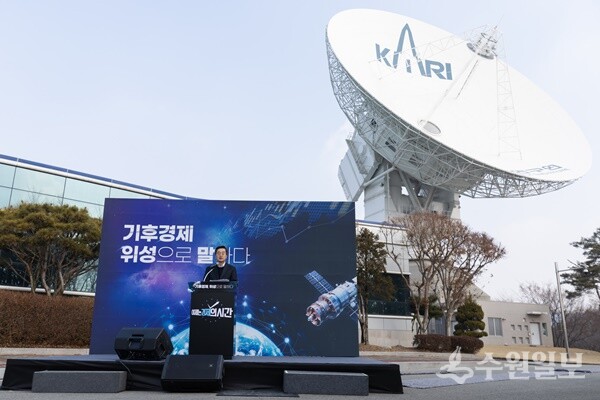
In the technology domain, Gyeonggi Province is developing three ultra-compact 'Climate Satellites' at the metropolitan government level for the first time in the nation, with 'Gyeonggi Climate Satellite No. 1' launching in the second half of 2025. The satellites support precise climate policy establishment through real-time data collection on urban heat islands, greenhouse gases, and disaster situations.
Additionally, the 'Climate Fund' is a new attempt to revitalize energy transition and regional economy simultaneously. Gyeonggi Co., Ltd. installs renewable energy power plants using underutilized state and public land, and returns part of the profits to residents. This adds citizen participation and profit-sharing to the publicly-led energy ecosystem, realizing a sustainable climate transition model.
■ Changing Climate in Daily Life: Climate Action Opportunity Income, Single-Use Product Zero Experiment
'Climate Action Opportunity Income' is a system in which citizens receive point-based monthly compensation when they authenticate daily carbon-neutral practices—such as using tumblers and using public transportation—through an app. Within one year of implementation, membership surpassed 1.28 million, setting the highest record among metropolitan government app-based policies.
Additionally, the province is expanding single-use product reduction campaigns beyond provincial government offices and affiliated agencies to restaurants, festivals, funeral homes, and sports facilities. In particular, 'Gyeonggi Single-Use Product-Free Specialized Districts' operating in six regions including Bucheon, Ansan, Gwangmyeong, and Yangpyeong have established structures where over 150 restaurants and cafes use reusable containers.
■ Gyeonggi Province Climate Policy Drawing Global Attention
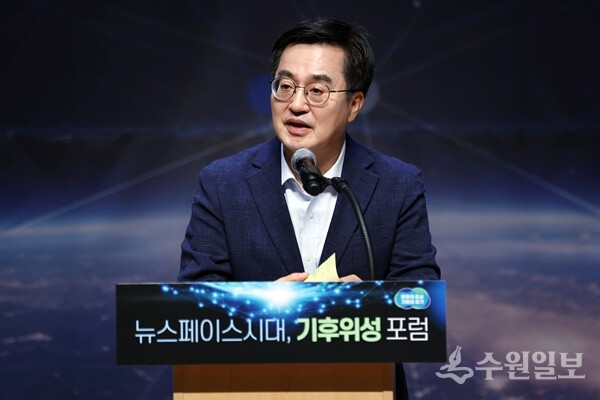
Gyeonggi Province's climate transition policies are drawing attention beyond South Korea to international society. Governor Kim Dong-yeon is the sole South Korean representative to be named among eleven global 'Local Leaders' selected by UN Climate Action, and the World Economic Forum (WEF) introduces Gyeonggi Province as a 'Clean Energy Innovation Hub.'
Additionally, at 'REM ASIA 2025' hosted by U.S.-based CRS, Gyeonggi Province was selected as a 'Clean Energy Leading Institution,' and at the United Cities and Local Governments Asia-Pacific Congress (UCLG ASPAC) held in the Philippines in June, Gyeonggi Province's 'Climate Insurance' was introduced as an exemplary policy case.
Governor Kim Dong-yeon emphasized that "climate policy is not merely a policy for the environment, but a comprehensive economic transition strategy combining industry, technology, welfare, and international cooperation." He also evaluated that "Gyeonggi Province is proving the direction of South Korea's climate economy through action, not words."
Going forward, Gyeonggi Province plans to refine follow-up strategies such as 'Climate Insurance Plus,' 'Climate Satellite,' and 'RE100 Industrial Model,' positioning itself as the center of South Korea's climate innovation beyond climate leadership.
Loading comments…