


Gyeonggi Province Takes Proactive Steps Against 'U.S. Tariff Risk'
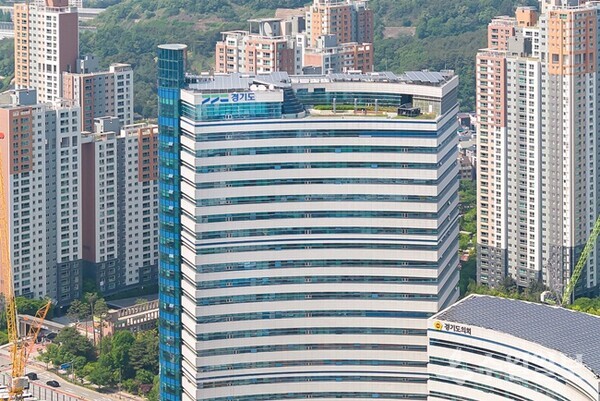
[Suwon Ilbo=Reporter Kim Gap-dong] Gyeonggi Province is taking proactive measures to respond to the U.S. government's tariff imposition by activating the 'Gyeonggi Province Trump Tariff Response Task Force (dedicated organization),' providing emergency special business fund support, offering logistics costs, extending local tax payment deadlines for tariff-affected businesses, and other active support measures.
In particular, the province plans to provide additional support such as assisting automotive export companies—which are expected to face concentrated tariff damage—in establishing production bases within the United States.
The province announced on the 3rd countermeasures titled 'Follow-up Measures for Gyeonggi Province Emergency Economic Meeting in Response to Trump Tariffs' and stated it will implement them immediately. These measures follow-up on last month's 31st 'Emergency Economic Meeting' presided over by Governor Kim Dong-yeon at Pyeongtaek Port.
First, the province will operate the 'Gyeonggi Province Trump Tariff Response Task Force' under the leadership of Jeong Doo-seok, Economic Coordination Officer, comprising five offices and bureaus including the International Cooperation Office, Future Growth Industry Office, Railroad Port and Logistics Office, and Autonomous Administration Office. The Task Force will be responsible for preparing measures that can provide practical assistance to export companies in the province related to automobiles, which are expected to face the greatest impact from tariff imposition, and monitoring progress.
To provide rapid consultation and response to export companies facing difficulties from the announced U.S. automobile tariff imposition, the province will operate a dedicated window within the Gyeonggi Region FTA Trade Promotion Center. The center will provide HS codes and tariff information through newsletters and other means to accurately understand U.S. tariff policy trends and respond in a timely manner, while continuously supporting customized consulting for businesses.
For export companies, the province will provide export opportunity vouchers of 8 million won per company to respond to tariff risks. Eligible companies can select and receive support from 14 service fields including patent and intellectual property, legal, tax, and accounting consulting. Additionally, to enhance competitiveness of export companies, the province will support logistics costs of up to 3 million won per company and overseas standards certification costs of up to 10 million won per company.
The province will also provide substantial benefits to tariff-affected businesses including extensions of local tax payment deadlines, exemptions from collection, and suspension of tax investigations. Furthermore, the province plans to extend the local tax special provisions law's exemptions for knowledge industry centers and industrial complexes scheduled to expire this year, and will recommend to the government a legal amendment to expand the exemption rate to up to 75% for tariff-affected businesses.
For automobile export companies, the province will support their entry into production bases within the United States. By June of this year, the province will support 10 automobile parts companies hoping to enter Georgia by matching them with state government officials, and providing one-on-one customized comprehensive consulting by experts in fields such as law, taxation, and accounting. The province is also reviewing plans to additionally dispatch electric, electronic, and semiconductor products in September. Additionally, the province plans to open an additional Gyeonggi Business Center (GBC) in Dallas, Texas by year-end, which, together with the already-operating New York and LA GBCs, will expand functions from export support activities such as buyer matching and contracts to comprehensive consulting including environmental surveys and coordination with relevant institutions for local market entry.
The province is reviewing hosting a 'Future Mobility Tech Show' at a U.S. venue to build networks between Gyeonggi Province-based automobile export companies and U.S. automobile manufacturers such as Ford, GM, and Stellantis. The plan includes establishing exhibition booths for local companies and strengthening cooperation frameworks between Gyeonggi Province companies and U.S. automobile manufacturers through Korea-U.S. future vehicle cooperation forums and inter-company memoranda of understanding (MOUs).
In the medium to long term, the province will also promote industrial structure conversion and regulatory improvement. First, to respond to the crisis from the transition to eco-friendly vehicles, the province will support the commercialization of eco-friendly vehicles, including support for prototype production and certification costs, as individual companies face limitations in business entry and workforce retraining capacity.
Regarding institutional improvements, considering the difficulties faced by automobile export companies, the province is allowing domestic coastal freight transport operators shipping export automobiles to operate vessels of 15 years or older on a temporary basis until June 30, 2025, when they receive permission from the Ministry of Oceans and Fisheries under the 'Notice on Ship Age Restrictions for Domestic Coastal Cargo Vessels.' The province plans to actively cooperate with officials from the Korean Shipping Association to extend this allowance period. Additionally, the province has decided to continuously pursue regulatory relief, such as excluding additional tax credit benefits for automobile companies within the Seoul Metropolitan Over-Concentration Restriction Zone.
Jeong Doo-seok, Economic Coordination Officer, said, "In an emergency economic system where high-rate tariff imposition has become a reality, supporting export companies, which are the backbone of the South Korean economy, is one of Gyeonggi Province's greatest responsibilities. We will listen to voices from the field and cooperate closely with relevant agencies to develop and implement the measures most needed by businesses."
Meanwhile, ahead of the U.S. tariff imposition, the province has been implementing an exchange rate fluctuation insurance support project that provides full coverage (up to 20 million won per company) for insurance premiums from this year to ease the burden on export small and medium-sized enterprises in the province caused by increased exchange rate volatility.
In March, the province dispatched a Commercial Environment Investigation Team headed by the International Trade Division Manager to Georgia, where approximately 150 domestic companies, including Hyundai Motor Group's electric vehicle factory, have established operations. On the 2nd, the province sent a letter requesting cooperation to Michigan Governor Gretchen Whitmer, a major automotive production hub in the United States. The province has also decided to provide emergency special business fund support on a scale of 50 billion won—the first in the nation—to small and medium-sized businesses suffering direct and indirect damage from tariff imposition, and is making efforts to resolve difficulties faced by export companies.
Loading comments…