


Gyeonggi Province Provincial Government Building Annex 3 Construction Must Be Withdrawn to Prevent Damage to Hwaseong Fortress Preservation and Restoration
A claim has been raised that the construction of Gyeonggi Province Provincial Government Building Annex 3, which adversely affects the preservation and restoration of Hwaseong Haenggung Palace, must be withdrawn.
Additionally, it has been pointed out that the installation of a rear entrance gate at Sungkyunkwan University Station on the national railroad, which sees 300,000 daily commuters, is urgent.
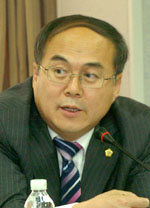
On the morning of the 28th of last month during the 2nd plenary session of the 246th extraordinary session of the Suwon City Council, Councilmember Kim Hyo-su (Urban Construction Committee) stated, "The construction of Gyeonggi Province Annex 3 could adversely affect the preservation and restoration of Hwaseong Haenggung Palace," and argued that "the cultural heritage change impact assessment for the annex construction was conducted hastily," demanding that the annex construction be withdrawn.
Furthermore, Councilmember Kim urged that discussions be conducted on land and building utilization plans following the 2012 relocation of the Gyeonggi Province Government Office, and called for the establishment of utilization plans.
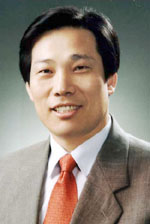
Councilmember Kang Jang-bong (Urban Construction Committee) questioned plans for installing a rear entrance gate, noting that the entrance to Sungkyunkwan University Station, which sees 300,000 daily visitors, is only installed on one side, increasing inconvenience for residents using the station.
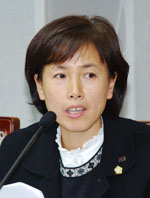
Councilmember Yoon Gyeong-seon (Autonomous Administration and Planning Committee) asked about converting school cafeteria operations in the city to direct management and inquired about the background and selection process for a specific religious institution to undertake private contracting projects for the city.
In response, Suwon City Mayor Kim Yong-seo stated, "The cultural heritage change review related to the provincial government's Annex 3 construction was conducted lawfully," and noted, "We will actively cooperate with the province regarding utilization plans for the provincial government office site."
Regarding the installation of a rear entrance gate at Sungkyunkwan University Station, he stated, "Korean Railroad Corporation is shifting the burden to the city by citing local government responsibility," and added, "We will also explore ways to attract private investment in station improvements."
| <Suwon City Council 246th Extraordinary Session Policy Question Live Coverage> ▲ Councilmember Kim Hyo-su (Representing Maegyo, Maesan, Godeung, and Hwaseo-dong districts; Urban Construction Committee) = Is it correct to judge that the construction of a 4-story provincial government annex 3 with an area of 1,980 square meters 190 meters away from Hwaseong Haenggung Palace will have no impact on Hwaseong preservation and restoration? Is there no plan to withdraw the annex construction? - Mayor Kim Yong-seo = Regarding the request to withdraw the construction of Gyeonggi Province Annex 3, under current building laws, when the national government or local governments construct office buildings, only building consultations are conducted instead of obtaining building permits. ▲ Kim Hyo-su = Are there fundamental countermeasures such as transferring the cultural heritage change impact assessment duties related to Hwaseong Haenggung Palace to the Hwaseong Projects Office? Additionally, were there any external pressures from Gyeonggi Province during the cultural heritage impact assessment process? - Mayor Kim Yong-seo = Regarding the construction of Gyeonggi Province Government Building Annex 3, on November 16 of last year, three cultural heritage experts provided the opinion that the building is planned at a lower height than the existing provincial government office building and will be constructed at a height lower than the provincial government office main road, thus having no impact on Paldal Mountain and cultural heritage, so the heritage change approval procedure was not carried out. Additionally, regarding the allegations of external pressure in the selection of cultural heritage review committee members and the review process, we properly handled the matter in accordance with the Cultural Heritage Protection Act based on the opinions of three cultural heritage experts. Henceforth, regarding various development activities within 500 meters of cultural heritage sites, we will collect opinions from three or more related experts in accordance with applicable regulations, and when impact is assessed, we will conduct construction projects after obtaining permits from the Cultural Heritage Administration through Gyeonggi Province. The plan to transfer heritage change permit approval duties and related procedures to the Hwaseong Projects Office requires comprehensive review since cultural heritage is designated in multiple locations throughout the city, not just Hwaseong, and will be considered during administrative reorganization. ▲ Kim Hyo-su = What are the plans for consultations with the province regarding land and building utilization after the provincial government relocation, and what administrative support measures such as forming a land utilization countermeasure committee will be provided? - Mayor Kim Yong-seo = We currently understand that the provincial government relocation will occur 5 to 6 years later, after 2012. No definite plans for the provincial government office site utilization have been confirmed to date. In the future, until the province determines a specific utilization plan, we will maintain continued interest and actively consult with Gyeonggi Province. ▲ Councilmember Kang Jang-bong (Representing Pahjang, Yulcheon, and Jeongja 1-dong districts; Urban Construction Committee) = The situation is extremely inconvenient for residents around Sungkyunkwan University Station on the national railroad, which serves 300,000 daily passengers. Are there plans to secure national government funds or willingness to attract private investment for the rear entrance installation? - Mayor Kim Yong-seo = Since 2005, following requests to add a rear entrance gate at Sungkyunkwan University Station, we have conducted on-site inspections and held consultations with Korean Railroad Corporation. Korean Railroad Corporation has taken the position that it will review the rear entrance gate installation if the local government bears the full cost of the additional entrance project. Regarding the installation of the rear station requested by the city, Korean Railroad Corporation is passive about construction, citing the reason that "it is not a priority." This reality is both frustrating and regrettable. For aging railroad stations like Sungkyunkwan University Station, Korean Railroad Corporation, which operates the railroad facilities, should undertake station improvement projects. It is unreasonable for Korean Railroad Corporation to shift insufficient finances to our city, and it is difficult for the city to reflect this given our fiscal circumstances. Regarding attracting private investment stations, we have held consultations with a certain company twice since last year, and we will continue to discuss and promote plans to attract private investment.
▲ Councilmember Yoon Gyeong-seon (Democratic Labor Party Proportional Representative; Autonomous Administration and Planning Committee) = Please provide answers about the current operational status of school cafeteria facilities in Suwon and whether all schools can convert to direct management cafeteria systems. Additionally, what are your thoughts on the proposal to establish a school meal support center to prevent cafeteria accidents and provide oversight and guidance? - Mayor Kim Yong-seo = Currently, of 174 elementary, middle, and high schools in Suwon, 147 schools operate direct management cafeterias, while 27 schools operate contracted cafeterias. For the 27 schools currently operating contracted cafeterias, the School Meal Act stipulates that all schools must convert to direct management by 2009. The Gyeonggi Province Office of Education is proceeding with a plan for all schools to implement direct management starting in 2010. The city plans to support the expansion of direct management cafeteria facilities as a priority, allocating 2.836 billion won to 15 schools this year. The establishment of the "Suwon City School Meal Support Center" is an inherent function of the Office of Education. If there are matters the city can support, we will consult with the Office of Education and provide support. ▲ Yoon Gyeong-seon = Regarding the private contracting of the Suwon Foreign Workers Welfare Center, please explain the reasons for changing the contracting organization through public recruitment despite the existence of the Suwon Foreign Workers Shelter, along with the selection process. Additionally, what is the background behind a specific religious facility undertaking multiple private contracting projects? - Vice Mayor Ye Chang-geun = The Suwon Foreign Workers Shelter was operated by the "Suwon Foreign Workers Shelter Operating Committee," composed of civic organizations with interest in foreign workers, and was not a private contracting arrangement. Instead, the city provided private sector operational subsidies without entrustment agreements. The Suwon City Foreign Workers Welfare Center was established with an investment of 2.1 billion won in city and provincial funds to provide better welfare services, including operating various educational programs for foreign workers and protecting their rights through grievance counseling. Considering private contracting to nonprofit organizations or groups to be desirable, we conducted public recruitment in accordance with related ordinances. Among 2 organizations and groups that applied, the Suwon Central Baptist Church was selected as the contractor operator by a review committee for contractor selection, composed of experts including city council members, university professors, and policy advisory members. The selection of private contractors for city affairs and facilities follows the Suwon City Private Contracting Ordinance regulations, comprehensively reviewing contractors' financial capacity, facilities and equipment, technical expertise, ability to fulfill responsibilities and credibility, and balanced geographic distribution through public recruitment. Therefore, the contractor for the city's private contracting facilities was selected through a transparent and fair process. ▲ Yoon Gyeong-seon = What are the standards and legal basis for the contractor selection method for the Disabled Persons Activity Support Project? - Vice Mayor Ye Chang-geun = The selection of disabled persons activity support project operators is based on guidelines issued by the Ministry of Health and Welfare on January 31 of this year. Project operators must meet certain qualification standards—public, nonprofit, and private institutions—and are selected through public recruitment and screening committee review. If no applicants are received, local governments can designate appropriate institutions. The city recruited activity support project operators in accordance with these guidelines and notified 18 disabled persons-related organizations and 3 self-reliance foundation organizations with qualifications about the recruitment plan. Two organizations applied: the Suwon City Comprehensive Welfare Center for the Disabled and the Suwon Severe Disability Independent Living Center. Among these, the Suwon Severe Disability Independent Living Center was found to be an unregistered organization and was determined to be an unqualified institution according to Ministry of Health and Welfare guidelines, thus excluded from project operator candidates. Only one organization, the Suwon City Comprehensive Welfare Center for the Disabled, was selected. To select the lacking one project operator, the city contacted various civic organizations and received project plans from Burdnae Senior Welfare Hall, which met qualifications, and made additional selections. ▲ Yoon Gyeong-seon = To provide free essential vaccinations for children aged 6 and under, are there methods to provide free vaccination for children using private hospitals and clinics? - Vice Mayor Ye Chang-geun = The tobacco tax increase that was to fund the free vaccination project did not pass the National Assembly, making it impossible to secure 50% of national funds (1.181 billion won) and provincial funds (595 million won). Additionally, the Ministry of Health and Welfare planned to implement this project starting July 1 of this year. While we budgeted accordingly, the project implementation plan has not been transmitted, making independent city implementation currently impossible. For now, as in previous years, the city continues to provide free vaccinations at health centers for children aged 6 and under using the already secured budget of approximately 470 million won. For the insufficient budget portion, we will allocate budget for free vaccination projects at health centers in the first supplementary budget later this year, ensuring the benefits reach those in need. ▲ Councilmember Kim Myeong-uk (Representing Paldal, Namhyang, Sinan, and Ingye-dong districts; Economic and Environmental Committee) = Are the current large-scale development projects of Gwanggyo New City and Homae-sil housing site developments considering Suwon's environmental policies and future? - Mayor Kim Yong-seo = Regarding current large-scale development projects such as Gwanggyo New City development and Homae-sil housing site development, prior environmental impact assessments are conducted when projects are decided, and environmental impact assessments are conducted before project implementation. To construct environmentally friendly cities suited to the city's circumstances and differentiated from other cities, we will strengthen the environmental policy execution organization and ensure environmentally friendly development through reviews by the environmental consideration coordination committee and environmental conservation advisory committee. ▲ Kim Myeong-uk = Are you willing to form a "Climate Change Task Force Team" to address urban environmental issues including climate change, air quality, and noise? - Mayor Kim Yong-seo = Currently, countermeasure organizations have been formed at the government-wide level, comprehensive measures have been prepared, and sector-specific response strategies are being implemented. The city is also promoting carbon reduction implementation projects such as vehicle emission reduction projects. Currently, the Climate Change Response Strategy Task Force Team is only operated by Seoul, and we will give careful consideration to forming a Task Force Team if the authority regarding climate change agreements is transferred to local governments. ▲ Councilmember Lee Hee-jung (Representing Jeongja 2 and 3-dong districts; Urban Construction Committee) = Are there plans to adopt low-noise permeable pavement technology, which is known to have effects in preventing traffic accidents and reducing noise? - Director Kim Ji-wan of the Construction and Transportation Bureau = Low-noise permeable pavement technology does indeed have excellent effects in drainage and noise reduction during the initial construction phase when it rains. However, as time passes, there are disadvantages such as deteriorated drainage due to foreign materials and additional maintenance costs. The city has been expanding asphalt pavement application for durability purposes, but there are no cases where low-noise permeable pavement has been implemented. However, after confirming such cases, we will prioritize adoption at traffic accident occurrence points and children's protection zones. |

Loading comments…