


Mayor Baek Gun-ki of Yongin Emphasizes 'Urban Balance'...Presents Second-Half Tasks for 7th Civilian Administration

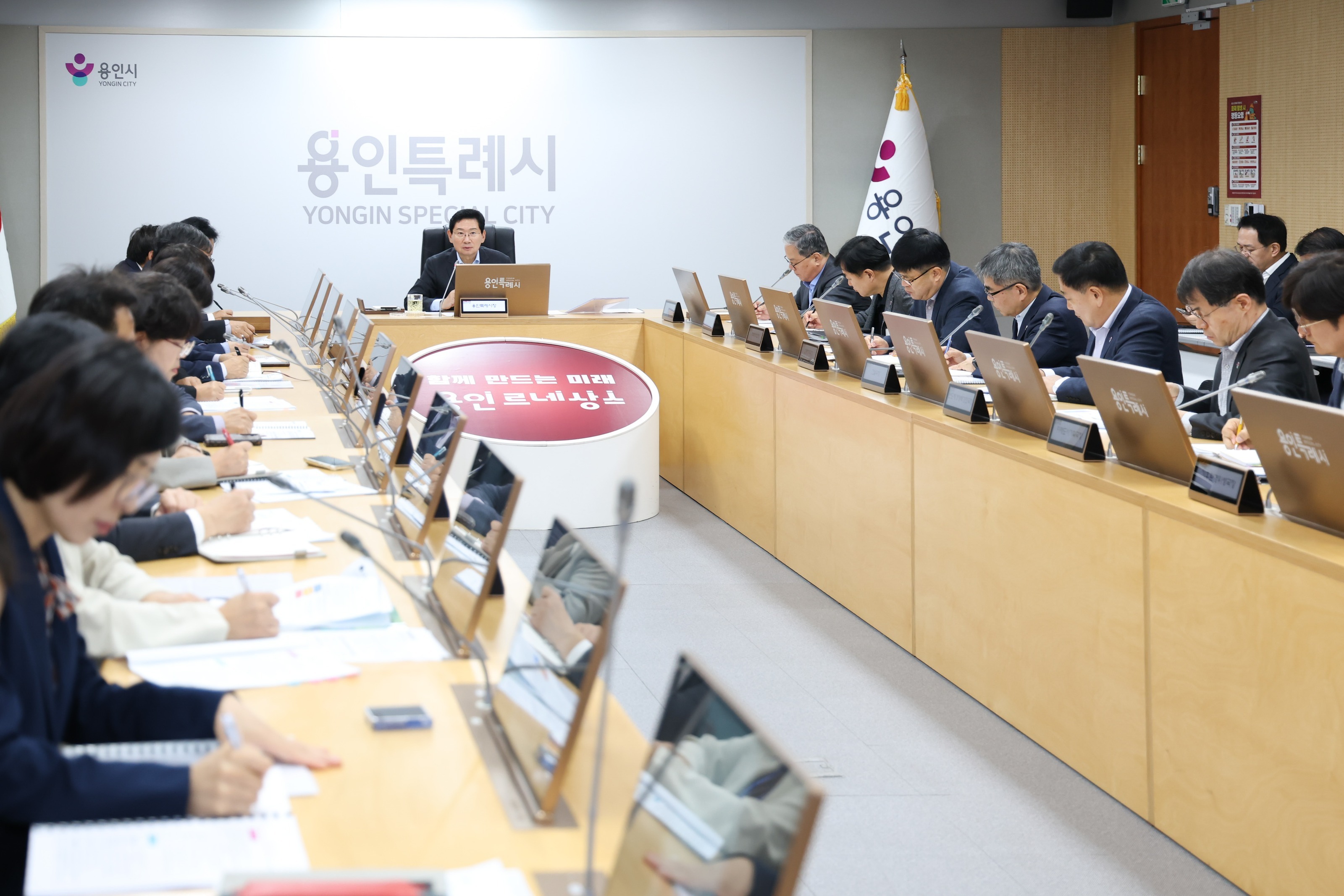
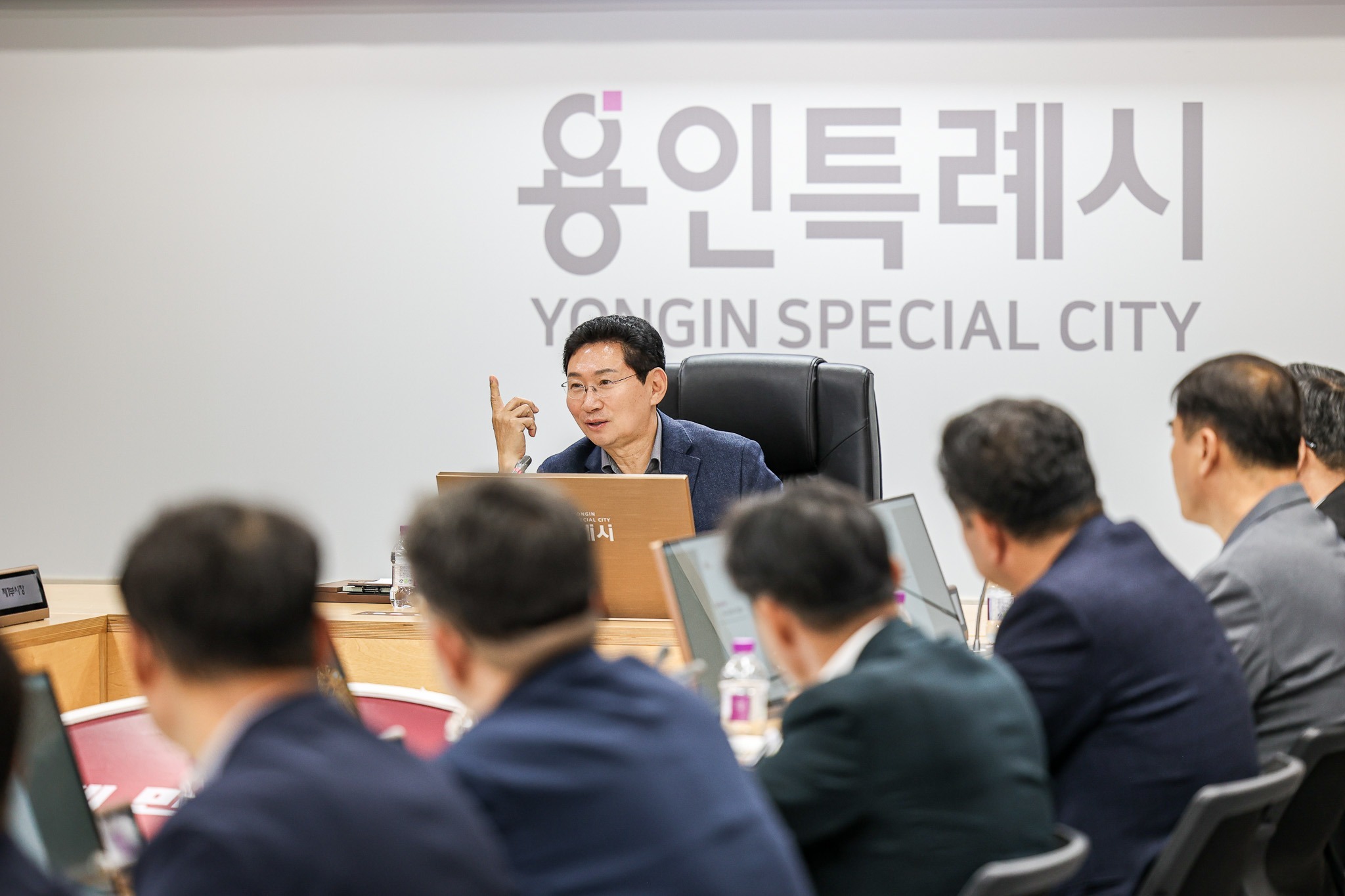
[Suwon Ilbo=Park No-hun Reporter] Mayor Baek Gun-ki of Yongin held a 3rd anniversary press briefing at the City Hall Ace Hall on the 1st, presenting future tasks for the second half of the 7th civilian administration with emphasis on 'urban balance' as 'creating an eco-friendly ecological economic self-sufficient city.'
On this day, Mayor Baek presented strategies across sectors with 'balance,' 'economy,' and 'environment' as keywords, setting goals for ▲balanced development city in all directions ▲leap toward South Korea's economic capital ▲realization of carbon neutral city.
First, the city established development strategies tailored to the characteristics of three districts for balanced development in all directions.
The city plans to construct a self-sufficient complex city with residential, industrial, and eco-town functions on approximately 6.2 million square meters in the Namsa-eup area of Choin-gu and establish guidelines for planned development.
To enhance urban competitiveness through expansion of transportation infrastructure, the city will open Namyongin IC (Wongsam) and Bukyongin IC (Mohyeon) on the Sejong-Pocheon Expressway and establish Gungchon Seoyongin IC and Pogok IC on the 2nd Outer Ring Expressway.
The city also plans to pursue opening of Route 82 local road in the Jangji-Namsa section and Route 84 local road in the Jungni-Cheonni section.
While efforts will be made to reflect the 'revised Gyeonggang Line extension' connecting Gwangju Samdong-Yongin Idong-Namsa in the next railway network construction plan, the city will promote the establishment of the 'Dongtan-Baebal Line' passing through Idong and Wongsam and the reflection of Wongsam SK Station in the 'Pyeongtak-Baebal Line' included in the third National Railway Network Construction Plan.
By 2024, the city will connect five green anchor points centered on Gyeongan Stream—Galdam Ecological Forest, Mapyeong-dong Comprehensive Sports Complex, Gyeongan Stream Urban Forest, Unhak-Hodong Waterfront Ecological Park, and Yubang-dong Citizens' Green Rest Area—to create the 'Yongin Eoul-rim (Lim) Park' with a scale of 2.77 million square meters.
The Idong Reservoir, the largest in Gyeonggi Province, will be developed as an 'Idong Eco-Leisure Park' combining waterfront ecological park and water leisure functions, and a 'Farm and Forest Town' resort will be created in the Baekam-myeon area to add functions for cultivating young farmers.
Giheung-gu will pursue advanced convergence co-development through the 'Gyeonggi Yongin Platform City' included in the 3rd New City and old city regeneration of Singal, Guseong, and Mabuk districts.
In particular, the city plans to promote the SRT stop at GTX Yongin Station, which will be completed in 2023, and open new stations on the Bundang Line, which will be reflected in the 4th National Railway Network Construction Plan and extended from Giheung to Dongtan to Osan.
Additionally, the city plans to establish new transportation systems connecting Dongbaek-Shinbong, extend the Yongin Monorail to Gwanggyo, and open Dongbaek IC to become a transportation hub in the southern metropolitan area.
Suji-gu will also pursue attracting the SRT Ori-dongcheon Station, promoting the extension of Seoul Metro Line 3, and establishing new transportation systems connecting Dongbaek-GTX Yongin Station-Seongbok Station-Shinbong-dong, with the goal of building a fast and convenient commute environment.
Additionally, the Dongcheon Station Complex urban development project on approximately 280,000 square meters in the Dongcheon-dong 897-beonji area with advanced industrial, commercial, and residential functions aims to announce district designation and development plan establishment by March next year while working to establish win-win measures with residents and landowners.
The city also unveiled a vision to leap forward as South Korea's economic center city based on the semiconductor industry.
Emphasizing the strength of the Giheung Campus, the birthplace of Samsung Semiconductor's legend, and the creation of the 'Yongin Semiconductor Cluster' in Wongsam-myeon, Choin-gu, where the world's top 1st and 2nd memory semiconductor companies are located, the city will officially proclaim 'Yongin, the Center of the Global Semiconductor Industry' during Citizens' Day in September and accelerate the formation of a global semiconductor ecosystem.
Furthermore, the city plans to support the establishment of a Samsung Electronics Giheung Campus research complex, establish specialized high schools for semiconductor talent cultivation, and construct an R&D triangle belt connecting Giheung Samsung-Jigok Ram Research-Wongsam SK to help develop cutting-edge technologies.
The Gyeonggi Yongin Platform City, being created on 2.757188 million square meters in the Bojeong and Mabuk areas of Giheung-gu, will establish four platforms—transportation, MICE, knowledge-based advanced industry, and living—to provide a foundation for leaping forward as the economic center of the southern metropolitan area.
Additionally, by 2024, the city plans to create 27 public and private industrial complexes to generate approximately 77,000 jobs and establish a Yongin venture start-up investment fund to provide a solid start-up foundation.
Lastly, the city will accelerate carbon neutrality realization based on four strategic projects—urban forest, green energy, green mobility, and green recycle—with the goal of transitioning to a carbon-neutral society by 2050.
In this regard, the city will create all 13 undeveloped rose urban parks including Yongin Eoul-rim Park and provide eight urban natural park areas such as Yubang, Guseong, and Hagal as citizens' green rest areas to increase park area per capita from 6.5 square meters in 2021 to 11.3 square meters by 2025.
To expand green energy, the city will establish hydrogen fuel cell power plants with a capacity of 170MW by 2028 in four locations—Pogok, Namdong, Wongsam, and Bojeong—and develop the Yongin Semiconductor Cluster as an energy-independent RE100 industrial complex, unifying district energy supply with eco-friendly LNG to dramatically reduce energy consumption.
Additionally, the city plans to convert 50% or more of the city's registered vehicles, approximately 250,000 vehicles, to electric and hydrogen vehicles by 2050 and distribute 200 electric buses by 2025. By 2030, the city will also increase open public electric vehicle charging stations to 300 locations.
To expand resource recycling facilities, the city will establish a resource recovery center in Idong-eup in 2023 and also plans to expand waste incineration facilities to replace the Yongin Eco Town within Yongin Respeia in Pogok-eup and the 2nd and 3rd units of the Yongin Environmental Center in Geumo-ri, Pogok-eup by 2025.
Mayor Baek stated, "I will make the remaining one year of my term a time for laying a solid foundation for a better future for Yongin City," and added, "I will dedicate myself to completing a premium city that citizens can take pride in, including the designation of a cultural city that can enhance urban status."
Loading comments…