


Special Planning Suwon City with Population of 1.23 Million Completes Blueprint for Smart City

[Suwon Ilbo=Reporter Seo Dong-young] Suwon City has prepared the 'Suwon City Smart City Plan (2021-2025)' to be pursued over the next five years, completing a blueprint capable of enhancing urban competitiveness and improving citizens' quality of life.
Suwon's initiative reflects the contemporary trend of establishing urban planning that can develop public services and cities utilizing information and communication technology in a more convenient and sustainable manner.
◆Suwon City Innovates with Smart City
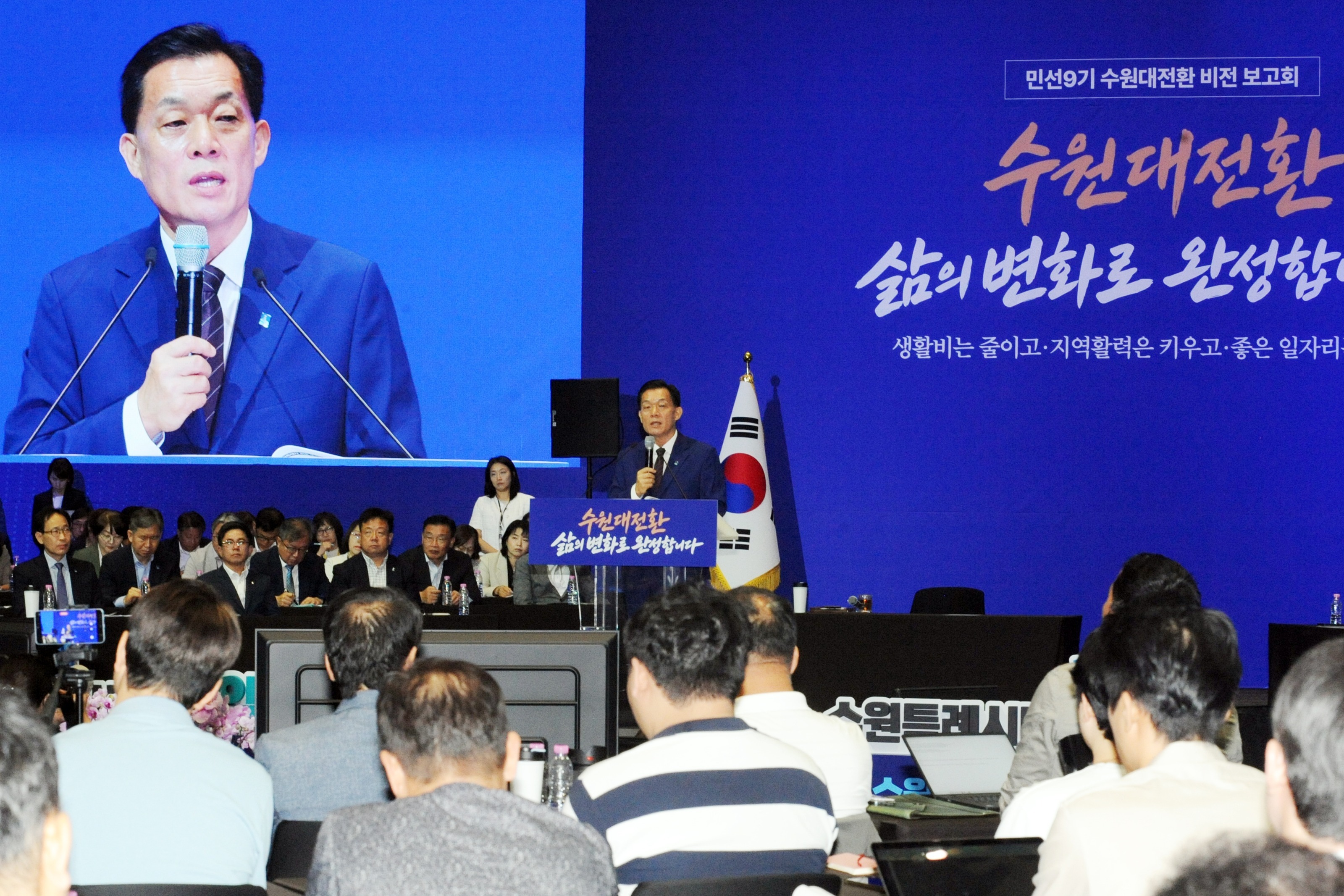
Suwon City introduced its smart city Suwon plan at a policy announcement during an expanded senior staff meeting held on February 25 in the conference room of City Hall.
At a gathering where all senior civil servants share Suwon City's major administrative plans and goals, the contents of the smart city plan were shared, enabling all departments to participate in the implementation of smart cities over the next five years.
The city, which had established a U-CITY team in 2008 and established a ubiquitous city plan (2011-2015), has been undertaking work in line with the 2017 revision of the Smart City Act.
To efficiently create a smart city, the city commissioned a smart city plan development project starting in July 2019 based on the 'Act on Smart City Development and Industry Promotion,' seeking to establish a systematic plan.
In the research project, a survey was conducted on urban issues targeting 1,176 citizens to establish strategies tailored to Suwon's internal and external conditions, including being a metropolis with a registered population of 1.23 million, increasing elderly population, declining role of old downtown, and emerging gaps between western and eastern Suwon regions.
In addition, through comprehensive investigation of smart city-related services, it was analyzed that a control tower role was necessary to utilize accumulated data for each project and expand linkage and continuity among projects.
The city comprehensively analyzed various needs, urban issues, and related project information, reflecting them in the smart city Suwon concept.

◆'Smart Inclusive City Combining History, Technology, and People' Suwon
The vision of the newly established 'Smart City Suwon' is defined as a 'Smart Inclusive City Combining History, Technology, and People.'
The goals include ▲Realizing a comfortable and meaningful green smart city ▲Building an innovative smart city that connects and converges ▲Creating an open smart city that people want to visit and see.
First, a green smart city is implemented by building a nature-friendly green city and applying smart environmental technology centered on the Green New Deal.
Toward the goal of building an innovative smart city, innovation and creativity befitting the historical significance of being a city planned by King Jeongjo, succession of citizen-oriented thought, and establishment of data-driven innovation centers are being promoted.
Additionally, including the elderly and underprivileged from the digital divide and jumping to a new tourism city through citizen-participatory living labs and fusion with historical and cultural tourism concretizes the open smart city.
In particular, establishing a data-driven urban foundation is the central axis of smart city implementation. The willingness is reflected to solve urban problems centered on data, develop urban policies and services by building a data platform, and lead innovation through hiring startups and activating investments using open data for shared data.
To this end, a data marketplace platform project is being pursued to integrate and analyze public and private data. Additionally, a digital twin-based city operation system will be built by constructing a 3D virtual city using Suwon City's data to seek optimal city operations.
The city is envisioning three hubs to realize three goals for smart city Suwon.
The smart innovation hub connects R&D; Science Park and Tapdong District, Suwon Station and Hwaseo Station, Delta Plex, Smart Police, Samsung Electronics and surrounding areas to serve as a pioneer of smart innovation.
Additionally, the city plans to pursue smart city planning by creating eco-smart cities and designating smart green hubs utilizing nature such as Gwanggyo Mountain, and designating areas with high tourist inflow such as Suwon Hwaseong Fortress and Suwon Convention Center as smart open hubs.
At the same time, the city plans to apply smart urban services focusing on improving the living environment of the old downtown located in the city center, and introduce smart design from the urban planning stage for new cities mainly formed in outer areas to narrow the gap.
From this year through next year, the city plans to present a roadmap that advances existing smart services and expands related infrastructure, goes through a service expansion period in 2023-2024, and achieves settlement of the smart city system through cooperation with surrounding cities and related organizations and qualitative expansion by 2025.

◆From Sunlight Maps to Smart Shoes...An Intelligent City
Suwon City's smart city plan contains 29 implementation tasks and 41 services across six fields. Among these, 18 new smart service projects are being pursued.
First, the CCTV video data analysis system is a project expected to have effects on citizens' safety and traffic convenience. By analyzing and utilizing already installed CCTV video data, it will be applied to traffic, crime prevention, illegal dumping, dementia senior care, and child protection.
The sunlight map construction project is data showing profitability based on a sunlight map displaying sunlight for individual buildings distributed throughout Suwon City according to solar energy generation facility installation. It is being pursued to increase Suwon City's solar energy utilization.
A system providing integrated tourism information using public WiFi is also being established. Based on basic information entered by tourists and accessed areas, it will become easier to provide customized tourism information or apply inter-tourist destination linked discount systems.
The city is also promoting a project to build a smart innovation center that increases accessibility for youth as well as private, public, industrial, academic, and research sectors, to be utilized as a hub space for startup companies.
Projects to facilitate citizens' daily lives are also included. These include 'Smart Shoes for Dementia Prevention' that identify the real-time location of elderly people with dementia through smart shoes equipped with GPS location and wireless communication devices, and 'Walk to Suwon Pay' that connects health apps with local currency apps to provide citizens with exercise motivation.
Additionally, ▲Enhancement of Suwon City's integrated website ▲Energy pilot village creation ▲Customized energy usage information provision ▲Supporting five-sense experience user information sharing ▲Establishing smart Suwon experience spaces ▲Providing smart citizen education ▲Supporting elderly job creation ▲Operating smart city living labs ▲Establishing smart meeting systems ▲IoT mobile LTE CCTV, etc. are included in the new smart service projects (draft).
A city official stated, "Following King Jeongjo's innovative technique in constructing Suwon Hwaseong Fortress, we will do our best to devise smart policies that enhance citizens' quality of life," and added, "We will provide various smart city services that citizens can experience to create a smart inclusive city Suwon."
Loading comments…