


Suwon, Environmental Capital, Materializes Water, Energy, and Waste Resources

[Suwon Ilbo = Reporter Seo Dong-young] Suwon City is solidifying the foundation of an environmental capital through resource management policies utilizing water, energy, and waste.
◆ Keeping Suwon Healthy Through Water Circulation
As the city name 'Suwon (水原)' reveals, water is an extremely important resource in Suwon.
Suwon has an environment capable of securing abundant water resources, with seven rivers—Hwangguji Stream, Seoho Stream, Suwon Stream, Woncheonry Stream, Younghwa Stream, Gwanggyo Stream, and Yeocheon—and their tributary systems forming large and small reservoirs including Gwanggyo Reservoir.
However, continued urban development has negatively impacted water circulation. As impervious areas increase, rainwater inevitably flows into streams rapidly along the ground surface.
To manage increased stormwater runoff and resulting pollution loads through nature-friendly techniques, Suwon's Rain City project was devised.
This is known as Low Impact Development (LID).
The 'Rain City Suwon' project, pursued nationwide for the first time to enhance water cycle integrity, began in May 2009. The 'Suwon City Water Circulation Management Ordinance' was enacted, and as awareness of rainwater importance and reuse expanded, mid to long-term plans were established.
From 2015, projects involving water circulation—rainwater utilization facilities, recycled water facilities, and green stormwater infrastructure—came into being.
Rain gardens, seasonal surface watering using rainwater, rainwater infiltration flower beds, permeable blocks, rainwater infiltration trenches, rain savings tanks, rain refueling stations, tree filter boxes, and permeable parking lots were created through the Rain City project.
After the Rain City infrastructure was applied, water balance analysis showed that surface runoff from rainwater decreased and rainwater infiltration increased.
Subsequently, the Rain City project, aimed at creating a safe water circulation city where people, water, and nature coexist, combined citizen participation with IT technology, advancing to a stage where remote control of rain refueling stations and surface watering systems became possible.
The city has established itself not only as a Rain City project leader but also as a local government leading the water circulation sector through integrated water management policies and water environment network operations.

◆ Preparing for the Future with Clean Energy
A representative method for efficiently managing energy resources is the 'Green Curtain' project, which reduces hot urban temperatures in summer.
The Green Curtain project, which plants green vegetation on building windows to block sunlight, reducing indoor temperature by more than 3 degrees Celsius and saving electrical energy, is a 'hit product' for Suwon City.
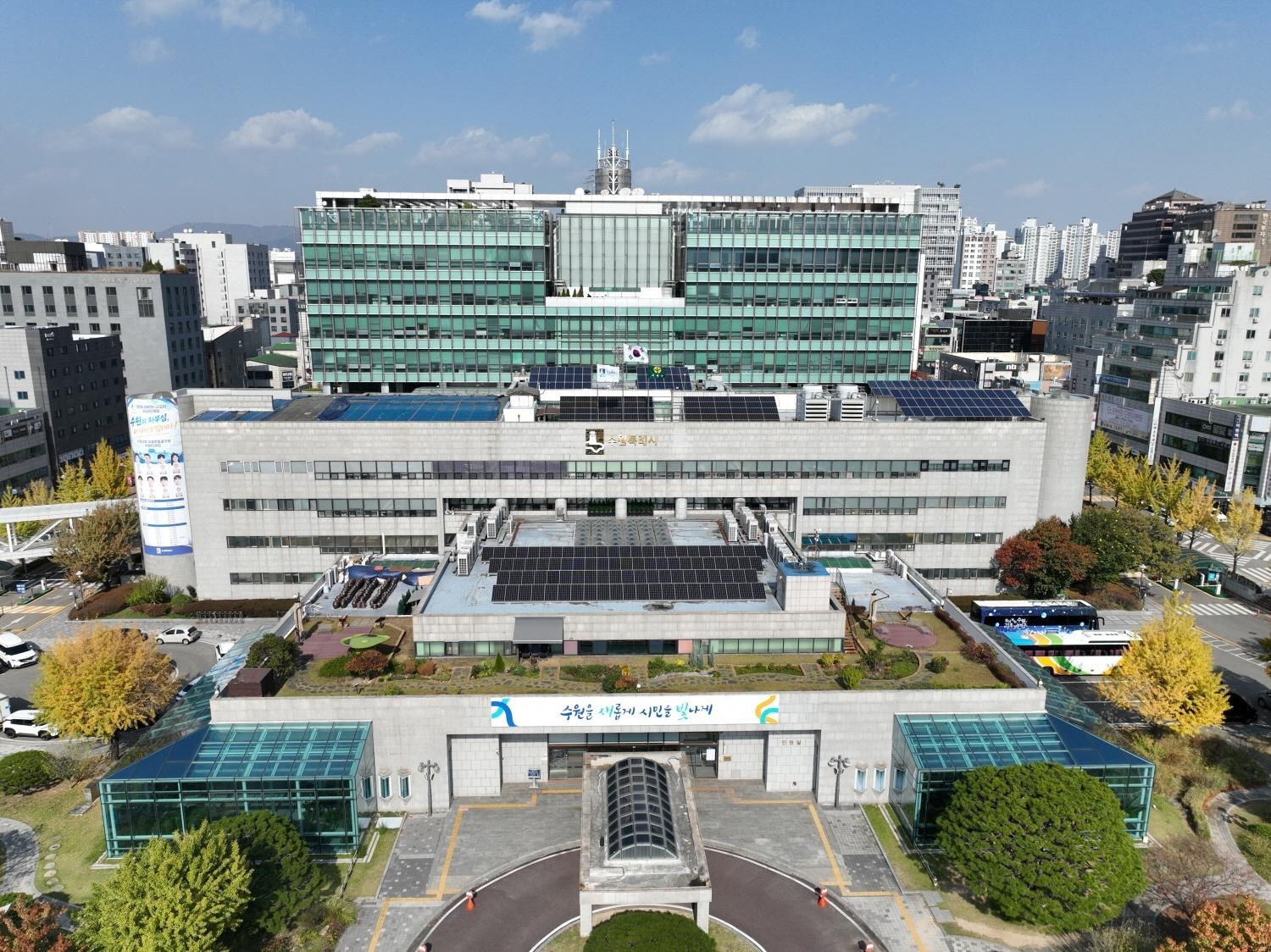
The project, which began in 2017, involves creating green curtains and green tunnels using climbing plants in Suwon City Hall, public facilities, schools, and multi-use facilities in the private sector.
Plants such as morning glory, hyacinth bean, balloon flower, luffa, bitter melon, and sword bean are utilized. After installation, indoor perceived temperatures drop 4-5 degrees Celsius and ground temperatures drop 6 degrees Celsius, achieving 20-30% electrical energy savings.
Moreover, green curtains not only reduce cooling costs in summer but also provide citizens with a green urban environment, increase the green coverage rate without requiring additional space, and reduce fine dust through plant utilization.
After seeing results from creating 30 green curtains in the first year, the city, following 56 installations last year, plans to create 40 green curtains this year as well. Many local governments have benchmarked Suwon's green curtain project.
Local governments including Jeju, Anseong, Guri, Gunsan, Siheung, Gunpo, Gangneung, Songpa-gu Seoul, and Dalseo-gu Daegu requested materials on the green curtain project or visited project sites directly.
The city produced manuals for creating green curtains and distributed them to citizens so that the private sector could also effectively improve energy efficiency.
Additionally, the city is striving to lead the energy sector for the future through expanded renewable energy supply, support for green building creation, and energy-efficient public buildings.

◆ A City Where Garbage Becomes a Resource
The city is making efforts to demonstrate best practices as an environmental capital by utilizing growing residential waste as a resource.
Resource Circulation Centers, resource recovery facilities, and food waste resource recovery facilities serve as the main pillars for appropriately handling residential waste.
First, the Resource Circulation Center, with a daily processing capacity of 235 tons, plays a key role in processing large waste, recyclables, and street sand.
Waste brought into Suwon City Resource Circulation Center has increased explosively from 47,396 tons in 2014 to 75,731 tons last year.
Of this, recyclables are disposed of at 14,372 tons in 2014 and 35,234 tons in 2019.
The ratio of recycled outflows compared to inflows has increased from 30% to over 46%.
Additionally, at the Resource Recovery Facility located in Youngtong-dong, heat generated during the treatment process is utilized to produce electricity through private power generation projects or supply to district heating companies.
This is expected to achieve both greenhouse gas reduction and increased fiscal revenue.
Food waste management is handled by the Food Waste Resource Recovery Facility located in Saeksung-dong.
A stable processing system for large-scale food waste collected daily throughout the city is in place for processing such as feed production. The plan is to expand the feed facility scale by 100 tons by next year to establish a more stable processing system.
Additionally, the city is working to minimize garbage from the source and minimize environmental pollution occurring during waste processing by promoting reduction in discharge and spreading a culture of proper waste separation.
Particularly this year, while promoting a 22% reduction in residential waste compared to the previous year, the city plans to continuously conduct sampling of garbage brought in from public institutions and implement customized waste disposal publicity for foreigners and college students.

Loading comments…