


Suwon's Swift COVID-19 Response Played Major Role in Curbing Spread

[Suwon Ilbo=Reporter Seo Dong-young] Suwon City's swift response to COVID-19 is receiving praise for playing a major role in preventing the spread of the virus.
On January 20, a Chinese woman who entered Incheon Airport was confirmed as the first COVID-19 patient in South Korea. The government raised the infectious disease crisis alert level from "interest" to "vigilance."
Two days later, Suwon City held an "emergency response meeting on novel coronavirus infection" and immediately established a "novel coronavirus response task force."
Mayor Yeom Tae-young posted "Suwon City's Novel Coronavirus Response Report No. 1" on his personal SNS and promised, "We will prioritize citizen safety and respond with an 'overabundance of caution' to COVID-19." He also declared "transparent and rapid information disclosure."
True to the mayor's promise, the city implemented preemptive responses each time COVID-19 spread, suppressing community transmission.
The city disclosed confirmed patient information, movement patterns, and COVID-19 response updates to citizens through SNS. As of the 22nd, Mayor Yeom Tae-young's SNS contains 315 COVID-19 response updates.
On January 23, Suwon City, which established "screening clinics" (8 total) at four district health centers and four hospitals, operated a crisis response headquarters at Jangan-gu Health Center during the Lunar New Year holidays (January 24-27) to prepare for any potential patient outbreaks.
After the fourth confirmed case in South Korea on January 27, the Ministry of Health and Welfare escalated the infectious disease alert level from "vigilance" to "caution," and Suwon City upgraded its infection response task force to a disaster safety response headquarters, raising its response level further.
On February 2, the first confirmed case in Suwon occurred—a man in his 40s who had entered from Wuhan, China. The city convened an emergency response meeting and decided to respond at the "critical" level, the highest crisis alert stage. It issued orders for temporary closures of all daycare centers starting February 3 and suspended all programs at Suwon City public facilities and community centers in all districts.
Four days later, Suwon's second confirmed case occurred—a relative living in the same building as the first confirmed case.
The next day, Mayor Yeom Tae-young instructed, "Suwon City must independently prepare facilities for close contacts of confirmed patients to stay during their quarantine period." He determined that "home quarantine alone," where families inevitably share space, could not perfectly prevent family-to-family transmission.
The city searched for suitable facilities and decided to use 30 rooms (1st and 2nd floors) of the Suwon Youth Hostel in Seodun-dong as temporary quarantine facilities.
Operations began on February 18. This was the first such temporary quarantine facility for COVID-19 close contacts established by a basic local government in the country. Residents can use the facility for two weeks until their quarantine is lifted.
Starting with the admission of three family members of Suwon's 1st and 2nd confirmed cases on February 19, families of confirmed patients and close contacts of confirmed cases underwent quarantine at the temporary facility. A total of 70 people have been admitted, and 63 have completed their quarantine and been discharged. As of April 22, seven people are under quarantine at the temporary facility.
Following the 31st confirmed case in South Korea on February 18, a large cluster infection occurred centered on Sincheonji Church of Jesus in Daegu.
Days later, a cluster infection also occurred at Suwon's "Lifesaem Church" (Yeongtong-gu). Eleven church members who attended services (three from Suwon, six from Hwaseong, and two from Osan) tested positive for COVID-19.
From March 4 to 5, the city conducted diagnostic tests on all 171 attendees of the service held on February 23 where the cluster infection occurred and extensively monitored contacts of the attendees. It also recommended home quarantine for all contacts, preventing secondary and tertiary infections.
From early March, confirmed cases among overseas arrivals occurred successively. Cases where overseas arrivals rode in family members' cars from the airport and then infected family members at home increased.
On March 8, Suwon's first confirmed case among overseas arrivals occurred—a man in his 20s who had traveled in Europe. The next day, one family member of the confirmed case was also confirmed positive.
Suwon City prepared measures to prevent contact between overseas arrivals and their families until COVID-19 test results were confirmed. Starting March 26, the city was the first in the country to operate a temporary testing facility at the Election Training Institute, a facility where asymptomatic overseas arrivals could stay for one to two days until their COVID-19 test results were reported. Overseas arrivals are transported from the airport to the temporary testing facility by van, preventing contact with other people.
After sample collection, occupants stay for one to two days until test results are returned. Those testing "positive" are transferred to government-designated hospitals, while those testing "negative" return home for two weeks of home quarantine. Discharged persons are transported home by Suwon City van.
Starting with 26 admissions on the first day, 651 people used the temporary testing facility as of April 21. As of the 22nd, five citizens who tested positive for COVID-19 after diagnostic testing at the temporary testing facility (Suwon confirmed cases No. 30, 36, 37, 38, 41). By thoroughly isolating from the moment of entry until test results were available, the city prevented additional infections.
The city also prepared measures to isolate overseas arrivals and their families. On March 27, it signed business agreements with five hotels in the city, including Value Hype Hotel Suwon and Ibis Ambassador Suwon, and launched "peace-of-mind accommodation" services allowing families of overseas arrivals living in Suwon to use hotels at discounted rates during the overseas arrival's home quarantine.

Domestic family members of overseas arrivals can use the hotels at rates negotiated between Suwon City and the five hotels, with discounts up to 70% off regular rates.
When arrivals quarantine at home and families stay at hotels, infection risk can be prevented and "complete isolation" can be achieved. The "peace-of-mind accommodation service" is also helping the accommodation industry, which has seen drastic revenue drops since the COVID-19 crisis. From March 27 to April 21, 196 households (333 people) booked the peace-of-mind accommodation service.
Suwon City's overseas arrival management policies—including the "temporary testing facility for overseas arrivals" and "peace-of-mind accommodation service"—which the city pioneered nationally, are now spreading nationwide. Approximately 40 local governments across the country are adopting and operating temporary testing facilities and peace-of-mind accommodation services for arrivals.
Mayor Yeom Tae-young held an online briefing on the 2nd and announced, "We will provide 100,000 won per capita in 'Suwon City Emergency Basic Income' to all Suwon residents." The city has been distributing the emergency basic income starting just a week later on the 9th.
Mayor Yeom Tae-young's five-year campaign to request the government to "grant basic local governments authority to employ epidemiological investigators" was also realized.
On February 26, the National Assembly held a plenary session and passed the "COVID-19 Three Laws," including the "Amendment to the Infectious Disease Prevention and Management Act," which was jointly proposed by lawmaker Ki Dong-min (Democratic Party). The amendment included a provision stating, "Mayors, county governors, and district chiefs may appoint epidemiological investigators among their civil servants when necessary to conduct epidemiological investigation work."
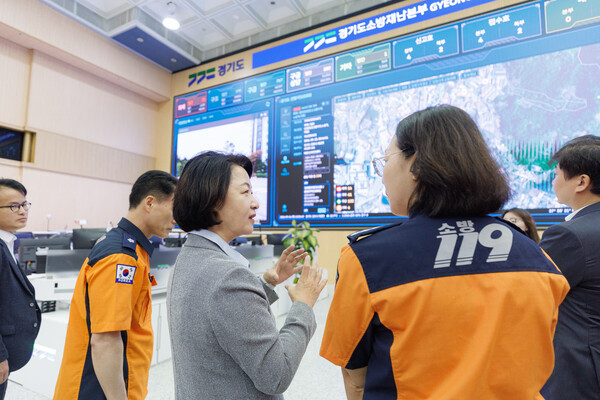
Presiding over the "COVID-19 Progress Inspection Report" held at City Hall's Disaster Safety Situation Room on the 20th, Mayor Yeom Tae-young said, "Our city's swift COVID-19 response policies played a considerable role in minimizing the spread of the infectious disease," and "Thanks to the active cooperation of citizens, medical personnel, police, firefighters, and public officials, Suwon City was able to respond to COVID-19 preemptively and exemplarily."
As of April 22, Suwon City has 49 confirmed COVID-19 cases. No additional confirmed cases have occurred during the 13 days following a man in his 30s who entered from abroad being confirmed positive on the 9th.
Suwon's confirmed case rate per 100,000 residents is 4.1 cases. This is lower than the nationwide rate (20.5 cases) and Gyeonggi Province rate (4.9 cases).


Loading comments…