


89% of Gyeonggi Province Residents View Social Conflict as 'Serious'...'Ideological Conflict' Ranks First
Suwon NewsPublished 2019.12.17 06:58
Most Urgent Conflict Issue: Regional Development Imbalance Between Southern and Northeastern Gyeonggi (24%)62% Support 'Public Deliberation Process' as Solution to Public Conflict
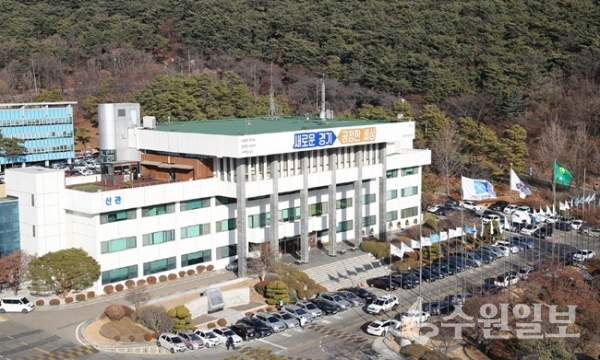
[Suwon Ilbo=Reporter Park No-hun] Nine out of every ten Gyeonggi Province residents perceive social conflict as 'serious.' Additionally, 65% answered that the situation has 'become worse' compared to a year ago.
According to Gyeonggi Province on the 17th, a public opinion survey on 'social conflict' was conducted. To the question 'Can you trust people?', over half of the residents, 55%, answered 'yes, I can trust them,' while 41% responded 'I cannot trust them.'
Notably, this figure has shown a declining trend annually. Positive responses that reached 70% in 2017 decreased to 60% in 2018 and further to 55% in 2019, marking a 15 percentage point drop over three years. This indicates that provincial society is increasingly becoming 'untrustworthy.'
When asked whether social conflict would be positive for social development, only 20% of residents agreed.
The most serious conflict identified was ▲ideological conflict, with over half of residents (55%) ranking it first. This was followed by ▲economic disparity (18%) and ▲gender conflict (9%). This contrasts with responses to the same question in 2017, when residents ranked ▲economic disparity (29%), ▲generational conflict (16%), and ▲ideological conflict (15%) in that order.
Regarding ▲gender conflict, comparing responses between those in their 20s and those 50 and older revealed a notable generational perspective difference, with 31% of those in their 20s viewing it as serious compared to just 1% of those 50 and older. However, regarding ▲economic disparity, both age groups showed similar perspectives at 20% and 17% respectively, indicating aligned views on economic issues.
When asked about 'the most urgent issue to resolve among current conflicts in Gyeonggi Province,' residents ranked ▲conflict arising from development imbalance between southern and northeastern Gyeonggi (24%) first. When Gyeonggi Province was divided into eight regions, this issue ranked first in seven of them.
Ranking second was ▲conflict surrounding the construction of nuisance facilities, such as garbage landfills (16%), which ranked first (24%) in the western adjacent region bordering Incheon, where the Metropolitan Landfill is located. Third place was ▲conflict due to changes in transportation infrastructure, such as road routes and railway station locations (13%).
When asked whether a 'public deliberation process' in which residents jointly discuss and deliberate to develop policy alternatives would be helpful in resolving such public conflicts, 62% of residents agreed.
A director of the Social Communication and Cooperative Governance Division said, "This result confirms that social conflict is very serious," and added, "Gyeonggi Province is making efforts toward systematic conflict management by selecting priority management projects at the Conflict Management Deliberation Committee to proactively prevent conflicts and by appointing conflict mediators."
Kwak Yun-seok, head of public relations and planning for the province, stated, "When public conflicts occur, introducing 'public deliberation surveys,' a process in which residents participate and create policy alternatives such as the 'public deliberation on Shin-Kori Units 5 and 6,' could serve as a solution."
The survey was conducted by Gyeonggi Province through ㈜Realmeter on 2,010 residents using an automated response survey method from November 26-28, with a 95% confidence level and a sampling error of ±2.2%p.
© Suwon Ilbo. Unauthorized reproduction and redistribution prohibited.


Loading comments…