


Choo Mi-ae: "7 Million Gyeonggi Residents Commute Daily... 40 Railway Lines Needed for Industrial Growth"

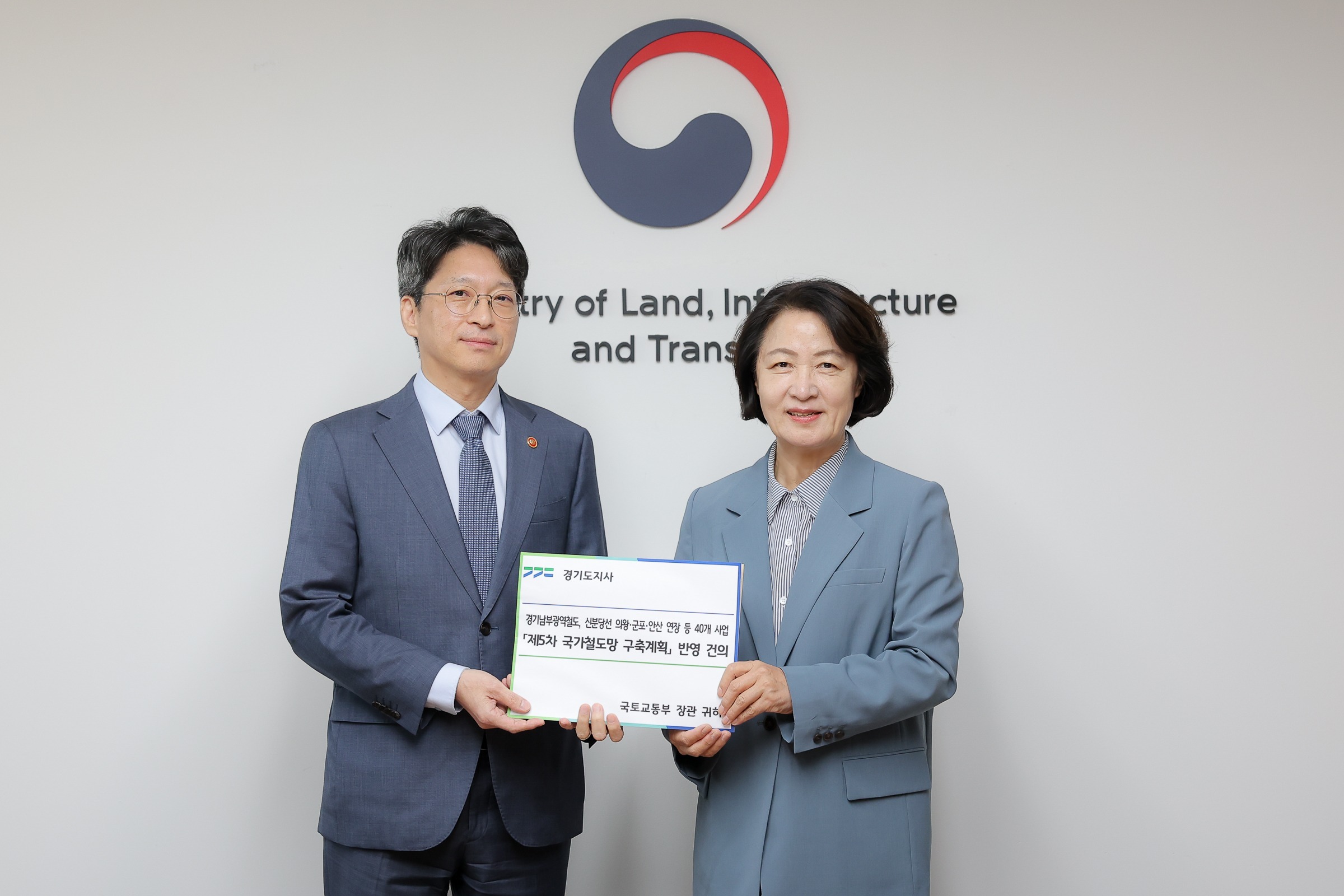
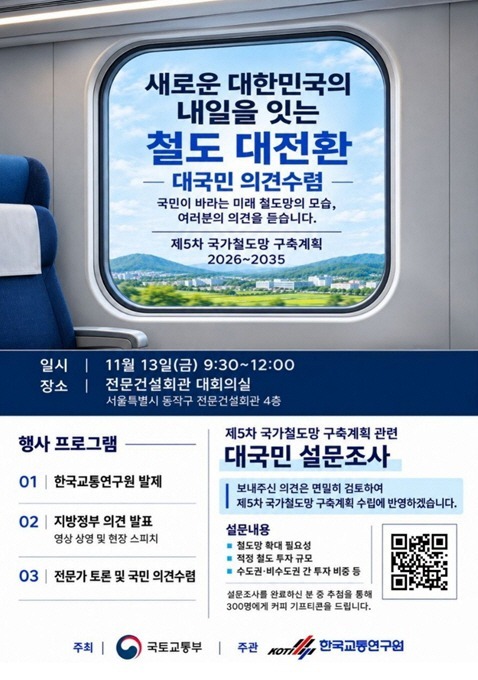
Gyeonggi Province Governor Choo Mi-ae attended the '5th National Railway Network Construction Plan Public Consultation Meeting' hosted by the Ministry of Land, Infrastructure and Transport at the Specialized Construction Building in Seoul on the 13th, urging the government to reflect 40 railway projects proposed by Gyeonggi Province to support the Republic of Korea's industrial growth.
Gyeonggi Province has requested a total of 40 projects to be reflected in the 5th National Railway Network Construction Plan. These consist of 3 high-speed railway projects, 8 general railway projects, and 29 metropolitan railway projects.
The event was held to gather opinions from local governments, experts, and the public before determining the direction of national railway network expansion over the next 10 years. Among metropolitan authority leaders, only Governor Choo and Incheon Mayor Park Chan-dae attended.
During the local government opinion presentation, Governor Choo stated, "The population in Gyeonggi Province is growing, housing is increasing, and factories are expanding, but railways are not keeping pace with this growth at all." She emphasized, "Seven million Gyeonggi residents commute daily. Railways are an urgent livelihood issue on which the daily lives of Gyeonggi residents depend."
Governor Choo continued, "Gyeonggi Province has proposed 40 railway projects that are essential in the 5th National Railway Network Construction Plan," and added, "Since Gyeonggi Province is responsible for Korea's residential stability and industrial growth, expanding Gyeonggi Province's railway network is the path to enhancing the competitiveness of the Republic of Korea itself."
Governor Choo also requested that the investment scale for new projects in the 5th National Railway Network Construction Plan (2026-2035) be expanded to over 100 trillion won. During the 4th plan (2021-2030), it was approximately 60 trillion won.
Gyeonggi Province has cited resolving transportation disparities in northern Gyeonggi Province, preparing transportation solutions for new cities, and strengthening competitiveness in national strategic industries as reasons for expanding the railway network.

Northern Gyeonggi Province has long endured military installations and various regulations for national security purposes, but many areas still lack adequate railway accessibility. The province maintains that national-level railway investment is necessary to guarantee the mobility rights of residents in northern Gyeonggi Province.
The province also emphasized railway network expansion in preparation for large-scale housing development projects, including the third new city initiative. Since railways require extensive time to develop, incorporating future transportation demand can reduce traffic inconvenience for new city residents and support the government's housing supply policy.
Expanding railway networks connecting the Yongin Advanced System Semiconductor National Industrial Complex, semiconductor production facilities in Pyeongtaek, Icheon, and Hwaseong, and the research and development hub in Pangyo can enhance accessibility between industrial sites and residential areas and facilitate the mobility of excellent talent.
The 5th National Railway Network Construction Plan is a statutory plan that determines the direction of national railway network expansion for 10 years from 2026 to 2035. The Ministry of Land, Infrastructure and Transport plans to finalize and announce the 5th National Railway Network Construction Plan through draft preparation, public hearings, consultations with relevant agencies, and deliberation by the Railway Industry Committee.

Loading comments…