


Gyeonggi Province Says "Unfair Public Appraisal System Allowing Tax Breaks on Expensive Real Estate Must Be Reformed"

[Suwon Ilbo=Reporter Hong Sung-gil] Gyeonggi Province has decided to develop concrete alternatives to address the current public appraisal system's failure to properly reflect market prices, which has become a source of unfair taxation, and will propose them to the central government.
Through seven months of policy discussions with the Gyeonggi Province Real Estate Policy Committee established last December, the province has identified problems with the current appraisal system and prepared improvement measures. On the 17th, it announced plans to formally propose these to the Ministry of Land, Infrastructure and Transport this month.
Gyeonggi Province's public appraisal system improvement plan consists of four measures: ▲Delegation of authority for standard site and residential appraisal and evaluation to provincial governors ▲Prompt implementation of non-residential real estate appraisal system ▲Abolition of the 80% appraisal ratio for residential properties ▲Implementation of price survey projects for high-value non-residential real estate, among others.
First, the province plans to propose delegating authority for standard site and residential survey and evaluation to provincial governors to ensure accurate real estate public appraisal pricing.
The province notes that while the Ministry of Land, Infrastructure and Transport currently selects standard sites and residences to set public appraisal prices, there are limitations in conducting precise surveys and evaluations due to insufficient time and personnel, resulting in large discrepancies across all transaction price ranges.
Accordingly, the province believes that delegating authority for standard site and standard residential survey and evaluation to provincial governors who are familiar with local circumstances and have superior on-site accessibility, while having the Ministry of Land, Infrastructure and Transport verify these results through a role-sharing approach, will enable fair public appraisal pricing.
Second, the prompt implementation of non-residential real estate appraisal system is a measure to correct unfair taxation.
Under the current system, taxes are levied based on publicly appraised prices for land and residential properties, but non-residential real estate such as commercial buildings or large office buildings do not have public appraisal prices. Consequently, taxes are levied based on the 'standard market price' calculated by each local government and the National Tax Service and the 'benchmark market value,' but many have pointed out that such calculation methods have limitations in reflecting actual transaction prices.
The problem is that to address this, the government amended the law in 2016 to require publication of public appraisal prices for non-residential real estate as well, but it has yet to be implemented due to practical difficulties.
Third is the abolition of the 80% appraisal ratio for residential properties. The appraisal ratio refers to multiplying the appraised value by a certain percentage. Currently, an 80% appraisal ratio is applied to residential properties while land is published at its assessed price. The problem is that in such cases, residential properties, which represent the combined concept of land and buildings, sometimes have lower public appraisal prices than land alone, creating a reversal phenomenon. The province believes that abolishing the appraisal ratio would alleviate this problem.
Finally, the province plans to implement price survey projects with specialized institutions for high-value non-residential real estate in the province. This is because high-value real estate transactions are rare, and particularly for non-residential real estate, evaluation work is difficult, making it challenging to identify actual transaction prices. The province explained that through such surveys, if transparency and fairness in non-residential real estate prices are secured, it can lay the foundation for equitable taxation and restore public confidence.
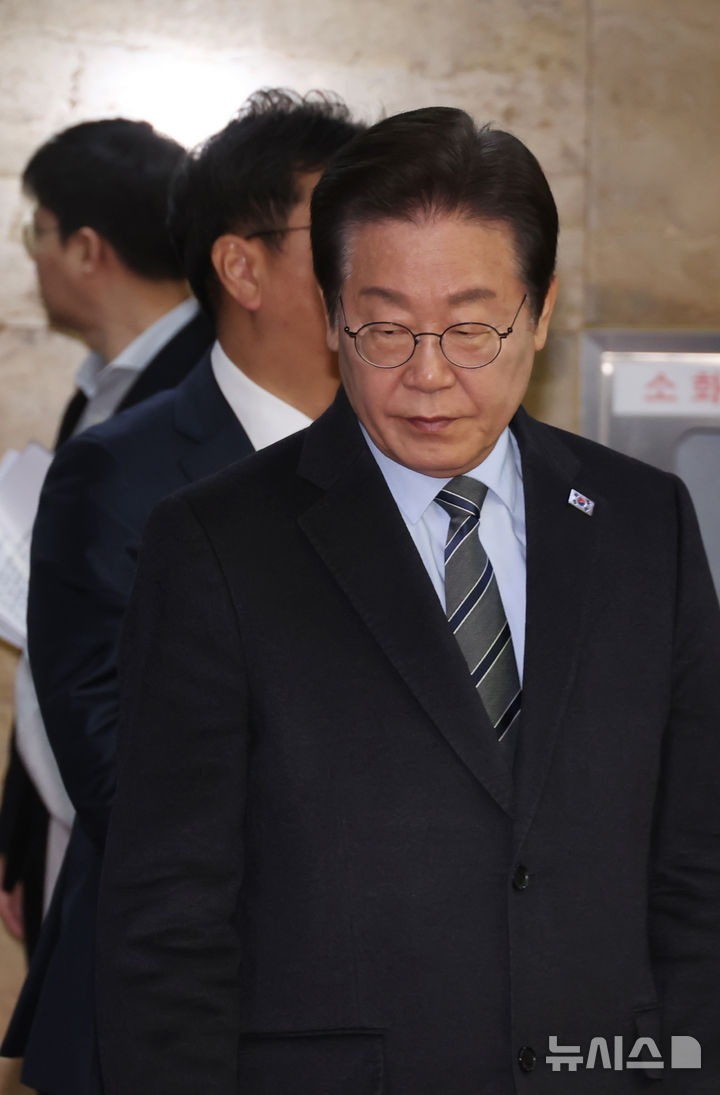
Kim Ki-se, director of the Gyeonggi Province Autonomous Administration Bureau, said, "The reform of the public appraisal system can be said to be the first step in implementing a basic income-type land possession tax that Governor Lee Jae-myung is pursuing," and "The province plans to recover unearned real estate income through the land possession tax and use it as a source for basic income. To achieve this, prior improvement of the public appraisal system, which is the basis for taxation, is necessary."


Loading comments…