


Gyeonggi Province Shifts Population Policy Focus from Fertility Incentives to Quality of Life Improvement
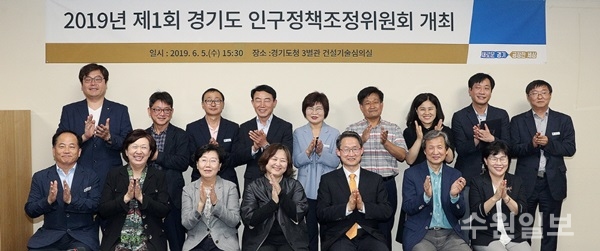
[Suwon Ilbo=Reporter Kim Ah-hyun] Gyeonggi Province has shifted its population policy direction this year from existing fertility incentives to improving 'quality of life for all generations' and is concentrating on 20 core capability projects across 7 major sectors based on life cycles.
The province held the Population Policy Coordination Committee (Chair: Kim Hee-gyeom, Senior Vice Governor) on the 5th and deliberated and adopted the '2019 Gyeonggi Province Low Fertility and Aging Society Implementation Plan' reflecting these contents.
Gyeonggi Province's Low Fertility and Aging Society Implementation Plan is established annually according to the low fertility and aging society policy roadmap pursued by the government. This implementation plan follows the policy roadmap announced in December of last year.
The province explained that it has established Gyeonggi-tailored measures as the government has changed the framework of population policy from fertility incentives to improving quality of life for all generations.
According to this implementation plan, the province will this year divide life cycles into 7 sectors—▲work-life balance ▲childcare ▲education ▲employment ▲senior citizens ▲housing supply ▲response infrastructure—with the vision of 'realizing a sustainable Gyeonggi where all generations live happily together,' and will concentrate on pushing forward a total of 20 core capability projects.
The work-life balance sector supports balance between work and life, and includes 3 projects such as establishing a work-life balance platform including job creation for middle-aged women to prevent career interruptions, and supporting after-school pickup services for elementary school children in areas with low public transportation infrastructure.
In the childcare sector, 6 projects are included such as expanding public and government-operated childcare centers to 150 or more per year through 2022, supporting postpartum care expenses in Gyeonggi Province, expanding public postpartum care centers, and the 'Children's Love Playground' project which remodels public and government-operated childcare centers and toy rental centers to create playgrounds.
In the education sector, free uniform support for approximately 127,000 first-year middle school students in the province and elementary school dental care programs are included.
In the employment sector, 5 projects are listed such as 40s-60s re-employment support assisting early retirees in their 40s and baby boomers in their 50s and beyond with re-employment, job creation support for 50s-60s generation, and 'new middle-aged supporters' connecting 30 young entrepreneurs with 60 startup supporters for assistance.
Additionally, in the senior citizen sector, projects such as 'diverse cultural enjoyment activities for senior citizens' promoting expanded cultural participation are pursued, in the housing sector, interest support for happy housing rental deposits, and in the response infrastructure sector, low fertility reduction campaigns and awareness improvement projects are to be implemented.
Gyeonggi Province's Population Policy Coordination Committee was launched in March 2017 as the nation's first such committee and serves as the control tower for Gyeonggi Province's population policy, performing roles including proposing and consulting on population policies, coordinating opinions between departments, and evaluating results. Committee members consist of the senior vice governor as chair, provincial councilors, private experts, and bureau chiefs.
Senior Vice Governor Kim Hee-gyeom said, "Population policy aimed at improving quality of life does not show immediate effects, and it is necessary to build a long-term policy promotion system and implement systematic project management."

Loading comments…