


Gyeonggi Province Governor Choo Mi-ae Inspects Disaster Situation Room to Prepare for Heavy Monsoon Rains
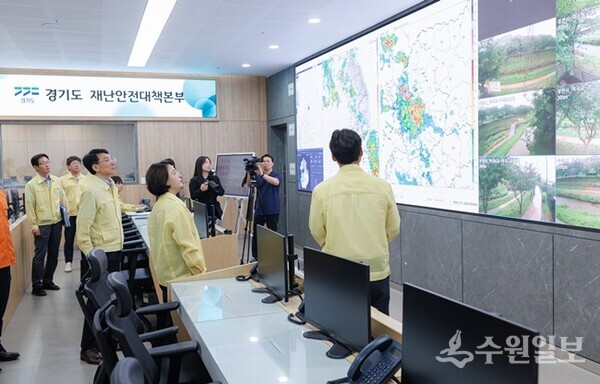
[Suwon Ilbo=Reporter Kim Gap-dong] As nationwide monsoons began on June 1st starting from Jeju Island, Gyeonggi Province Governor Choo Mi-ae visited the Disaster and Safety Situation Room to inspect the province's disaster response status.
Governor Choo visited the Gyeonggi Province Government Disaster and Safety Situation Room on the morning of June 6th and received briefings on this summer's weather conditions including monsoon forecasts, comprehensive measures for preparing against summer wind and water disasters, and the Gyeonggi Province disaster response system.
At the meeting, Governor Choo said, "The rain is expected to intensify through tomorrow, so please pay close attention and not overlook the preparations made so far and attend to the field work," and urged, "We earnestly hope this passes safely, but accidents can occur suddenly anywhere. Please maintain good emergency communication systems."
Governor Choo then instructed △establishment of preparedness measures centered on vice heads of organizations and overall situation management △pre-monitoring, inspection and pre-control focused on three major casualty types (landslides, streams, underground spaces) △organization and enhancement of emergency evacuation support systems utilizing resident evacuation support units for priority evacuation targets and pre-evacuation △active utilization of civil defense warning facilities along with disaster prediction and warning facilities when evacuation orders are necessary to disseminate evacuation commands and emergency situations.
Accordingly, the province plans to establish proactive pre-preparedness measures including pre-inspection of disaster-vulnerable areas such as underground space flooding, strong river currents, and landslides with potential for casualties, and inspection of emergency communication systems for control and evacuation field personnel through self-defense disaster units and resident evacuation support units.
Meanwhile, in preparation for this summer's wind and water disasters, the province is operating a joint provincial-municipal-private "disaster prevention measures task force" and has completed inspections of approximately 960,000 vulnerable facilities in the province while conducting ongoing follow-up management.
The province has also established and is operating control and evacuation response guidelines based on advanced technology for three major casualty types (underground spaces, streams, and landslides), and has been consistently promoting infrastructure improvements in vulnerable areas such as flood detection alarm devices and automatic blocking facilities since February.
正在加载评论…