


Special Exhibition "1926 Infinite Take-off" Held to Mark 100th Anniversary of Hangeul Day
A major special exhibition is being held to commemorate the 100th anniversary of the establishment of Hangeul Day and to reflect on the history and meaning of the day.
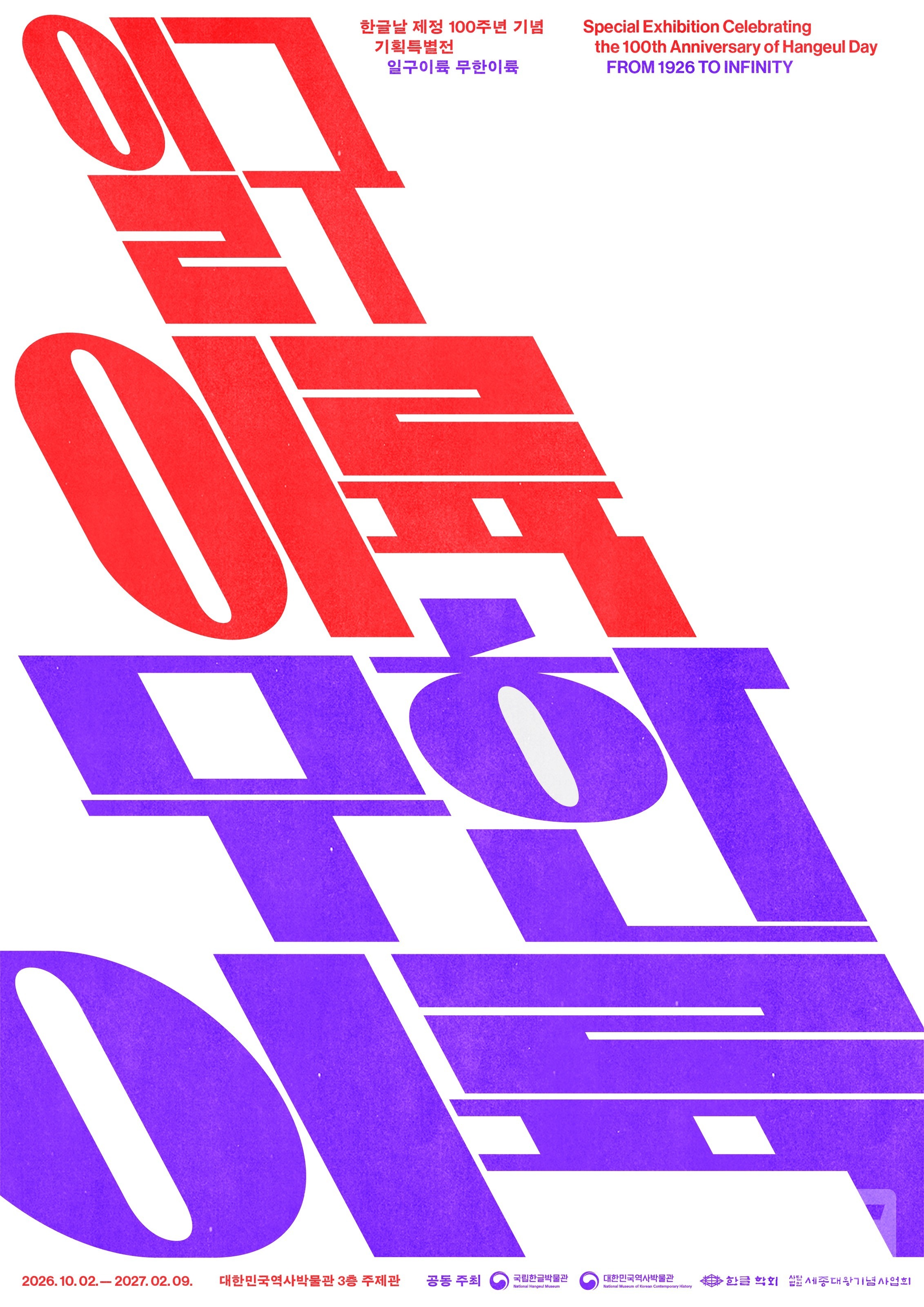
The Ministry of Culture, Sports and Tourism announced that it will jointly host the planned special exhibition "1926 Infinite Take-off" at the National Museum of Korean History from the 2nd through February 9, 2027, in collaboration with the National Hangeul Museum, the National Museum of Korean History, the Korean Language Society, and the King Sejong Memorial Project Association.
The exhibition title "1926 Infinite Take-off" inherits the significance of 1926, when the first Hangeul Day commemoration ceremony was held, and reflects aspirations for the infinite possibilities of Hangeul as it leaps toward the future.
From 'Gagya Day' in 1926 to National Holiday Hangeul Day...Organized in 3 Sections
This exhibition will publicly present a total of 116 items comprising 121 pieces of Hangeul culture materials that allow visitors to understand at a glance the history of Hangeul Day and the origins of its original name, 'Gagya.'
The exhibition is divided into three spaces. The 'Gagya Day: 1926' section covers the history from the movements to commemorate the creation of Hangul in the 1910s, through the first 'Gagya Day' commemoration ceremony held in 1926, to present-day national holidays.
'Clues to the Familiar Gagya' section sheds light on the process of establishing the name Hangeul and the efforts of the Joseon Language Research Society in preserving our language during Japanese colonial rule. The 'Hangeul Day: Infinite Take-off' space provides archive experience of records from the past 100 years, interview videos, and AI-based future Hangeul experiences.
Rare Materials Including Manuscripts of 'Malmoee,' the First Korean Dictionary, and Various Experiences Prepared
In particular, this exhibition features numerous rare materials of high historical value. Visitors will encounter the 'Malmoee' manuscripts by Professor Ju Si-gyeong, the pioneer of Korean dictionaries, and his students, as well as the manuscripts of 'Joseon-mal Keun Sajeon' (The Great Dictionary of Korean), which was confiscated by Japanese police and discovered in a warehouse at Seoul Station shortly after liberation.
In addition, various interactive programs in which visitors can directly participate will operate. A wide range of booths where visitors can engage together are prepared, including fortune-telling using Hangeul arrangement, personal virtual character creation experiences, and AI-based Hangeul future imagination experiences.
Loading comments…