


Gyeonggi Province Applies Paju City as First Candidate for Ministry of Unification's Peace Economy Special Zone
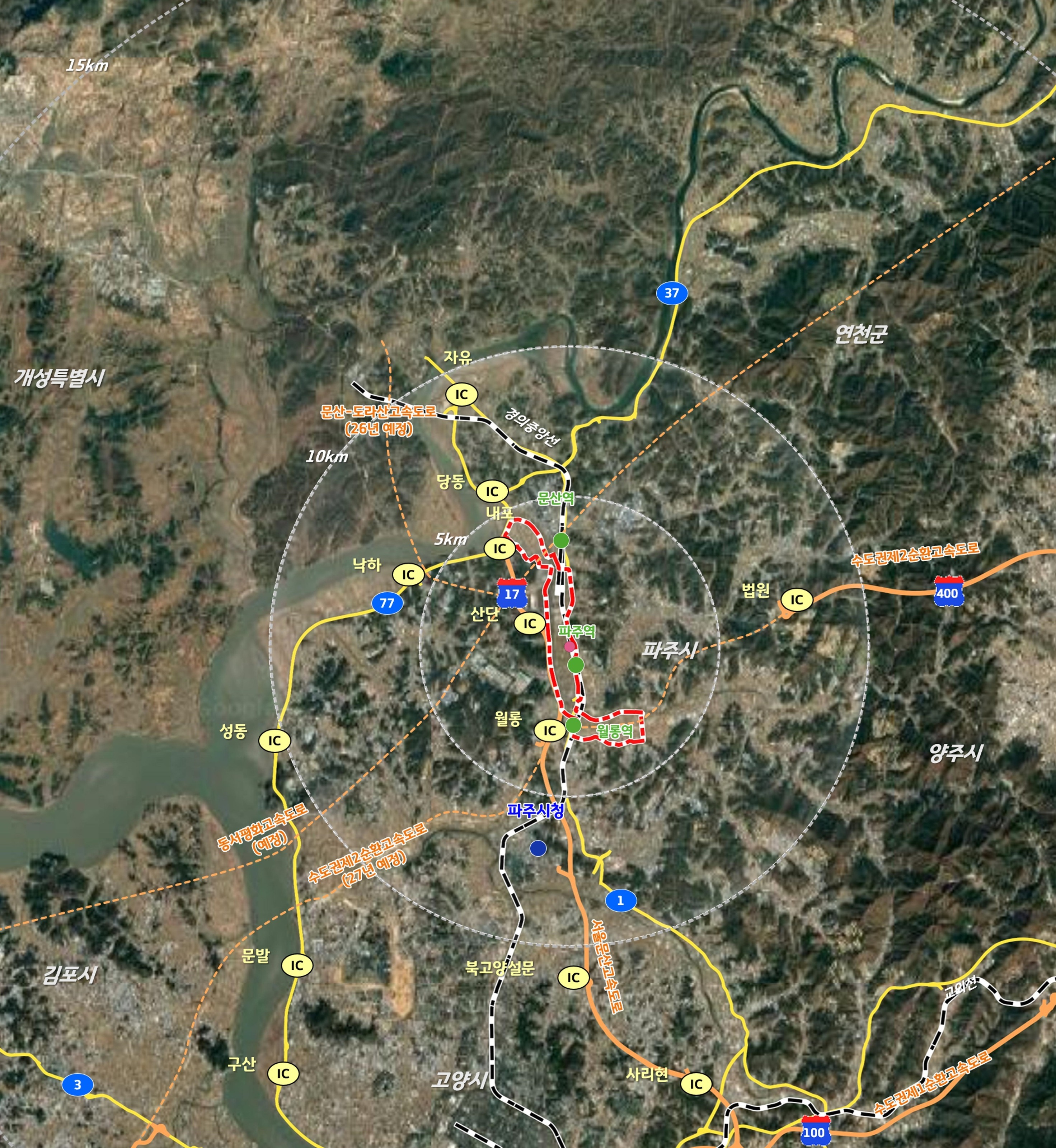
Gyeonggi Province has applied for Paju City as a candidate site for the Peace Economy Special Zone being promoted by the government. The province plans to apply Paju City as the first candidate site, while Yeoncheon County and Pocheon City, for which development plans are currently being established, are scheduled to apply as second candidates next year.
Gyeonggi Province announced on October 1 that it submitted a development plan to the Ministry of Unification and the Ministry of Land, Infrastructure and Transport on September 30, requesting the designation of an approximately 6.9-square-kilometer area (approximately 2.08 million pyeong) encompassing Paju-eup, Munsan-eup, and Wollong-myeon in Paju City as a Peace Economy Special Zone.
This special zone designation application is in accordance with the Ministry of Unification's "First Peace Economy Special Zone Basic Plan" and "Peace Economy Special Zone Designation Plan Announcement." Gyeonggi Province established the Paju Peace Economy Special Zone development plan and submitted the application by the September 30 deadline for first designation applications. The deadline for second designation applications is August 31 next year.
The Peace Economy Special Zone is a national special zone designated to promote industrial, tourism, and logistics development projects in border areas with North Korea and, in the long term, to establish the foundation for inter-Korean economic exchange and economic community. Unlike general industrial complexes, the special zone considers the peace and security conditions of border areas, regional development, and future possibilities for inter-Korean cooperation, and can receive tax and fee reductions, special permits, and infrastructure support. The Ministry of Unification plans to designate approximately four special zones in total.
According to the application submitted by Gyeonggi Province, the Paju Peace Economy Special Zone will be pursued with core goals of fostering advanced future industries and linking to future inter-Korean economic communities.
The development plan adopts a mixed development method combining industry, tourism, and residence, comprising a total of five districts including two industrial districts and mixed-use, cultural tourism, and inter-Korean logistics districts. Six strategic industries including artificial intelligence (AI), advanced manufacturing, pharmaceuticals, and smart logistics will be intensively fostered, with approximately 20% of the total area (1.4 square kilometers) allocated as peace-use land. Currently, interest in relocation from 210 companies has been secured, demonstrating high investment demand. The total project cost is estimated to reach approximately 2 trillion won.
The province emphasized that Paju is the optimal site given that the Ministry of Unification's basic plan designates the western inland region, which includes Paju, as a "smart and convergent industrial cooperation zone," and that Paju has existing advanced industrial infrastructure, connectivity with the Gaeseong Industrial Complex, and comprehensive regional transportation infrastructure. The province plans to make an all-out response to government review by emphasizing excellent location and abundant corporate demand.
Prior to this application, Gyeonggi Province has led the establishment and attraction of the Peace Economy Special Zone system since 2016 by implementing a total of 80 policy responses including proposals and discussions with the National Assembly and central government ministries, and eight related studies.



Loading comments…