


Op-Ed 37 Years After the Fall of the Berlin Wall: The Korean Peninsula Needs 'Pragmatic Diplomacy' to Break the Deadlock
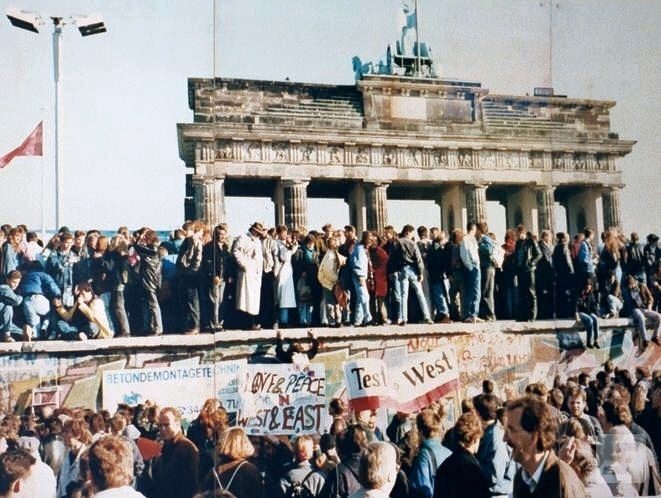
On the night of 37 years ago (November 9, 1989), the Berlin Wall—for nearly half a century the sharpest symbol of the Cold War division between East and West—collapsed as if it were an illusion. The 155-kilometer concrete structure that had divided the city and suppressed freedom for 28 years crumbled amid citizens' cheers. This event marked a pivotal turning point in the global order of the late 20th century, signaling the end of the bipolar system.
Structural Fissures That Created Historical Coincidence
History is often remembered for dramatic single moments. On that evening, a single phrase—"immediately, without delay"—from Günter Schabowski, spokesman for East Germany's ruling party, opened the border checkpoints. However, behind that moment lay decades of accumulated structural fissures. The combination of Soviet reform and opening-up, the declaration of non-intervention, the bankruptcy of centralized planned economies, and the "aspirations from below" represented by the Monday demonstrations in Leipzig created an inevitability of collapse.
Thirty-seven years later, Berlin's legacy poses a stern question to the Korean Peninsula, the world's only divided nation. As strategic competition between the United States and China intensifies and a bloc mentality of North Korea, China, and Russia versus South Korea, the United States, and Japan takes hold, rough waves of a "new Cold War" sweep across Northeast Asia. With North Korea defining inter-Korean relations as "hostile two states" and closing the door to dialogue, the Korean Peninsula has fallen into a prolonged state of political stagnation.
The Dilemma of U.S.-North Korea Exploratory Talks Amid New Cold War Stalemate
Amid this impasse, the possibility of resuming exploratory dialogue between the United States and North Korea has recently resurfaced in Washington and foreign media circles. It can be interpreted as a measure combining America's will to resume summit diplomacy with strategic calculations, but diplomatic assessments of this development remain sharply divided between optimism and skepticism.
This is because North Korea's calculations have become far more complex than in the past. Following the Ukraine war, with North Korea strengthening ties with Russia and recovering trade with China, Pyongyang has shown less desperate urgency to lift U.S. sanctions than before. Combined with memories of the Hanoi summit failure, the prevailing view is that North Korea will not hastily respond to overtures from the United States. Even if dialogue materializes, there is a possibility that it may result only in practical negotiations at the level of "nuclear freeze" rather than denuclearization, or that North Korea may attempt to create a framework of "engaging America while isolating South Korea," excluding the Republic of Korea.
Therefore, what we need now is neither vague illusions nor premature impatience about U.S.-North Korea dialogue possibilities. While keeping open the positive possibility that U.S.-North Korea dialogue could serve as an opportunity to ease tensions on the Korean Peninsula, we must establish a thorough "conditional diplomatic strategy" to ensure that this does not result in marginalizing South Korea or widening security gaps.
The key is to anchor the trajectory of U.S.-North Korea negotiations to the principles of "inducing substantive denuclearization" and "indirectly restoring inter-Korean dialogue channels" on the basis of close South Korea-U.S. coordination, and to secure a leading diplomatic space as a party to the Korean Peninsula issue.
Moving Beyond Tactical Attrition to Bipartisan National Interest Diplomacy
Now, as uncertain exploratory talks between the United States and North Korea are about to begin, what our political circles must be most vigilant about is the outdated attitude of consuming Korean Peninsula issues through partisan gain and political calculation. The moment when foreign policy and security issues are torn apart by factional logic and abused as tools for securing domestic political advantage, the Republic of Korea will lose not only diplomatic initiative but even its voice as a party amid drastic changes in the international situation.
The fall of the Berlin Wall demonstrated that dramatic reversals can occur when flexible changes in circumstances combine with proactive diplomatic efforts. Facing the rough waves of a new Cold War and exploratory talks between the United States and North Korea, South Korea's political circles—both ruling and opposition—must set aside emotional confrontation and tactical calculations and work together. This is the time to gather pragmatic and bold wisdom to take the lead in shaping the destiny of the Korean Peninsula through unified national interest diplomacy.

Loading comments…