


Editorial 'Saebit Fund' Standing on 800 Billion Won in Achievements, Questioning the Path of Local Government Capital
800 Billion Won in Achievements Shattering Cool Skepticism
When local governments announced they would create venture funds, the prevailing sentiment was largely cool. There was thick skepticism that such efforts would amount to mere populist political rhetoric or result in wasteful spending due to lack of expertise.
The discordance arising when public funds mix with risk capital in the market has long been a stumbling block for local government venture investment.
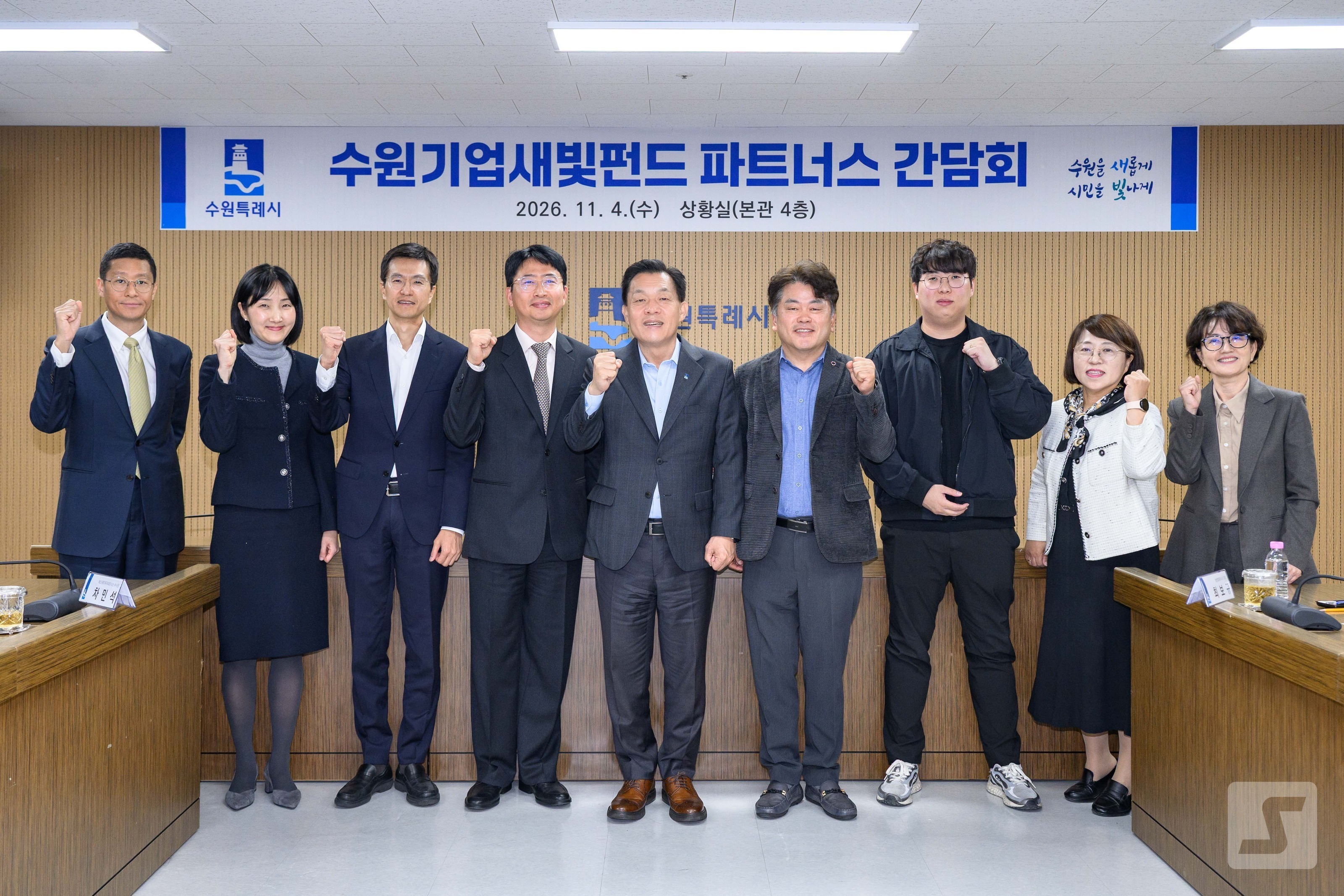
The achievements of Suwon City's 'Suwon Business Saebit Fund' directly challenge this inertia. The completion of raising a massive fund totaling 803.6 billion won across the first and second phases, coupled with the commencement of preparations for a third fund, carries implications far beyond the numbers.
The first phase fund (472.9 billion won raised) invested 35.04 billion won into local enterprises, reaching 132% of the mandatory investment commitment amount pledged by firms in the area, effectively serving as seed money. The second phase fund, formed at a scale of 488.75 billion won with the city's capital contribution of 10 billion won as seed money, has already completed disbursements of 11.9 billion won and is rapidly bearing fruit in practice.
From Benevolent Subsidies to 'Anchor Capital Provider'
The essence of this achievement lies in the 'transformation of local government's role' rather than the external scale of funds. Even within the Seoul metropolitan area, the concentration of venture capital has become severely biased toward specific Seoul districts. For regional startups with excellent technology but insufficient financial track records struggling with capital shortages, the threshold of traditional loans or general investment remained high.
Suwon City departed from the previous approach of dispensing subsidies benevolently. By drawing in major venture capital (VC) and accelerator (AC) operators, dispersing risk, and leveraging private sector expertise, the city has fulfilled the role of anchor capital protecting the roots of local technology enterprises.
Mayor Lee Jae-jun's decision to hold operator meetings to directly hear voices from the field and declare preparations for the third fund demonstrates strong commitment to solidifying this public-private cooperation model.
Direction of the Third Fund: Segmentation of Capital and Settlement Conditions
The third fund, now opening its curtain, carries the next phase of challenges beyond proving quantitative results. Most importantly, qualitative segmentation of capital is more critical than enlarging the scale. Meticulous venture capital stages must be designed so that early-stage companies possessing cutting-edge technology in AI, biotech, semiconductors, and the fourth industrial revolution can advance to the scale-up phase without suffering from short-term performance pressure.
Furthermore, capital supply must lead to the completion of settlement conditions where businesses can take root. If a virtuous cycle is not established where invested companies, when successful, return to the region as jobs and tax revenue rather than departing, the fund's achievements may remain as castles in the air. This is why parallel establishment of follow-up ecosystems combining initial R&D support, administrative support, and global networks is necessary.
Laying the Foundation for Sustainable Future Economic Growth
Suwon City's initiative demonstrates that local governments can transform from passive managers of regional economy to active capital providers driving the growth of promising industries. It is hoped that the third Saebit Fund will result in bold yet modest fruit, changing the structural constitution of regional industry beyond dazzling numbers.


Loading comments…