


From Administrator to Politician: Light and Shadow of Vice Mayor Posts in Gyeonggi
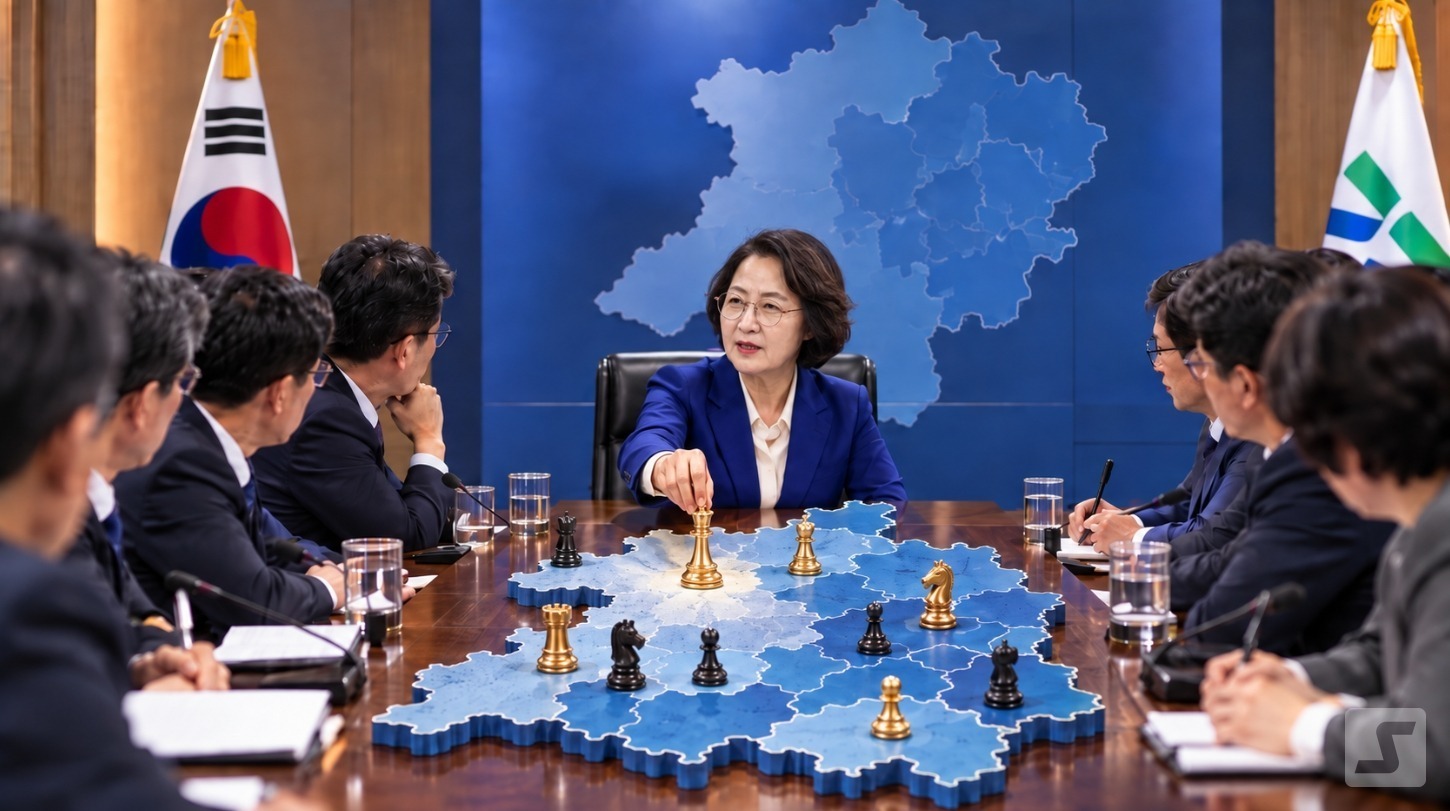
For senior officials in Gyeonggi Province, the position of vice mayor or vice county magistrate has been far more than a routine reassignment. Cases continue to emerge of former administrative 'second-in-command' officials challenging to become mayors or county magistrates in the regions where they worked, while others have broadened their political activities to presidential and national politics following connections forged in provincial government, using such positions as stepping stones for their future political paths.
According to the Gyeonggi Province government as of the 6th, at least 15 people who previously served as vice mayors or vice county magistrates have run for mayor or county magistrate elections in the regions where they worked. They include Kim Ki-se, Kim Gyeong-hui, Kim Dong-geun, Park Jeong-o, Seo Gang-ho, Yun Myeong-no, Yi Dae-jik, Yi In-jae, Yi Pil-un, Lim Chung-bin, Jo Byeong-don, Choi Seung-dae, Choi Won-yong, Choi Hyun-duk, and Hwang Seong-tae.
The most recent case is Choi Won-yong, Mayor of Pyeongtaek.
Mayor Choi served as Director of Planning and Coordination for Governor Lee Jae-myung, followed by positions as Vice Mayor of Pyeongtaek and Director of the Gyeonggi Free Economic Zone Authority.
In 2025, with approximately two years remaining until his mandatory retirement, he submitted a request for early retirement, publicly announcing his intention to support the election campaign in his hometown of Pyeongtaek for Lee Jae-myung, then Democratic Party presidential candidate.
Upon entering the Pyeongtaek mayoral race, he directly connected his provincial government experience to his political career, saying, "I learned how to work in coordination with President Lee Jae-myung and Gyeonggi Provincial Government, and I learned politics." He was elected Mayor of Pyeongtaek in this year's June 3 local elections.
Choi Hyun-duk, Mayor of Namyangju, represents another case of movement from a vice mayor position to regional politics.
Mayor Choi served as Vice Mayor of Namyangju in 2017 and took early retirement at the end of that year, announcing his candidacy for Namyangju mayor. At the time, he had nine years remaining until mandatory retirement. He subsequently took on the role of Secretary of the Safety and Administration Division for the Lee Jae-myung Gyeonggi Governor transition committee in 2018 and engaged in political activities. He was elected Namyangju mayor this year.
Vice mayor career experience served as a starting point for regional politics, with connections formed in provincial government subsequently developing into political networks.
This trend reflects the special nature of vice mayor and vice county magistrate appointments.
Under the Local Autonomy Act, the power to appoint vice mayors and vice county magistrates lies with the mayors and county magistrates themselves. The law explicitly stipulates that vice mayors and vice county magistrates be filled by general-track local civil servants appointed by mayors and county magistrates.
However, in Gyeonggi Province, a long-standing practice of personnel exchange has seen the provincial government send 2nd-to-4th grade senior officials from the provincial government to positions as vice mayors and vice county magistrates following consultation with cities and counties.
Separate from formal appointment authority, the provincial government's personnel decisions have substantially influenced who moves to which city or county position.
The current situation demonstrates this clearly.
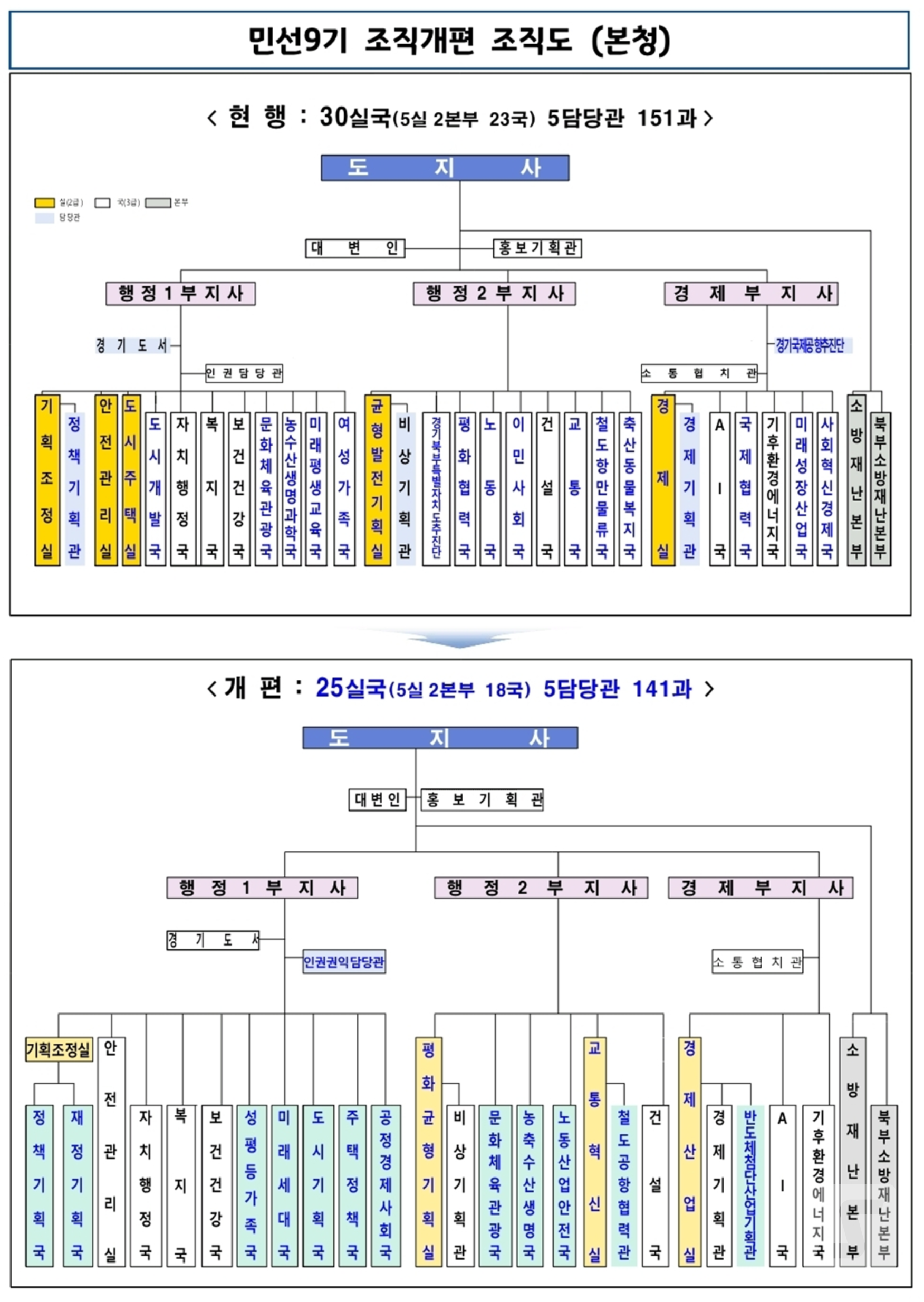
With the provincial government postponing vice mayor and bureau chief-level personnel matters originally scheduled for August-September to January 2027 citing organizational restructuring, seven positions—including vice mayors in Seongnam, Siheung, Gwangju, Icheon, Yangju, and Pocheon cities and Gapyeong County—remain vacant.
While legally the respective mayors and county magistrates can directly appoint officials, none have taken independent action to date. Cities and counties continue requesting prompt provincial personnel action and awaiting the next round of provincial appointments.
Should year-end retirements materialize, the number of vice mayor positions requiring replacement could increase further.
This is why the January personnel announcements next year amount to more than simply filling empty positions.
Vice mayors and vice county magistrates serve directly under the chief executive, handling organizational and budget matters as well as major issues including urban planning, development, transportation, and welfare. The Local Autonomy Act stipulates that vice executives assist the chief executive in overseeing overall operations and directing and supervising subordinate staff.
For provincial government senior officials, it is an opportunity to directly experience a specific region's administrative structure and current issues while gaining access to local political figures, administrative organizations, and major institutions.
For those considering elected positions following retirement, which city or county position as vice mayor they hold is not unrelated to their future career path.
From the governor's perspective, the significance of vice mayor appointments is not insignificant either.
When senior officials who have shared provincial government philosophy and policies later advance to chief executive positions following service in cities and counties, they can serve as a connection link for policy cooperation between the province and relevant local governments. Politically, personnel who have built trust relationships in provincial government subsequently operating in various regions can become human networks available for future political ventures.
Indeed, cases exist where connections formed in provincial government were later recombined in presidential campaign organizations.
When former Gyeonggi Governor Kim Moon-soo ran for president in the 2025 presidential election, Assemblyman Park Su-young, who served as Senior Vice Governor for Administration under Governor Kim, assumed the position of Policy Coordination Director of the campaign. Media at the time analyzed that so-called 'Gyeonggi line' officials who had worked together during Governor Kim's tenure occupied key positions in the presidential campaign organization.
There is no evidence that vice mayor or provincial government senior official appointments were made for the purpose of creating future political allies. However, given that cases actually exist where trust relationships built in provincial government later reconnect in regional and national politics, it is difficult to completely separate political ripple effects from personnel decisions.
Past cases show repeated instances in which regional administrative experience by vice mayors became political assets.
In Yangju, two former vice county magistrates successively became chief executives.
Former County Magistrate Yun Myeong-no served as Vice County Magistrate of Yangju before being elected as the first elected-term County Magistrate of Yangju in 1995, winning a second term. Lim Chung-bin, also a former Vice County Magistrate of Yangju, defeated Former Magistrate Yun and was elected County Magistrate in 2002, subsequently serving as Yangju Mayor after the county's elevation to city status.
Icheon shows a similar pattern.
Former Mayor Jo Byeong-don, who served as Vice Mayor of Icheon, was elected mayor in 2006 and served three terms. Former Mayor Kim Gyeong-hui was also elected mayor in 2022 after serving as Vice Mayor of Icheon.
Former Mayor Yi Pil-un, who served as Vice Mayor of Anyang, became Anyang Mayor through a special election in 2007. Former Mayor Yi In-jae, who served as Vice Mayor of Paju, was elected Mayor of Paju in 2010. In Yi's case, his past experience as Paju Vice Mayor was cited as a factor behind the confidence he displayed in Paju city administration immediately following his election.
Mayor Kim Dong-geun also gained experience as Vice Mayor of Uijeongbu before challenging the Uijeongbu mayoral position in 2018 and winning election in 2022. In the 2022 election, he emphasized his experience gained while serving as vice mayor in understanding regional issues as a strength.
Regardless of election outcomes, many have selected regions where they previously served as vice mayors as their political stage.
Former Seongnam Vice Mayor Park Jeong-o challenged the Seongnam mayor position, while former Yongin Vice Mayors Choi Seung-dae and Hwang Seong-tae challenged for the Yongin mayor position. Former Pyeongtaek Vice Mayor Seo Gang-ho, former Yeoju Vice Mayor Yi Dae-jik, and former Gwacheon Vice Mayor Kim Ki-se all similarly entered mayoral races in their respective former work regions.
Of course, vice mayor experience does not guarantee political success. Cases of losing in primary party nominations or general elections are not uncommon.
Additionally, one cannot definitively conclude from such cases alone that the provincial government assigned specific senior officials to vice mayor positions with an eye toward their future political advancement.
However, it is confirmed that long-standing provincial government personnel practices involving substantial influence have repeatedly provided senior officials opportunities to accumulate administrative experience and human networks in specific regions, with such careers subsequently utilized as assets in challenging for elective positions in those regions.
For the governor, it becomes a human foundation connecting cities, counties, and provincial administration. For senior officials, such positions can expand the range of future career choices.
Currently, seven vice mayor positions remain vacant, with additional replacement needs anticipated.
Who moves to which city or county position as 'second-in-command' in January next year carries significance far beyond simple provincial government senior official reassignment.

Loading comments…