


I Will Practice Politics That Builds Trust Like the Earth
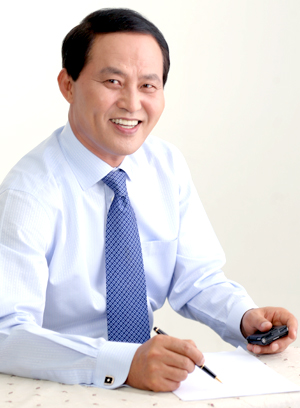
Go Hee-seon (62, photo), Head of the Grand National Party's Suwon Yeongdeung-gu Committee, consistently emphasizes 'trust.' Several descriptive phrases follow Go. A self-made successful entrepreneur, a guardian of seeds, a man of unwavering loyalty, and a politics newcomer untouched by worldliness. No matter which phrase is examined, the various descriptors align with his consistent life of 'sincerity' and 'honesty.'
His choice to enter politics is partly rooted in being recognized as a leading expert in agriculture who reached the position of chief executive (chair of Nongwoo Bio). It is a conviction to demonstrate that there is a 'politics that builds trust' like the truth of earth, contrary to the distrusted existing political climate.
He already served as a National Assemblyman from Hwaseong City during the 17th term. However, the reality of politics was not smooth, and now he is quietly sowing seeds again in Suwon's Yeongdeung-gu as head of the party committee.
His theory that "whether a farmer sows seeds that determine the success or failure of farming, or a politician sows seeds for the nation and regional development, the value is exactly the same" resonates with sincerity.
Known as a guardian of food sovereignty leading the realization of Korea's seed sovereignty, Go has lived a fierce life every moment. In his youth full of dreams, difficult family circumstances imposed many constraints, but he did not become discouraged.
With interest in seeds, he entered among farmers, clashed and ran with his body, and approached with his heart to achieve today's success. Because of this, in politics, he places particular value on listening to voices from the living field, and a philosophy of approaching with a humble attitude has become firm.
'Results are important, but the process is precious too' is also one of his convictions learned through the series of processes of sowing, cultivating, and harvesting seeds. He believes the process must also be honest and one must be able to look far ahead and wait.
There is an anecdote during the IMF crisis that offers a glimpse into his such conviction. When major domestic seed nursery companies were being successively acquired and merged by foreign companies at that time, Nongwoo Bio protected itself from this fate.
"There were times when I faced misunderstanding—even viewed as 'foolish' for not transferring to foreign companies despite guaranteed large sums of money. However, with a sense of mission that seeds are not simply a commodity but the pride of our nation and a national resource, I was able to reject temptation."
Go recalls that the choice at that time is something he is extremely proud of and grateful for.
"At that time, I express deep gratitude to the farmers and people who provided national support, encouragement, and strength to enable us to protect our seeds."
On such soil stands today's Nongwoo Bio centered on biotechnology, and it became an opportunity to be reborn as a genuine 'global national enterprise' through KOSDAQ listing and other developments.
As safe food has become a major topic, Nongwoo Bio, with the motto of 'table safety,' has devoted itself to developing safe and health-beneficial functional new varieties utilizing biotechnology, achieving development results in over 100 types.
Already, enterprises have shifted their weight to the premise of fulfilling public roles contributing to the nation and society. Would it be unreasonable to say that the public-spirited corporate ideology that Nongwoo Bio has demonstrated ensures Go's publicity as a politician?
His interest in Yeongdeung-gu, described as the nation's youngest IT city, as an agricultural expert is not unrelated to the future value of agriculture—its cutting-edge nature.
Biotechnology and the IT industry are cutting-edge industries that can create synergy with each other, and understanding regional characteristics was not unfamiliar to him. As a local enterprise headquartered in Suwon's Yeongdeung-gu, he has devoted efforts to seeking a role for regional development and a prosperous life for residents.
To address current issues facing Yeongdeung-gu, Go is designing genuine policies on a large scale based on 'trust.' It is a determination that the outdated political behavior of making only promises without implementation must absolutely be eliminated.
He is deeply concerned about practical and urgent issues across all sectors—transportation, residential environment, cultural life, educational welfare—that require policy approaches at the central government level.
The conclusion is to develop Yeongdeung-gu back to the original spirit of new city development and into the nation's most exemplary city, securing the best residential conditions for residents. Go has named this the 'Green Smart City.' It is a determination to create a human-centered Yeongdeung-gu that combines the trendy concepts of 'smart' and 'green.'
Furthermore, at a time when society faces social conflict due to welfare populism, Go takes the position that childcare welfare should take priority.
"Low birth rates pose a critical threat to the nation's future. Since the past, our nation's competitiveness has been said to depend on talent—people and education. Low birth rates could bring about a national disaster that collapses both of these elements."
Advanced nations are reducing low birth rates through implementation of various incentive systems as a matter of national prosperity. That reflects how seriously they understand the gravity of the situation.
Yet he points out it is regrettable that our reality, while appearing urgent on the surface, actually treats it as someone else's problem in substance.
"One of the causes of low birth rates is the burden of children's education expenses. Half-price tuition has become a topic, but childcare costs are also an area many young couples struggle with."
Fortunately, as of this year, for children aged five and over, the government is providing 177,000 won regardless of parental income level. The government has a plan for gradual increases to 200,000 won in 2012 and 300,000 won by 2016. Currently, the age five curriculum is divided into 'educational curriculum' at kindergartens and 'childcare curriculum' at daycare centers, but if the government introduces a common curriculum, children aged five attending daycare centers will also be able to receive higher-quality education comparable to that of kindergarten.
However, Go argues the matter must go one step further. Policy implementation that makes the government responsible for childcare for infants and young children from ages zero to five is necessary. By having the state take full responsibility, it would meaningfully reduce the burden on young couples, including dual-income couples.
He emphasizes that along with government policy, the political community must make greater efforts to solve the problem, and formation of consensus among all citizens is also important.
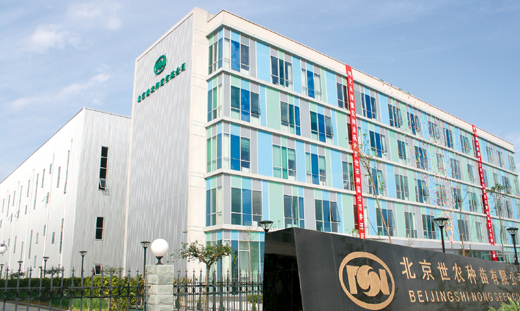
● The following is a Q&A; on the seed industry, inseparable from Go, the chairman of Korea's representative seed industry company, Nongwoo Bio.
Q. The importance of the global seed industry is being highlighted. What is your vision?
If I were asked to name what is most 'sad' and 'frightening' in the world, it would be 'hunger' and 'food'—things to eat. While different people might cite war, weapons, and other things, nothing can take precedence over food. Seeds are not merely an industrial matter but a living entity equivalent to human survival itself, and as a national resource, they represent an important field often compared to a silent war between nations.
Recently, with biotechnology as its foundation, agriculture, including farming, is being recognized as the 'fourth resource' with importance and value comparable to that of the IT industry—so much so that it is called the 'semiconductor of agriculture.' Seeds are already recognized as directly linked to a nation's food supply and 'food sovereignty,' and economically as a 'high-value-added' industry. The intangible value created in the future will be enormous.
Food dependency means a red light is turned on for ensuring stable food supplies for the people, so it goes without saying. For this reason, protecting and breeding our seeds is important. In reality, seeds become the source responsible for feeding people worldwide, so the market scale is enormous. With a market estimated at over 45 trillion won, vegetable seeds account for more than 3 trillion won of that. In addition, with changes toward vegetable-based diets, development and distribution of functional seeds, such market demand continues to grow, and I forecast this pace will accelerate rapidly.
Developed nations are predicting such market changes and investing heavily in related industries centered on biotechnology, and accordingly, their competitive advantage in overseas markets is increasing.
Q. What efforts are being made for the development of Korea's seed industry?
Nongwoo Bio has already declared itself a strategic research and development-focused company centered on R&D.; Centered on the Biotechnology Center and breeding research institute in Yeoju, Gyeonggi Province, we operate research institutes and local subsidiaries in key regions including China, the United States, India, and Indonesia. This is positioning for developing seeds with excellent local adaptability containing disaster resistance, disease resistance, and functionality, while simultaneously serving as an advance base to manage the global market together with local subsidiaries.
Particularly, in China with its massive population of 1.3 billion, we have established research institutes in Beijing, Hebei, and Guangdong regions, developing region-specific specialized crops and expanding market dominance by receiving praise from local farmers. Such efforts align with Nongwoo Bio's corporate will to preempt the global market.
Annually, we reinvest approximately 20 percent of sales into research and development expenses to encourage R&D;, and as a result, red pepper varieties have already gained worldwide recognition, with notable growth in all varieties including radish, cabbage, melon, and watermelon.
We are accelerating research on biotechnology techniques including DNA marker development and verification, cell fusion research, and transgenic development.
Loading comments…