


Facility Vegetable Soil Disease Treatment Remedy Developed
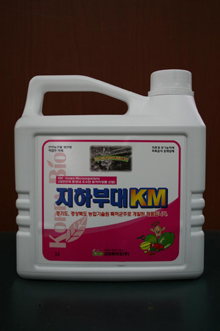
A treatment remedy for soil-borne diseases developed in Gyeonggi Province is expected to alleviate concerns among facility vegetable farmers.
The Gyeonggi Province Agricultural Technology Center (located in Gisan-dong, Hwaseong) announced on the 20th that it has launched a new product 'Jihapudae KM' developed using patented microorganisms for tomato wilt disease control following one year of joint research with Koryo Bio Co., Ltd.
The product is made using a patent strain 'Pseudomonas,' which is a multifunctional microorganism with strong antimicrobial activity against the fungus causing wilt disease and bacterial wilt, while also promoting plant growth.
The newly developed 'Jihapudae KM' is a remedy that can reduce the occurrence of soil-borne diseases and is effective against wilt disease and bacterial wilt, expected to be of great help to farmers cultivating vegetables such as tomatoes.
Wilt disease is a disease that breaks out in most fruit and vegetable crops including tomatoes, cucumbers, and melons, with approximately 20 percent of cultivating farms suffering damage. Since the pathogen invades through roots and proliferates in large quantities, it is difficult to control with chemical pesticides, and the scale of damage is increasing.
Previously, without an available remedy, farmers had no choice but to pull out diseased plants or watch their crops die when soil-borne diseases occurred.
The province anticipates that distribution of this new product to farms will result in income increase effects of over 20 million won per hectare, and expects even greater effects when considering disease control in other crops.
'Jihapudae KM' has currently applied for listing on the eco-friendly organic agricultural materials registry.
An official from the Agricultural Technology Center stated, "We are also developing new microbial pesticides using multifunctional microorganisms such as Bacillus with high growth-promoting effects while controlling soil-borne diseases such as pepper phytophthora and lettuce sclerotinia. We are doing our best to revitalize the domestic eco-friendly microorganism sector, which is losing ground to foreign microbial products."




Loading comments…