


Samsung LED Remains, But 'Risk of Relocation' Lingers
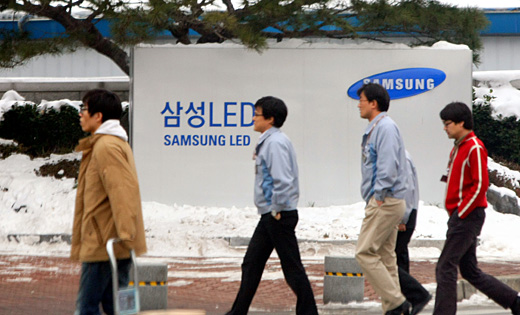
As Samsung Group's concentrated investment in Sejong City makes revision of plans for Suwon Samsung Digital City inevitable<Page 1, 11th edition of this paper>, Samsung LED, which operates its headquarters and production lines in Suwon, has decided to build a third production line in Sejong City. While the Suwon community, which was alert to the possibility of relocation of headquarters and production lines, has been relieved at the news of capacity expansion rather than relocation, it is not ruling out the possibility of future relocation plans in terms of operational linkage.
According to the government's 'Sejong City Revision Plan' announced on the 11th, Samsung will secure 1.65 million square meters of land in Sejong City and concentrate investment in new business ventures of five affiliates including Samsung Electronics, Samsung SDI, Samsung LED, Samsung SDS, and Samsung Electro-Mechanics. A total of 2.05 trillion won is scheduled to be invested sequentially from next year through 2015, and employment effects of approximately 15,800 people are estimated to be generated. The five affiliates plan to enter fields including solar power generation, fuel cells, LED (light-emitting diodes), data processing, call centers, and biohealth care.
In particular, Samsung LED, which operates its headquarters and production lines in Suwon Digital City, plans to create a lighting engine production base in Sejong City to secure production capacity on the scale of 100 million units annually, thereby securing competitiveness in the next-generation lighting industry. Samsung LED, a joint venture between Samsung Electronics and Samsung Electro-Mechanics that launched in April of last year, is establishing its third LED production line following factories in Suwon and Yongin. LED, known to have generated sales of 800 billion won in just over a year since its founding, is drawing attention as a next-generation growth engine for Samsung, and the investment dispersion resulting from the Sejong City expansion is likely to have considerable impact on the regional economy.
The local community and cooperating companies expressed relief that the headquarters was not being relocated, while expressing concern that long-term investment in the Suwon area would be suspended. Although Samsung LED has not disclosed its major cooperating companies, citing information security and business confidentiality concerns, key cooperating partners numbering 4 to 5 companies and suppliers of consumables totaling around 20 companies appear busy calculating whether to revise their new investment plans. An official from Company A, which supplies key materials, said, "We were planning to expand our facilities and increase production plans to match the expansion of investment scale, but it is expected that we will need to reconsider after observing future developments," adding, "Not only our company but all other cooperating companies will also be affected by Samsung's reduction in regional investment."
Moreover, unlike the Suwon and Yongin production lines equipped with initial-stage facilities utilizing idle land from semiconductor factories, the factory to be built in Sejong City is expected to be equipped with full mass production systems, making it impossible to rule out the possibility of future consolidation of R&D and production lines. A Samsung LED official said, "There are no concrete plans at this point, and this is an area that will need to be reviewed on a long-term basis in the future," but added, "The existing Suwon and Yongin production lines will continue to operate, and as I understand it, investment is being made to establish Sejong City as a third base location to produce new products."


Loading comments…