


Local Governments' Birth Incentives Show 'Sky and Earth' Disparity
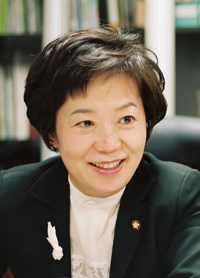
On the 7th, Rep. Jung Mi-kyung (Grand National Party, Gwonseon District, Suwon) from the National Assembly's Health, Welfare and Family Committee analyzed budget and execution data on birth incentive allowances submitted by the Ministry of Health and Welfare. According to the analysis, the total amount of birth incentive allowances (congratulatory bonuses and child-rearing subsidies) paid in the first half of this year reached approximately 43.2 billion won, with 117,000 recipients.
When broken down by 16 metropolitan cities and provinces, the payment amounts were highest in North Chungcheong (8.2 billion won), North Gyeongsang (6.5 billion won), and South Jeolla (5.7 billion won) in that order. The number of recipients ranked Gyeonggi Province (21,245 people), Seoul (18,294 people), and South Jeolla (16,315 people).
For first-child births, the largest congratulatory bonus is offered by Boseong County in South Jeolla at 2.4 million won, followed by Yeongju City in North Gyeongsang (1.7 million won) and Jangseong County in South Jeolla (1.5 million won).
The second-child congratulatory bonus is highest in Uljin County in North Gyeongsang at 6 million won, while for third children, Masan City in South Gyeongsang offers the most at 7.4 million won. This represents a maximum 148-fold difference compared to the lowest-paying municipality (5 million won in Young-do District, Busan, and five other areas).
While the birth incentive allowance system is being competitively adopted by local governments, each municipality sets different residency duration requirements, and there is a lack of consistency in both the allowance amounts and the scale of eligible recipients, according to Rep. Jung's explanation.
Rep. Jung Mi-kyung stated, "The birth incentive allowance system risks creating discord between regions beyond its original purpose of increasing population," and emphasized that "institutional support such as expanded childcare facilities and improved educational conditions must be backed behind financial assistance."


Loading comments…