


Vice Minister Hyun Su-yeop of Ministry of Health and Welfare Visits 'Naerae-ul Hangjae-Dream Workplace' in Hwaseong City
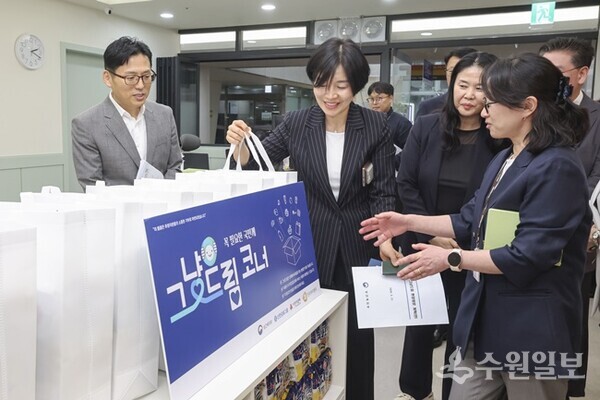
[Suwon Ilbo=Reporter Jung Jun-sung] With the Ministry of Health and Welfare's 'Hangjae-Dream' project transitioning to full operation from the 18th, Vice Minister Hyun Su-yeop of the Ministry of Health and Welfare visited the 'Naerae-ul Hangjae-Dream Workplace' in Hwaseong Special City on the 21st, conducting an on-site inspection and hearing opinions.
On this day, Vice Minister Hyun toured the Hangjae-Dream workplace on the basement first floor of Hwaseong Naerae-ul Integrated Social Welfare Center, confirmed operational status, and expressed appreciation and encouragement to the workers implementing the project.
Vice Minister Hyun Su-yeop stated, "It is impressive that Hwaseong City created the Hangjae-Dream user space as an 'On Lounge,' enabling users to receive services in a comfortable and warm atmosphere," and added, "Since the Hangjae-Dream project is for those facing livelihood crises, please continue efforts to enable users to utilize the service without burden."
Acting Mayor Yoon Seong-jin of Hwaseong City said, "Hwaseong City currently operates five hub-type Hangjae-Dream workplaces, and as of May, we are promoting 'Hwaseong-type Hangjae-Dream' at nine welfare centers and 16 eup/myeon/dong offices," adding, "We will expand operating spaces to 38 locations by year-end and make efforts to support food-vulnerable populations and discover welfare blind spots."
He continued, "With the start of the full Hangjae-Dream project, we will strengthen crisis household discovery and support systems in cooperation with the community so that citizens in need of food assistance can receive help more easily."
Meanwhile, the 'Hwaseong-type Hangjae-Dream' is a public-private partnership project where welfare centers and community welfare councils in eup/myeon/dong areas serve as the core, installing shared refrigerators in welfare centers and administrative welfare centers in eup/myeon/dong, allowing community residents to freely donate food items that can then be utilized by those in need. Through this, it is promoting a culture of donation and supporting discovery of welfare blind spots.
Loading comments…