


Special Report Suwon Has Transformed 3: Suwon Special City, South Korea's First 'Reading City'
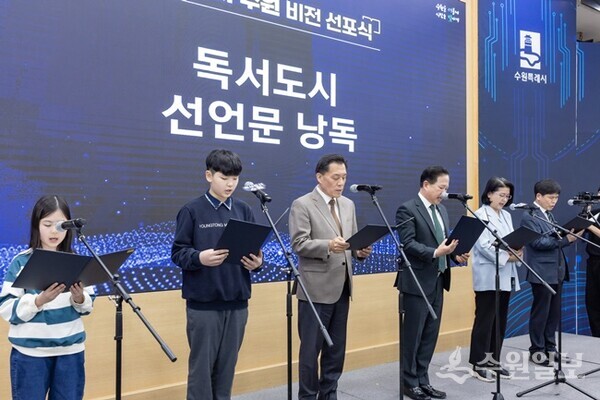
[Suwon Ilbo=Reporter Jung Jun-sung] "Together, we will build South Korea's first 'Reading City Suwon.'"
Suwon Special City proclaimed itself as South Korea's first reading city and announced its aspirations to become a city of readers. At the 'Suwon Reading City Vision Declaration Ceremony' held on March 30, students, citizens, and leaders from education and the public sector of Suwon declared their commitment to creating a reading culture in which people learn and grow through books. Suwon's children will nurture dreams through books, Suwon's youth will conduct deep exploration through books, Suwon citizens will share books in their neighborhoods, Suwon's libraries will create spaces for knowledge and culture, schools in the Suwon region will strengthen reading education, and the city will pursue reading as a future strategy for urban development—such were the pledges made.
■ South Korea's First Reading City: Suwon!
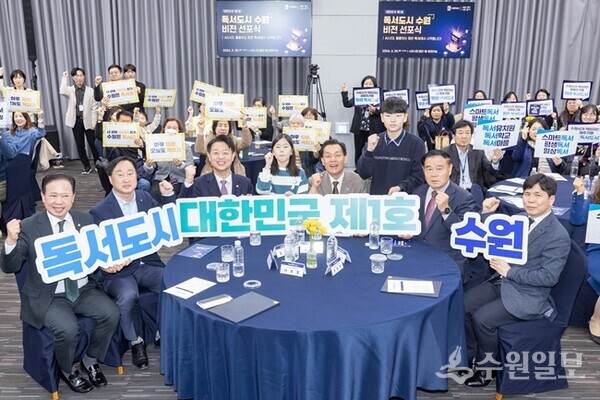
Suwon City's proclamation as a reading city aligns with national strategy. In January, under the leadership of the Parliamentary Education Committee, a Reading Nation Declaration Ceremony and the inauguration of the Reading Nation Promotion Committee were held, joining a project to establish reading education as a national core strategy. The initiative reflects a determination to develop talent capable of independent thinking, critical understanding, and questioning to navigate the artificial intelligence era, thereby cultivating the ability to properly utilize AI. Suwon City stands as the first city leading this paradigm shift.
The city's plan to build a reading city centers on creating favorable reading environments and expanding customized programs across villages, schools, and libraries. The plan includes strategies to expand 'Smart Reading' utilizing artificial intelligence, 'Lifelong Reading' created collaboratively by schools and communities, and 'Daily Reading' enjoyed everywhere.
To this end, Suwon City Library will explore various applications of artificial intelligence, including introducing AI robots that read aloud and conducting reading discussion forums with artificial intelligence. Additionally, the library will establish an ecosystem in which reading education extends beyond libraries and schools into villages where it can become self-sustaining. The city plans to expand customized programs by life stage and create a culture in which reading connects with daily life.
In particular, Suwon City Library is expected to serve as a hub for the reading city. It will launch a "10 Minutes a Day, 1,000 Books a Lifetime" reading campaign. Efforts will include expanding book lending numbers, broadening the use of reading points, converting outdoor spaces into reading areas, and expanding community reading culture.
■ 1.23 Million Suwon Citizens Read 2026 Book of the Year
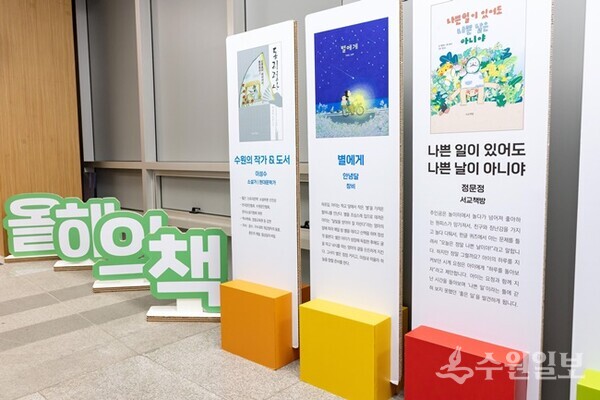
Reading City Suwon is challenging citizens to read one book together this year. Through citizen recommendations and voting, five books have been selected. Here is a brief introduction to the 2026 Suwon City Book of the Year—including "Live Cherishing Yourself" (Na Tae-ju), "The Use of History" (Choi Tae-sung), "Even If Bad Things Happen, It's Not a Bad Day" (Jung Mun-jung), "To the Stars" (Annyeong Dal), and "Dongni Jeongsa" (Lee Sung-soo)—so please consider joining with at least one book.
First, "Live Cherishing Yourself" is an essay compiled by poet Na Tae-ju, known for his work "Wild Flowers," from notes he kept for lectures. The collection gathers passages that moved people with empathy and inspiration, connecting messages from Eastern and Western figures with his own experiences and conveying them in simple, concise language, offering warm consolation and empathy to readers exhausted by harsh daily life.
"The Use of History," a bestseller written by Korean history instructor Choi Tae-sung, is an explanatory work that explores both Eastern and Western perspectives as well as ancient and modern times, helping readers understand how history impacts our lives today. Everyone seeking reasons to learn history and answers to life's questions will find themselves reflecting on their own lives.
"Even If Bad Things Happen, It's Not a Bad Day" is a children's book that received the most votes in citizen voting. It is a picture book by author Jung Mun-jung that helps develop resilience in children who are deeply upset by small matters. It will also benefit adults who, when facing bad events, need to build emotional strength to overcome crises without being overwhelmed by negative feelings.
"To the Stars" by author Annyeong Dal is a gift-like picture book that all generations can share together. It awakens the understanding that in shared moments of caring for each other, hearts deepen, and parting too is an inevitable process of growth.
Additionally, "Dongni Jeongsa" by a Suwon author was included. Recommended by the Suwon Branch of the Korean Writers Association, this novel by novelist Lee Sung-soo uses the Dongni Jeongsa established by pansori master Shin Chae-hyo as its backdrop. It illuminates and interprets pansori from a popular perspective, unfolding the most Korean yet most universal story.
■ Suwon City Library Draws Closer Every Day
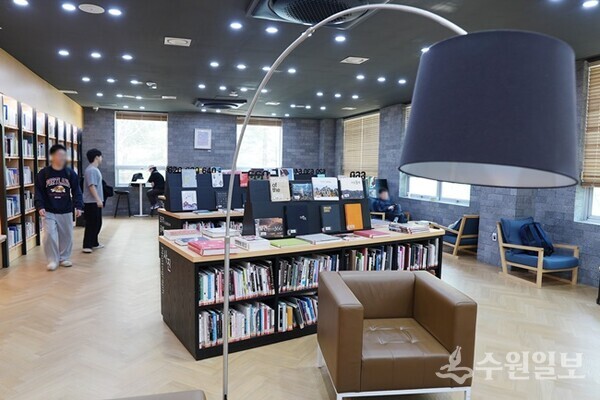
True to its reputation as a city of humanities, the city operates 23 public libraries. As of the end of last year, the city maintains a collection exceeding 3.09 million books, with each library operating specialized materials in specific subject areas. Over the past year, Suwon City's libraries served 4.3 million visitors, with 3.13 million books borrowed. This means that on average, each citizen used the library 3.5 times.
This year's vision for Suwon City library policy is 'A Knowledge and Culture Hub Growing Together with Citizens.' The strategy involves utilizing libraries as complex cultural spaces, fostering sustainable reading culture, creating reading environments responsive to the artificial intelligence era, and building cooperative community networks.
First, Suwon City libraries will expand and evolve into more complex spaces. In addition to Yeongtong Library, which is undergoing reconstruction, plans are in progress for new library construction in the Geumgok, Imok, Maetan, and Gosaek areas. Existing libraries will also undergo environmental improvements to become multi-purpose spaces for citizens. Spaces such as Cheongaeguri Pond (a youth space), galleries, Silver Generation Lounges, and cafes will be created. In particular, Seonkyeong Library, representing Suwon City, is expected to transform into a complex space featuring children's areas, spaces for middle-aged and older generations, artificial intelligence utilization areas, galleries, and cafes, becoming a new cultural landmark.
The city plans to strengthen the library's role so that citizens can read anytime and anywhere. It will introduce services for personalized book recommendations tailored to individuals at libraries, expand collections considering neighborhood characteristics such as usage rates, and make efforts to expand the foundation of reading culture through cooperation with community resources such as bookstores and small libraries.
A city official stated, "Suwon City will establish a smart reading environment where artificial intelligence and books meet, fostering a lifelong reading culture spanning all ages," and added, "Together with citizens, we will forge a new path for South Korea as a reading city where people read, think, and ask questions."
Loading comments…