


Osan City Launches Seolang Reservoir Healing Space Project; Aims for Completion in Early 2026
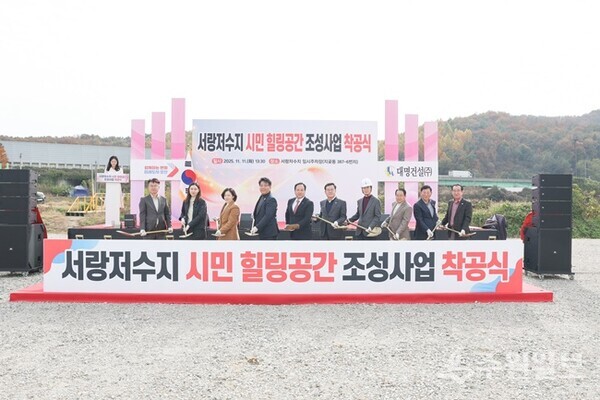
[Suwon Ilbo=Reporter Park Chan-hyeok] Osan City held a groundbreaking ceremony on the 11th for the Seolang Reservoir Citizen Healing Space project and launched full-scale project implementation.
The ceremony was attended by approximately 300 people including Mayor Lee Gwon-jae, provincial and city council members, and local residents, and proceeded with commemorative remarks, a groundbreaking ceremony, and commemorative photography.
In his remarks, Mayor Lee Gwon-jae said, "Once the landscape lighting, deck roads, and musical fountain are completed, Seolang Reservoir will become a true representative tourist destination in Gyeonggi Province," and added, "Seolang Reservoir will establish itself as a representative landmark that attracts not only 270,000 Osan citizens but also visitors from across the nation."
Previously, Seolang Reservoir had been Osan's representative waterfront facility, but inconvenience in use arose due to an incomplete circular walking trail. In response, the city plans to newly connect approximately 600 meters of the disconnected trail and create a 2.1km circular walking trail in total.
In detail, the city plans to install landscape lighting and a musical fountain at Seolang Reservoir to develop the project site into a citizen healing space and a hub for Osan's tourism. Aiming for completion in early 2026, the city plans to complete major facility construction including deck road and musical fountain installation.
Previously, as part of the Seolang Reservoir Healing Space project, the city had also been pursuing the "Seolang Reservoir Connecting Road Expansion Project" to improve accessibility to the Seolang Reservoir area.
The road, to be constructed with a total length of approximately 1km and a width of 18 meters, organically connects Seolang Reservoir with nearby areas to strengthen traffic convenience and tourism accessibility as a key infrastructure project. Although initial plans called for city budget allocation, the project was pursued through a public contribution method, achieving approximately 22 billion won in budget savings.
Loading comments…