


Gyeonggi-Type Family Care Allowance to Expand from 14 to Minimum 21 Municipalities Next Year
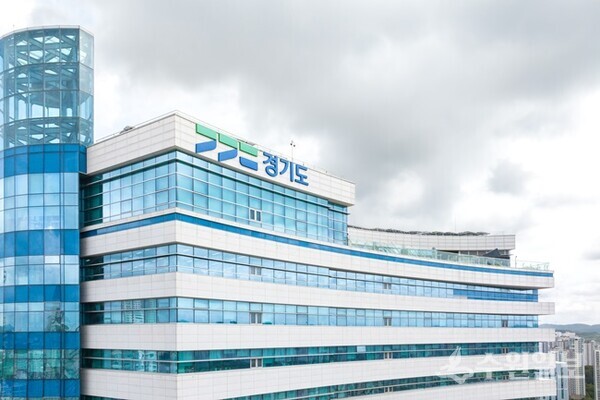
[Suwon Ilbo=Kim Gap-dong] Gyeonggi Province announced on the 9th that the Gyeonggi-Type Family Care Allowance, which provides care allowances to those caring for children, will expand from 14 municipalities this year to a minimum of 21 municipalities next year, an increase of 7 municipalities.
The province is actively reviewing participation by remaining municipalities for next year, and plans to encourage all 31 municipalities in the province to participate, as the number of participating municipalities is expected to increase further.
The 14 municipalities participating in the Gyeonggi-Type Family Care Allowance this year are: Seongnam, Paju, Gwangju, Hanam, Gunpo, Osan, Yangju, Anseong, Uiwang, Pocheon, Yangpyeong, Yeoju, Dongducheon, and Gapyeong.
The Gyeonggi-Type Family Care Allowance is a project that provides allowances (300,000 won per month for one child, 450,000 won for two children, 600,000 won for three children per month) when relatives within four degrees of kinship including grandparents and neighbors provide care for 40 hours or more per month to families experiencing childcare gaps with children aged 24-36 months whose household income is at or below 150% of the median income. The project aims to alleviate childcare burdens and recognize the value of care.
The province explained that the increase in municipal participation is because the major reasons for previous non-participation—incomplete coordination of social security systems, budget burden, and increased municipal workload—have all been resolved.
The Gyeonggi-Type Family Care Allowance recently completed coordination with the Ministry of Health and Welfare on establishing a new social security system and was adopted as an official program beginning in July, enabling stable operation from next year onward. With adoption as an official program, support targets were adjusted, reducing the budget burden on municipalities by over 50%.
Additionally, the province is promoting automation of care activity log verification, which was the primary factor in municipal staff workload. Automation functions have been added to the "Whenever Care" platform, which began formal operation in May this year, reducing workload while simplifying application documents, education completion requirements, and considering various measures to expand municipal participation including working-level meetings for staff members.
Yun Young-mi, Director of the Provincial Women and Family Division, stated, "We are focusing on procedural improvements to enhance convenience for residents and municipal staff," and added, "We are directly visiting municipalities considering participation and explaining the project to request cooperation so that all 31 municipalities in the province can participate."
Loading comments…