


Namyangju City Supports People-to-Government Exchange with Ulaanbaatar, Mongolia
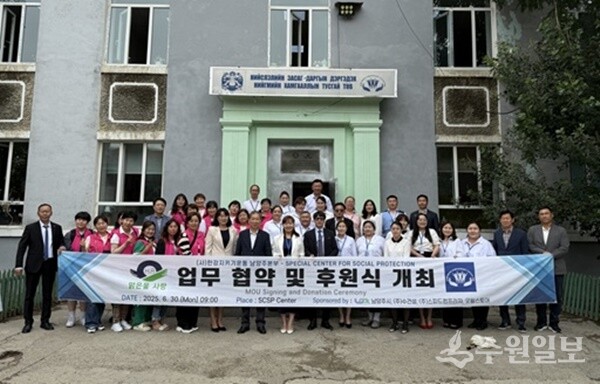
[Suwon Ilbo=Reporter Eom In-yong] Namyangju City announced on the 2nd that it proactively supported the smooth implementation of an international business agreement concluded between private organizations to strengthen friendly cooperation with Ulaanbaatar, Mongolia, an international exchange city.
The agreement, which was concluded on the 30th of last month, was signed between the Hangang River Protection Movement Association Namyangju Regional Headquarters and SCSP (Special Center for Social Protection), a social protection agency under the Mongolian government. To facilitate the conclusion of this agreement, the city played a substantive bridging role by coordinating major exchange agendas and agreement contents, and supporting the planning of the agreement ceremony to ensure its smooth conclusion.
Through this, the two organizations concluded a business agreement to cooperate in three areas: △supporting social welfare and education programs △promoting urban greening and environmental volunteer activities △establishing cultural experience programs. In particular, the agreement is significant as it includes concrete implementation methods of 'donation and volunteer service' for cooperation and mutual prosperity.
Meanwhile, Namyangju City and Ulaanbaatar, Mongolia have maintained friendly exchanges since 1998. In April 2000, they established the Mongolian Culture Village in Sudong-myeon, which is utilized as a space for citizens to experience Mongolian lifestyles and traditional culture on display. The two cities have continued active exchanges in various fields including youth and adolescent exchanges and mutual visits by delegations from both cities.
Moon Myeong-woo, director of the Administrative Support Division of Namyangju City, said, "It is meaningful that we are supporting exchanges in the welfare and environment sectors that are closely connected to citizens' lives," and added, "We will continue to expand substantive exchanges that citizens can experience going forward."
Loading comments…