


Term 8 Results Report-②Livelihood Economy Livelihood Economy Recovery and Future, Answering Through Action

[Suwon Ilbo=Reporter Kim Gapdong] Since its launch, the Term 8 Gyeonggi Province Government has made 'livelihood economy recovery' its top priority in provincial governance.
Amid overlapping economic crises—the aftermath of COVID-19, the triple crisis of high interest rates, high inflation, and high exchange rates, unstable global supply chains, martial law, and tariff challenges from the United States—Gyeonggi Province has demonstrated strategic leadership by directly responding to difficulties on the ground and steadily building the foundation for future growth engines.

■ Reviving a Sluggish Neighborhood Economy
The province has comprehensively deployed 'Gyeonggi Revitalization Big Sale' and other economic activation projects to revive traditional markets, shopping districts, and neighborhood commercial areas.
Last year, the province held consumption promotion events—including flea markets linked to local festivals, payback events, and prize giveaways—at 348 locations in both the first and second halves, such as Uijeongbu Happy Road Shopping District and Osan Five Colors Market. With participating markets increasing as they experienced the effects of revitalized commercial districts, the province is currently conducting 'Gyeonggi Revitalization Big Sale' at 406 locations in the first half of this year (June 21-29). Project funding has also been expanded 2.5 times from 4 billion won last year to 10 billion won this year.
Additionally, the 'Small Business Owner Strength GO Card,' first introduced nationwide by the province, provides operating funds up to 5 million won to 30,000 small business owners in Gyeonggi in the form of a credit card. With unprecedented conditions including six months of zero interest, tax deduction benefits, waived annual fees and guarantee fees, and up to 500,000 won cashback, this is evaluated as a policy that has filled the financial blind spot for small business owners.
The province has also lightened the payment processing fee burden for small business owners through the activation of local currency. Along with an average payment scale of over 5 trillion won annually—up 10% compared to 2021—the province has generated approximately 9.7 billion won in annual fee reduction effects.
Additionally, the province has executed low-interest loans totaling 5.4596 trillion won to a combined 58,000 small and medium enterprises and small business owners, easing their financial constraints.

■ U.S. Tariff Shock‥Local Government Takes Action First: Building a Gyeonggi-Type Export Breakwater
Regarding the tariff issue that emerged with the launch of Trump 2.0 in 2024, the Term 8 Gyeonggi Province Government has taken preemptive action.
Governor Kim Dong-yeon personally presided over an emergency economic meeting at Pyeongtaek Port in March and announced countermeasures to reduce damage to automobile and parts export companies. The province immediately provided a package including 50 billion won in special operating funds for tariff-affected small businesses, export opportunity vouchers, extended local tax payment deadlines, logistics cost support, and one-on-one consulting.
Subsequently, in April, Governor Kim traveled directly to the United States to propose establishing a working-level dialogue body with Michigan Governor Gretchen Whitmer and conducted 'field-oriented trade diplomacy' by meeting with nine Korean parts companies operating locally to listen to their grievances.
This is evaluated as an unprecedented case of a Korean local government directly responding to a global trade crisis.
Additionally, the province is implementing export trade and exhibition support projects including expansion of the Gyeonggi Business Center (GBC), Global Bridge export path development support (export consultation meetings), non-tariff barrier response export consultation meetings, trade promotion teams, and group pavilion participation in exhibitions.

■ Term 8 Investment Attraction of 100 Trillion Won Becomes Reality
In February 2023, during the provincial assembly address, Governor Kim announced a goal of attracting 100 trillion won in investment during Term 8. Subsequently, Gyeonggi Province launched an all-out investment attraction campaign with all departments and public institutions working together. As a result, Term 8 Gyeonggi Province has attracted 87.7 trillion won (approximately 88%), bringing the goal within reach.
By sector, the province attracted 23.1 trillion won from global companies including Onsemi (U.S.), ASML (Netherlands), Albox (Japan), Merck (Germany), and Air Products (U.S.). Additionally, it has drawn 38.2 trillion won in future industry investment centered on cutting-edge strategic industries such as semiconductors, batteries, and hydrogen.
Notably, the creation of the world's largest semiconductor cluster connecting Seongnam-Hwaseong-Yongin-Anseong-Pyeongtaek-Icheon is becoming a catalyst transforming Gyeonggi Province into the heart of South Korea's semiconductor industry. As a result of continued investment, plans include establishing an SK Hynix semiconductor cluster in Yongin Wonsam and constructing LG Display OLED cutting-edge facilities in Paju.
Additionally, through the development of industrial complexes, techno valleys, and public housing districts as well as attracting businesses, the province has achieved results of 19.09 trillion won, and through technology startup investment attraction including G-Funds, has achieved 6.5 trillion won in performance.

■ Building New Industry Ecosystems, Steadily Preparing for Future Growth Engines
The Term 8 Gyeonggi Province Government is boldly investing in building medium to long-term growth foundations beyond short-term recovery.
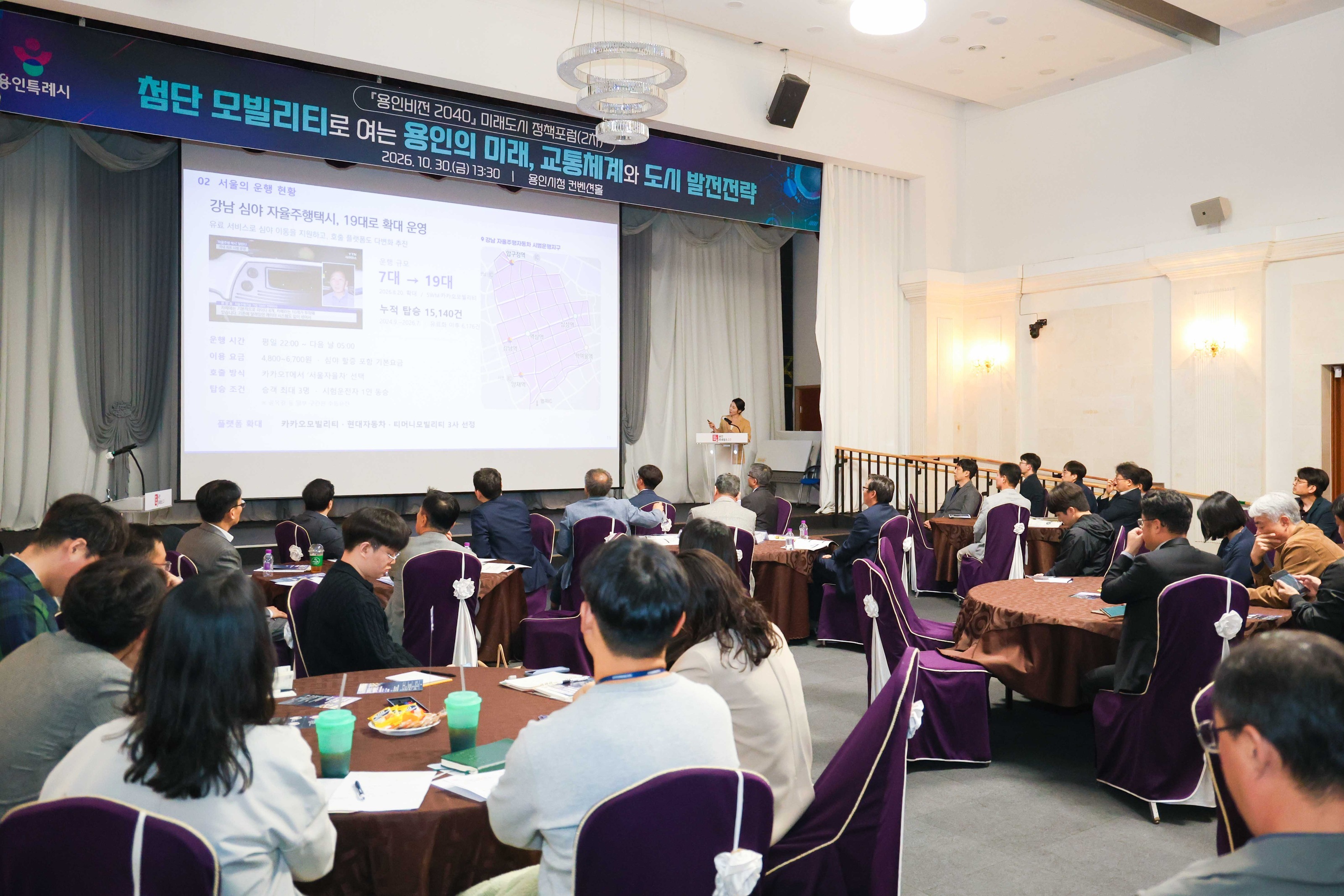
Centered on Hwaseong, Pyeongtaek, and Pangyo, the advanced mobility cluster has created a commercialization ecosystem that combines future vehicle components, software, and AI technology. The initiatives also include providing commercialization support to 10 future vehicle parts companies, training 305 personnel, providing 7.5 billion won in R&D; support, and securing national funding for autonomous driving demonstration districts.
In the biotech field, with the designation of the Gyeonggi-Siheung National Advanced Strategic Industry Specialized Complex, investment attraction of 4.7 trillion won is expected to proceed with 32 companies including leading enterprises.
The province is also accelerating support for ventures and startups. It has set a target of creating 200,000 square meters of startup innovation spaces across 20 regions with Pangyo as the hub and nurturing 3,000 startups, while concurrently holding the 'Gyeonggi Startup Summit' and operating global expansion programs.
AI talent development is also progressing steadily. Through the establishment of AI campuses in northern and southern Gyeonggi and enhanced provincial citizen AI capability training programs, support for master's and doctoral research in AI at Sungkyunkwan University's Graduate School of Artificial Intelligence and Korea Engineering University's Grand-ICT Research Center, and AI specialist talent education through collaboration with global big tech companies such as NVIDIA, the province has achieved the training of 2,835 AI future talents.
■ Results and Changes Created by Seeking Truth from Facts
The Term 8 Gyeonggi Province Government's livelihood economy measures were an integrated strategy encompassing crisis response and future development, beyond simple support.
Over the past three years, Governor Kim Dong-yeon is producing concrete results through "maintaining 88 trillion won in investment, supporting small and medium enterprises and self-employed businesses with 5 trillion won, and building an ecosystem for 300,000 innovative jobs." In an age of crisis, Gyeonggi Province today is a representative example of 'pragmatic governance' that has protected both the livelihood and future of its people.
Loading comments…