


Gyeonggi Province 360-Degree Care Policy for Everyone, Anytime, Anywhere During First Half of Eighth Elected Term
[Suwon Ilbo=Reporter Kim Gapdong] In August 2022, three mothers and a daughter in a multi-family housing unit in Suwon were found to have suffered from intractable diseases and financial hardship but had not applied for welfare services such as basic living allowance. This became known as the Suwon Three Mothers and Daughter Incident.
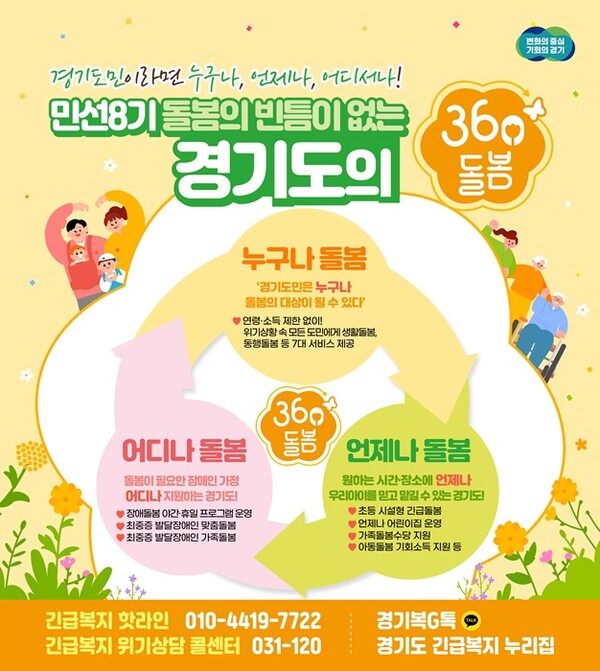
To prevent such incidents from recurring, Gyeonggi Province in the eighth elected term established an emergency welfare hotline (010-4419-7722) and emergency welfare crisis consultation call center (031-120), and continues to expand operations through the Gyeonggi G-Talk app and the Gyeonggi Province Emergency Welfare website.
Starting from these efforts, Gyeonggi Province's welfare policy has led to the 'Gyeonggi 360-Degree Care' policy launched last year. The '360-Degree Care' consists of three components to eliminate care blind spots: 'Care for Everyone,' which supports all provincial residents facing crisis situations regardless of age or income; 'Care Anytime,' which provides emergency care whenever families with children need it at desired times; and 'Care Anywhere,' which provides customized care for people with disabilities at any institution or home, day or night, weekends or weekdays.
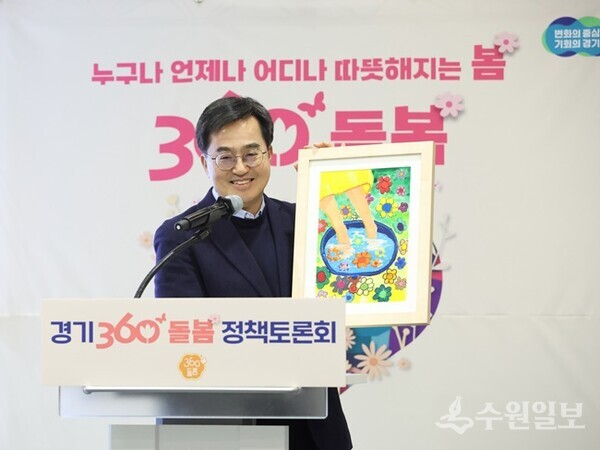
Gyeonggi Province Governor Kim Dong-yeon explained the policy background: "We want to fill all 360 degrees of care gaps. That is why we eagerly introduced this care policy package," and added, "We want to create a proactive and innovative welfare model in Gyeonggi Province that can respond to new crises." Below is an overview of the current status of the Gyeonggi 360-Degree Care Policy by sector.
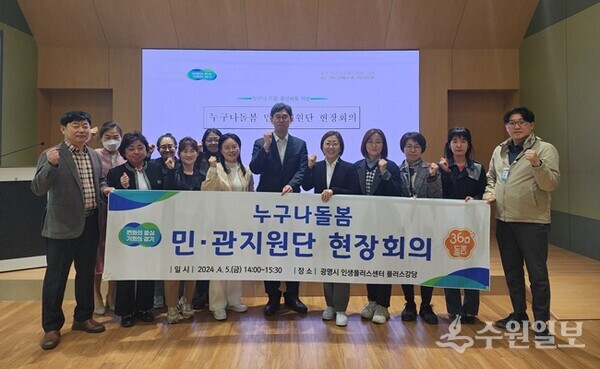
■ 'Care for Everyone' Provides 2,129 Services Over Five Months
The province operated 'Care for Everyone' from January to the end of May this year—a five-month period during which it provided 2,129 services to provincial residents by supplementing existing care gaps in diverse fields including life care, residential safety, and psychological counseling.
'Care for Everyone' is a project designed to enhance the quality of life for provincial residents by providing care services to all residents facing crisis situations without age or income restrictions, based on the principle that "all Gyeonggi residents can be the subject of care" in consideration of rapid aging and the increase in single-person households. Starting initially in six cities including Siheung in January, it has been operating in 15 cities and counties as of May, with Bucheon being the last to join.
There has been a problem where people who do not fall under the government-defined income standards cannot receive care services even in cases of sudden accidents preventing independent daily living or elderly people living alone suddenly needing care due to health deterioration. Gyeonggi Province's 'Care for Everyone' is characterized by providing services to all provincial residents facing crisis situations.
Services are divided into basic and expanded types depending on the service type. Basic-type services consist of five fields: life care supporting physical and household activities, companion care supporting mobility, residential safety supporting simple repairs, customized meal support, and temporary protection with short-term facility admission.
The expanded type adds two additional fields to the five basic services: rehabilitation care supporting customized exercise rehabilitation and psychological counseling supporting psycho-emotional stability. Among cities and counties in the province, nine cities and counties including Yongin, Pyeongtaek, Hwaseong, Bucheon, Gwangmyeong, Yangpyeong, Gwacheon, Gapyeong, and Yeoncheon operate the basic type, while six cities and counties including Siheung, Icheon, Anseong, Paju, Pocheon, and Namyangju operate the expanded type, with a total of 15 cities and counties participating.
To apply for 'Care for Everyone' services, residents can visit the local administrative welfare center, call the Gyeonggi Province call center (031-120) or the emergency welfare hotline (010-4419-7722), or apply online through the Gyeonggi Civil Affairs 24 website.
The province plans to collaborate with cities and counties to further develop the 'Care for Everyone' project and expand it to provide more equal opportunities for provincial residents.
■ 'Care Anytime' Advancing 10 Projects in Full Scale
The province is implementing 'Care Anytime' service, consisting of 10 projects to create a care system where children can safely and happily grow and parents can trust and entrust their children to care at desired times and locations.
'Care Anytime' comprises 10 projects including: operation of the 'Children Care Anytime Center Hotline Call Center' (010-9979-7722), elementary facility-type emergency care, operation of 'Anytime Childcare Centers,' home-visit emergency care, support for establishing 'Together Care Centers,' family care allowance support, child care opportunity income support, support for copayment for child care services, elementary first-grade school safe care, and support for children's happy meal during school breaks.
First, starting July 1, the 'Children Care Anytime Center Hotline Call Center' will operate 365 days, 24 hours. This provides one-stop services connecting families of children under 12 needing emergency care through the call center to child care facilities and home-visit care services near their residences on weekends and weekday nights.
One of the care services for this, 'Elementary Facility-Type Emergency Care,' provides child care at Together Care Centers and community child care centers near the residences of children ages 6-12 needing care on weekday nights, weekends, and holidays. Starting July 1, the service is available in 14 cities and counties including Suwon, Hwaseong, Seongnam, Namyangju, Ansan, Pyeongtaek, Anyang, Paju, Gimpo, Gwangmyeong, Icheon, Guri, Yeoju, and Dongducheon.
'Anytime Childcare Centers' are facilities where parents or guardians of infants and toddlers ages 6 months to 7 years can confidently entrust their children 365 days, 24 hours in case of temporary or emergency situations. There are 5 locations in Bucheon, Namyangju, Gimpo, Hanam, and Icheon, and nearby cities and counties can also use them. Services have been provided since June 1, with a usage fee of 3,000 won per hour.
'Home-Visit Emergency Care' starting in July provides home-visit child care services for children ages 3 months to 12 years. In 10 cities and counties including Suwon, Hwaseong, Anseong, Pyeongtaek, Siheung, Gwangmyeong, Namyangju, Guri, Dongducheon, and Gapyeong, applications can be made through the child care app or website, or by calling the 'Care Anytime Center Hotline Call Center.'
Together Care Centers will expand to 500 facilities by 2026. Together Care Centers are elementary care facilities for students ages 6-12 regardless of income, operating during school sessions (1 p.m. to 8 p.m.) and school breaks (9 a.m. to 6 p.m.), with 302 facilities currently in the province. To rapidly expand facilities, the province provides additional provincial funds when national funds are insufficient.
'Family Care Allowance,' accepting applications from June 3 to November 10 this year or until budget is exhausted, supports relatives or neighbors within the fourth degree of kinship caring for children ages 24-48 months with monthly payments of 300,000 to 600,000 won depending on the number of children cared for. Gyeonggi Province is the first in the nation to expand the target to include not just relatives but also neighbors.
'Child Care Opportunity Income,' one of the signature policies of the eighth elected term, is provided at 200,000 won monthly to provincial residents who participate in child care activities in communities such as village-centered resident meetings, recognizing their social contribution and encouraging participation. The province is proceeding with negotiations on establishing new social security systems with the Ministry of Health and Welfare, with implementation expected as early as July.
'Copayment Support for Child Care Services' is a project where Gyeonggi Province and cities and counties support copayments for the government's 'Child Care Services.' The province provides up to 20 hours monthly (240 hours annually) to families with median income of 150% or less, and 300,000 won within one year of birth for households with second or subsequent children. As of the end of May, 14,907 cases totaling 798.76 million won were supported, contributing to reducing child care burden. An average of 3,726 people per month benefited. Since participating cities and counties vary depending on budgetary circumstances, residents should check with their respective city or county before using services.
'Elementary First-Grade School Safe Care' is a Together Care Center operated with priority for first-graders, a child care transition period when parental retirement and leave are frequent and competition for care classes is intense. A total of 6 will be installed and begin operations in September, with gradual expansion thereafter.
Starting from the January 2024 winter break, Gyeonggi Province and cities and counties implemented the 'Children's Happy Meal During School Breaks' project, supporting 4,550 children across 198 facilities in 23 cities and counties by covering half of lunch costs for children using 'Together Care Centers.' Seven cities and counties including Suwon are scheduled to begin implementation from the July summer break this year, expanding to a total of 30 cities and counties.
■ 'Care Anywhere' - Three Projects to Relieve Care Concerns for Households with People with Disabilities
The province is implementing three 'Care Anywhere' projects to address care gaps for people with disabilities. 'Care Anywhere' is a project for people with disabilities who have faced care needs but have not received adequate support, and comprises: nighttime and holiday care program operations for people with disabilities, customized care for people with severe developmental disabilities, and family care projects for people with severe developmental disabilities.
First, since March, the province has been operating nighttime and holiday care programs for people with disabilities. In 19 cities and counties including Anyang, 42 operating institutions provide three types of care services (care type, program type, and self-help meeting type) to people with disabilities and families needing care on nights and holidays. The three types include: (Type A) facility-centered care type with 11 facilities, (Type B) facility-centered program type with 15 facilities, and (Type C) self-help meeting autonomous type with 16 facilities.
Type A facility-centered care provides care within the facility and supports programs such as cultural and leisure activities according to facility operation methods. Type B facility-centered program type supports cultural and art programs (musicals, choirs, etc.), sports (basketball, bowling, etc.), psychological counseling, rehabilitation therapy, and family programs. Type C self-help meeting autonomous type supports meetings such as exercise and pottery for people with disabilities and families who have difficulty participating in daytime self-help meetings due to work, promoting friendship while enabling participants to independently plan and decide on meeting operations so they can lead autonomous lives. Detailed information about 'Nighttime and Holiday Care Program' providers can be found on the Gyeonggi Province Comprehensive Support Center for People with Disabilities (Neum Center) website.
The customized care project for people with severe developmental disabilities targets those with challenging behaviors or those who have difficulty using facilities due to daily living or communication issues. To support their independence and provide insufficient activity support services, the province selected 60 people with severe developmental disabilities and has been providing up to 60 hours of care services monthly since May, with 2:1 care available for those with severe challenging behaviors. Since June, the province has been training 350 specialized care personnel to provide professional care, and will operate educational programs through experts including theoretical instruction and on-site coaching.
The family care project for people with severe developmental disabilities targets 210 households that solely rely on family care because they cannot access welfare services such as activity support services or daytime protection centers due to social exclusion from challenging behaviors. The province supports these families with 400,000 won in monthly family living allowances through the end of the year and provides community-linked services to prevent care exhaustion, enabling them to experience public care services. In April, 72 households received allowances, and in May, all 210 households received payment.
Going forward, the province plans to substantialize the contents of the 360-Degree Care projects to create leading welfare models and examples, gradually expand projects across cities and counties in the province, and make every effort to ensure that all provincial residents receive seamless services anytime, anywhere.
Loading comments…